




What is the PUFFINS Mission?
PUFFINS stands for 'Polarimetry in the Ultraviolet to Find Features in INterStellar dust'. It's a NASA-funded mission selected under its Astrophysics Pioneers program, which champions smaller-scale, high-impact projects. Led by researchers at the University
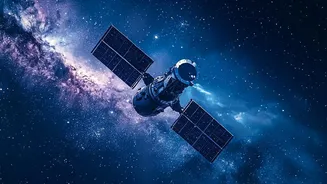
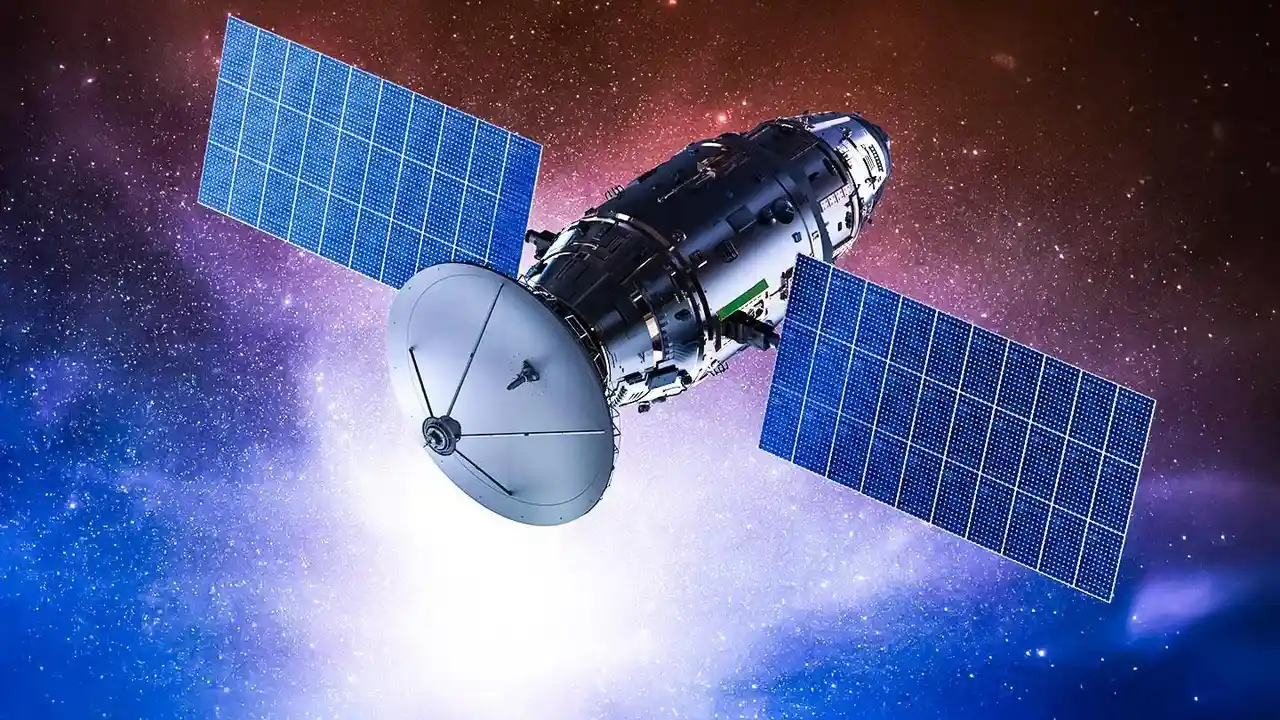
of Arizona, the mission involves sending a SmallSat—a compact and cost-effective satellite—into orbit with a specialized 10-inch telescope. Its goal is to observe the ultraviolet (UV) light from approximately 70 different stars to study the fine-grained dust floating in the space between them. With a budget of $20 million and a planned launch in 2030, PUFFINS aims to fill a significant gap in our astronomical knowledge.
Why Study Interstellar Dust?
It might sound insignificant, but interstellar dust is a critical ingredient in the recipe of the cosmos. These tiny grains, often smaller than 50 nanometres, are composed of elements like carbon and silicates. They play a vital role in the formation of stars and planets by providing surfaces for molecules to meet and react. In essence, this dust is the raw material from which planetary systems are built. By studying its composition and behaviour, scientists can better understand not just how planets form, but also how the building blocks of life might be distributed throughout the galaxy. As Principal Investigator Dr. Ramya Anche noted, understanding this dust is essential because it is a critical component of how planetary systems and, eventually, life form.
A Small Satellite with a Big Job
The mission centers on a SmallSat, a class of compact spacecraft also known as CubeSats. These satellites are much smaller and cheaper to build and launch than traditional, large-scale missions, making them ideal for targeted scientific investigations. This efficiency allows NASA's Pioneers program to pursue innovative science that might otherwise be too niche for a flagship mission. The PUFFINS satellite will carry a spectropolarimeter, an instrument that measures the polarization of light. This technique is key because as starlight passes through interstellar dust, its light waves get polarized, or aligned in a specific direction. Analyzing this change reveals crucial information about the dust's size, shape, and composition—details that are nearly impossible to see with conventional telescopes.
How Will PUFFINS See the Invisible?
The mission's technique, called ultraviolet spectropolarimetry, has not been deployed in space for nearly three decades. Previous observations in the 1990s only studied about 30 stars, leaving many questions unanswered. PUFFINS will more than double this sample size. Some dust grains align with the Milky Way's magnetic field like microscopic compass needles. By measuring how UV light from distant stars is altered as it passes through these aligned grains, PUFFINS can map the galaxy's magnetic fields and learn what the dust is made of. This is especially important for studying the smallest dust particles, which are nearly invisible to optical and infrared telescopes but radiate energy in the infrared after being heated by starlight.
Paving the Way for Future Discoveries
The data collected by PUFFINS will do more than just answer long-standing questions about interstellar dust. The mission also serves as a crucial technological pathfinder. The insights and technologies developed for PUFFINS will help inform the design of future, more ambitious projects, including NASA's planned Habitable Worlds Observatory (HWO). Set for the 2040s, the HWO will search for potentially habitable planets beyond our solar system, and understanding the dust that obscures our view will be critical to its success. By observing diverse environments from nearby star nurseries to the neighbouring Magellanic Clouds, PUFFINS will create a detailed map of how interstellar dust varies, providing a foundation for the next generation of space exploration.