


A Legend Born from Racing
To understand the weight of this moment, you have to go back to 1986. The first M3, the E30, wasn't created to be a luxury cruiser; it was a homologation special, a road-going car built so that BMW could go racing in the German Touring Car Championship.
It was raw, aggressive, and featured a high-revving four-cylinder engine derived from a racing block. It established a formula that would define the M3 for decades: a car that offered motorsport-derived performance and precision, yet was perfectly usable for a trip to the grocery store. This duality became its soul, creating a legacy celebrated at events from the Amelia Concours to Villa d'Este. It set the benchmark that all other performance sedans would be judged against.
An Evolution Through Controversy
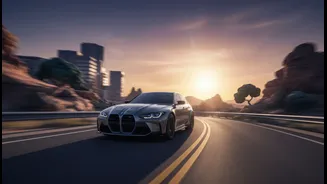
The M3 has never been static. Each of its six generations has brought change, often accompanied by cries from purists that the brand had lost its way. The move from the original four-cylinder to a six-cylinder in the E36, the introduction of a howling V8 in the E92, and the switch to turbocharging with the F80 were all controversial shifts. Yet, with each evolution, the M3 became faster, more capable, and ultimately won over new fans while expanding its legend. BMW M's CEO, Frank van Meel, notes that this pattern is repeating itself, with many now claiming the brand is 'dead' because of electrification. This history of adaptation shows that change is part of the M3's DNA, but the leap from combustion to a fully electric powertrain is by far its biggest challenge.
The Neue Klasse Electric Blueprint
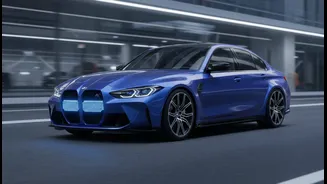
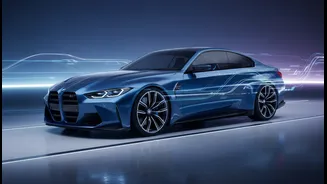
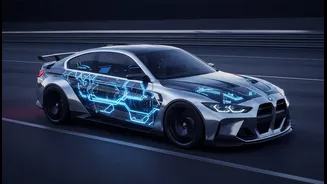
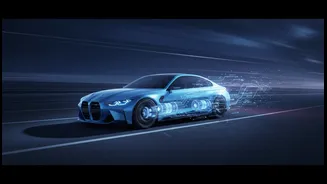
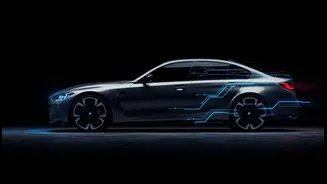
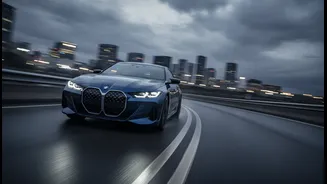
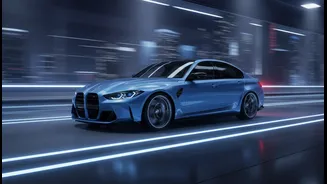
The future electric M3, expected around 2027, will be built on BMW's new 'Neue Klasse' architecture. The company has been clear: this will not be a half-measure. Recent concepts and prototypes showcase a radical new approach to performance. Instead of one or two motors, the electric M3 is set to use a quad-motor setup, one for each wheel. This allows for unprecedented control over torque delivery, a level of precision that mechanical differentials simply cannot match. A central high-performance computer, which BMW has nicknamed the 'Heart of Joy', will manage the entire system, promising a new dimension of handling and stability. This isn't just about straight-line speed; it's about redefining vehicle dynamics.
More Than Just Horsepower
While rumours of up to 1,000 horsepower swirl, BMW M executives are keen to manage expectations, stating that the focus is on usable, repeatable performance, not just headline-grabbing numbers. Frank van Meel has emphasized that generating power is easy for EVs; the real challenge is managing heat and maintaining consistency on a racetrack. The goal is a car that can be driven hard, lap after lap, without performance degradation. To achieve this, BMW is developing a unique battery cell chemistry specifically for its M models, housed within a structure that enhances the car's overall stiffness. The brand has also confirmed it will offer a choice: buyers will still be able to get a new combustion-engine M3 alongside the electric version, with neither being a halfway hybrid.
Can a Silent M3 Still Have a Soul?
The biggest question remains one of character. So much of the M3's identity is tied to the sound and feel of its combustion engines. How can an EV, inherently quiet and linear, replicate that emotional connection? BMW acknowledges this challenge, confirming they are developing unique sounds for the electric M3. The goal isn't to copy a petrol engine, but to create a new, emotionally engaging soundscape that gives the driver feedback. There's even talk of simulated gears to enhance driver interaction. Whether this intricate dance of software, quad-motor torque vectoring, and curated sound can recreate the magic that made the M3 a legend is the defining question. It's a test not only for BMW, but for the entire concept of the electric performance car.