




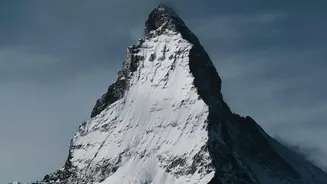


A Peak in Fluctuation
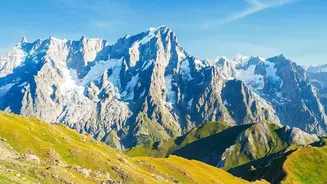
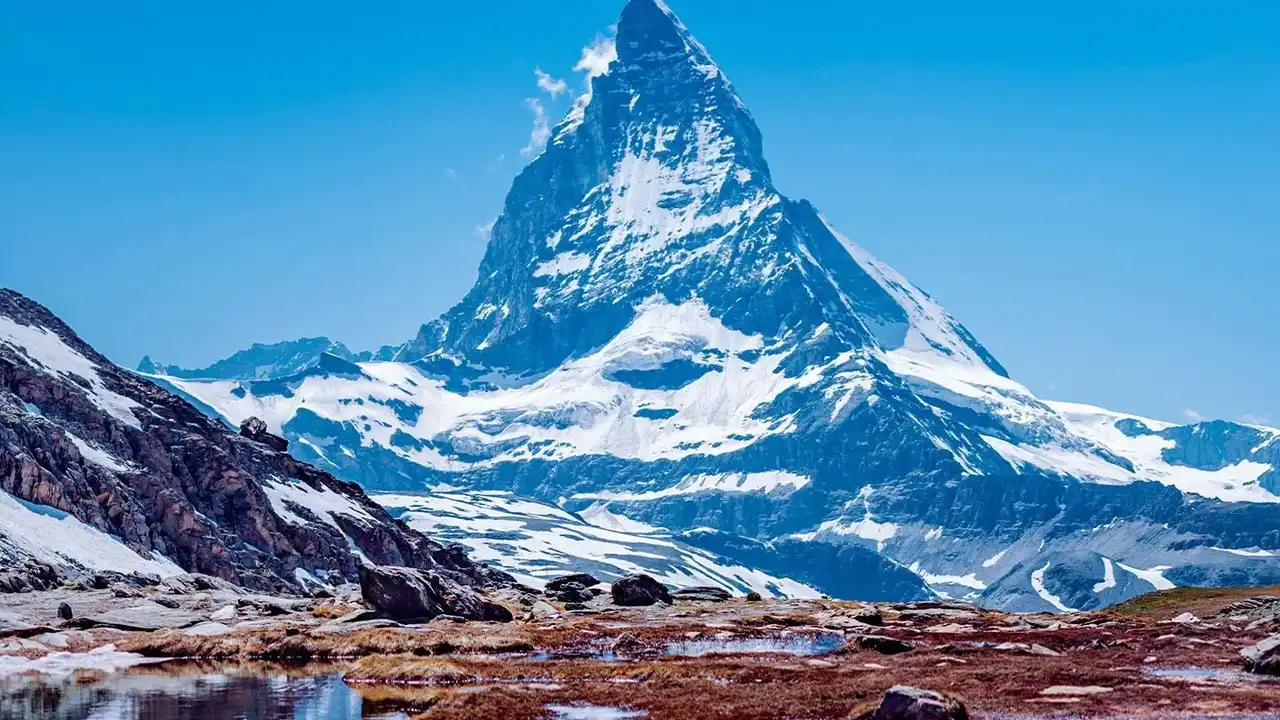
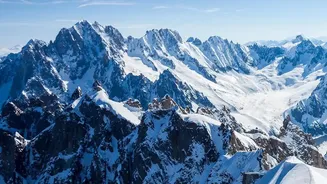
A team of expert surveyors recently recorded Mont Blanc’s summit at 4,805.59 metres. This marks a decrease of 2.22 metres from the measurement taken just two years prior in 2021. Since 2001, scientists have made a biennial pilgrimage to the summit, using
high-precision GPS technology and even drones to track its height. These regular check-ins are not just for the record books; they aim to build a long-term model of the ice cap to understand its behaviour. The peak’s altitude has been a moving target for decades, reaching a high point of 4,810.90 metres in 2007 before beginning a gradual decline. This constant change reveals that the 'height' of Mont Blanc is less of a fixed number and more of a dynamic vital sign for the mountain.
The Science of a 'Breathing' Mountain
It is crucial to understand what is actually being measured. Mont Blanc’s rock summit is stable at about 4,792 metres above sea level. Everything above that is a thick, perennial dome of ice and snow that acts like the mountain's living, breathing crown. This cap changes shape and size based on two key processes: accumulation and ablation. Accumulation is the build-up of snow, primarily during winter months. Ablation is the loss of ice and snow due to melting and sublimation (evaporation from a solid state), often accelerated by summer heat and wind. The final height in any given year is a direct consequence of the battle between how much snow falls and how much melts or is blown away. It's not the mountain itself that is shrinking, but the icy mantle upon its summit.
A Journey Back in Time
The most fascinating part of the latest measurement is its echo of the past. The new height of approximately 4,805.6 metres is remarkably close to figures from the late 19th century. In 1892, for example, pioneering cousins Joseph and Henri Vallot established a height of 4,807.2 metres, a figure that was considered official for generations. After climbing through much of the 20th century, peaking in 2007, the mountain now seems to be returning to a size more aligned with its historical stature. This suggests a more complex cycle than a simple, linear decline. The mountain 'remembers' its older dimensions as weather patterns shift, making the current trend both a modern phenomenon and a historical throwback.
More Than Just Melting
While it is tempting to point directly at global warming as the sole culprit for the shrinking summit, scientists urge a more nuanced view. They are careful to distinguish between the fluctuating height of the summit cap and the overall health of Alpine glaciers, which are retreating at an alarming rate. The height of the summit is highly sensitive to short-term weather, particularly the amount of summer rain and the strength and direction of high-altitude winds. Less rainfall in summer means less snow accumulation to offset the melt. Therefore, while climate change is undeniably impacting the Alps, the biennial height of Mont Blanc is a complex data point reflecting specific weather conditions, not just a simple proxy for the planet's rising temperature.