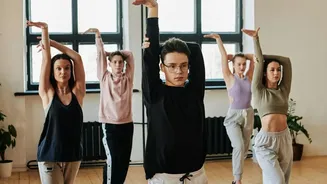








A Workout for Your Brain
Dancing does more for your mind than you might think. Learning choreography, even simple steps, is a potent cognitive workout. It forces your brain to create new neural pathways as you remember sequences, coordinate your body, and stay in rhythm. This
process engages multiple brain regions at once, from the motor cortex controlling movement to areas responsible for memory and decision-making. Studies have shown that this kind of complex mental coordination can improve focus, visual recognition, and even lower the risk of dementia in the long run. So, while you're focused on not tripping over your feet, you're actually giving your brain a high-intensity interval training session.
The Synchrony Stress Melt
Had a stressful day? Hitting a dance class might be more effective than zoning out on the couch. The combination of music, movement, and social connection is a powerful antidote to stress. Physical activity releases endorphins, the body's natural mood elevators. But group dancing adds another layer: synchrony. Moving in time with others has been found to reduce anxiety and lower levels of the stress hormone cortisol. This shared rhythm creates a 'flow state', a feeling of being completely immersed in the moment, which helps to silence the endless chatter of a worried mind and boosts overall psychological well-being.
Building Functional Endurance
We know dancing is good exercise, but its effect on endurance goes beyond basic cardio. Unlike repetitive exercises like running on a treadmill, dancing involves varied bursts of energy, changes in direction, and the use of a wide range of muscle groups. This builds what is known as functional endurance — the kind of stamina that helps you get through a long day or carry heavy groceries without getting winded. Regular sessions improve muscle tone and strength, especially in your core and legs, which are essential for balance and stability in all of life's activities. It's an engaging way to build a resilient body that's less prone to fatigue.
Unexpected Social Bonding
This is perhaps the most powerful and 'unexpected' element. Moving in sync with other people creates a profound sense of connection that transcends conversation. Neuroscientists call this effect of synchronized movement 'muscular bonding'. When we dance together, our brains can release oxytocin, often called the 'bonding hormone', which fosters feelings of trust and togetherness. Studies have shown that people who dance in sync with others are more likely to report feeling close to them and cooperate with them afterwards. This non-verbal communication builds a unique sense of community and belonging, turning a group of strangers into a cohesive unit.
An Increased Pain Threshold
Here's a truly surprising benefit: group dancing can actually make you tougher. Several studies, including those led by researchers at the University of Oxford, have found that synchronized, exertive activity significantly increases a person's pain threshold. The effect is attributed to a major release of endorphins, the body's natural painkillers. This endorphin rush from dancing in a group is found to be greater than from dancing alone. Researchers tested this by measuring participants' tolerance to a tight blood pressure cuff before and after dancing. Those who danced in sync with high energy showed the most significant increase in pain tolerance.