










The Ultimate Vision, The Ultimate Challenge
Christopher Nolan doesn't just make movies; he crafts monolithic experiences. For his next rumoured project, 'The Odyssey,' the director is reportedly doubling down on his commitment to the grandest cinematic format available: 15/70mm IMAX film. This
isn't just a stylistic choice; it's a statement about the power of cinema in an age of streaming. Nolan believes this format offers an unparalleled level of immersion, once describing it as akin to “3D without the glasses.” Following the blockbuster success of 'Oppenheimer,' which was partially shot on this format, 'The Odyssey' is said to be the first feature film shot entirely on IMAX film cameras. This ambitious undertaking promises visuals with staggering detail and a towering aspect ratio that fills your entire field of view, creating an experience that simply cannot be replicated at home. The only problem? The world has largely moved on from the technology required to show it.
What 'Projecting Correctly' Actually Means
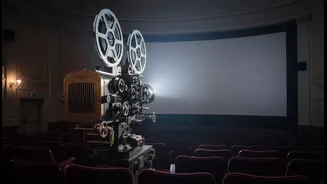
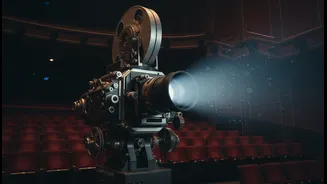
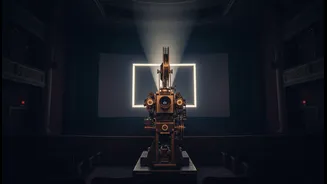
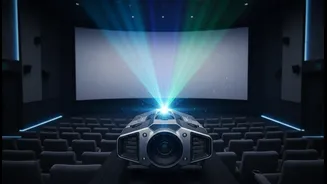
When the headline says “project correctly,” it’s referring to a very specific, and now very rare, technological process. The term is shorthand for projecting a physical 15/70mm IMAX film print. The “70mm” refers to the width of the film stock, but the “15-perf” detail is the key. It means each frame is 15 perforations wide as it runs horizontally through the projector. This creates a frame size nearly nine times larger than a standard 35mm frame, capturing an astonishing amount of visual information equivalent to a digital resolution of 16K or even 18K. The result is an image of breathtaking clarity and depth. These massive film prints—an 'Oppenheimer' reel weighed over 270 kg and was 17 kilometres long—require equally massive and mechanically complex projectors. Most modern cinemas, including most that carry the 'IMAX' brand, use digital projection systems, which are cheaper and more versatile. These are great, but they are not the same as seeing the physical film projected, which Nolan considers the definitive version of his work.
The Vanishing Art of Film Projection
The scarcity of these 41 theatres is a story of technological evolution and economic practicality. As digital projection became the industry standard over the last two decades, exhibitors dismantled their old, cumbersome film projectors. Maintaining a 15/70mm system requires specialized, trained projectionists, expensive physical film prints for every movie, and machinery that is no longer being manufactured. In a recent interview, IMAX CEO Richard Gelfond confirmed that new IMAX film projectors haven't been made in about 50 years. The existing network of 41 projectors is the result of a concerted effort to find, salvage, and rebuild decommissioned units from around the world—a process that itself was a monumental task. Following the success of 'Oppenheimer,' which screened in just 30 of these venues, IMAX worked to expand the network by 11 theatres for 'The Odyssey,' but the company has made it clear that adding more isn't practical. It’s a classic case of supply and demand, where the supply is a dwindling number of museum-quality machines.
The Hunt for a 'Correct' Screening in India
For cinephiles in India, the news is especially disheartening: none of these 41 theatres are located in the country. While India has a growing number of excellent digital IMAX and IMAX with Laser screens, it currently has no commercial venue capable of projecting 15/70mm film. In the past, venues like Prasad's IMAX in Hyderabad did have the capability, but it was eventually dismantled due to high operating costs and a lack of consistent films in the format. There is one such projector in the country, located at the Gujarat Science City in Ahmedabad, but it is used for educational and documentary screenings, not for commercial feature films. This means that while Indian audiences can still enjoy 'The Odyssey' in a large format, they will be watching a digital version that has been adapted from the original film source. The full, towering 1.43:1 aspect ratio and the unique texture of the film print will remain an experience that requires a passport.