




Choose the Right Strawberry Variety
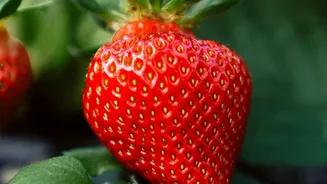
Success begins with selection. Not all strawberry plants are created equal, especially for container life. Look for 'everbearing' or 'day-neutral' varieties. Unlike 'June-bearing' types that produce one large crop, these varieties fruit throughout the season,
making them ideal for a steady home supply. Popular choices for containers include Albion, Seascape, and Fort Laramie, which is known for being exceptionally cold-hardy. These types are well-suited for the limited space of pots and can be more resilient to fluctuating conditions.
The Perfect Pot and Soil Mix
Strawberries have shallow roots, so a pot that is wider than it is deep is a good choice. Aim for a container that is at least 15-20 cm deep and 25-30 cm wide to accommodate a few plants. Good drainage is non-negotiable to prevent root rot, a common killer of potted plants. Never use heavy garden soil, which compacts easily. Instead, use a high-quality potting mix formulated for edible plants, and enhance it by mixing in about 30% compost for added nutrients. Some experts also recommend adding grit like pumice or coarse sand to further improve drainage.
Sunlight and Placement Strategy
Sunlight is the engine for sweet berries. Your strawberry pots need a minimum of six to eight hours of direct sun each day. Before winter sets in, identify the sunniest spot on your balcony—this will likely be a south or west-facing position. As the sun's angle lowers in winter, that prime real estate becomes even more critical. While dormant plants need less light, maximising sun exposure on milder days helps keep the plant healthy and ready for spring growth. Also, consider wind. Grouping pots together against a sheltered house wall can protect them from harsh, drying winds.
Winter Watering: A Delicate Balance
Overwatering in winter is a greater threat than cold for potted strawberries. When plants are dormant, their water needs decrease significantly. The goal is to keep the soil from completely drying out, not to keep it consistently moist as you would in summer. Check the soil every week or two on a mild, frost-free day by pushing your finger a couple of centimetres deep. If it feels dry, provide a small amount of water until it just begins to drain from the bottom. Never let pots stand in a saucer full of water, as this can lead to frozen, waterlogged roots.
Protecting Roots from Frost
Plant roots are much more vulnerable in a pot than in the ground, where the earth provides natural insulation. To protect them, you need to insulate the container itself. Wrap your pots in materials like hessian, bubble wrap, or horticultural fleece. You can even place a smaller pot inside a larger one and stuff the gap with insulating material like straw or leaves. Standing the pots on wood or polystyrene blocks can also prevent cold from seeping up from the concrete balcony floor. On nights when a hard frost is forecast, you can cover the plants themselves with a fleece blanket, but remove it in the morning to allow for air circulation.
To Feed or Not to Feed
Stop fertilising your strawberry plants as autumn ends. Feeding encourages new, tender growth that is highly susceptible to frost damage. The goal in winter is dormancy, not active growth. You can resume feeding in early spring, once the danger of hard frosts has passed and you see new leaves emerging. When you do start feeding again, a liquid fertiliser high in potassium, like a tomato feed, is excellent for encouraging flowers and fruit. A light feed every few weeks during the growing season will be sufficient.