




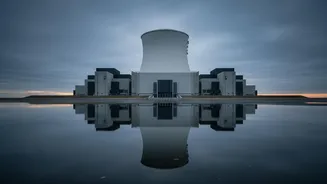
Power Reactors: A Contained Process
A nuclear power reactor is essentially a complex steam engine. It uses the heat from a controlled nuclear chain reaction to boil water, create steam, and turn turbines to generate electricity. To do this, most commercial reactors use low-enriched uranium
(LEU) as fuel. Natural uranium ore mined from the ground contains only about 0.7% of the critical isotope, uranium-235 (U-235), which is the part that can sustain a chain reaction. For reactor fuel, this concentration is increased to about 3% to 5%. Crucially, at this low enrichment level, the fuel cannot be used to create a nuclear weapon. While the spent fuel from a reactor contains plutonium, which can be a proliferation concern, the process to extract it is chemically complex and distinct from enrichment.
Enrichment: The Gateway Technology
Uranium enrichment is the process of increasing the percentage of that fissile U-235 isotope. This is a physical process, most commonly done using high-speed gas centrifuges that separate the slightly lighter U-235 from the heavier U-238. This is where the term 'dual-use' becomes critical. The very same facility and technology used to produce 5% LEU for a power plant can also be used to produce 90% highly enriched uranium (HEU), which is weapons-grade. While it takes a lot of effort to get from natural uranium's 0.7% to reactor-grade 5%, about 90% of the work required to get to weapons-grade is already done by the time you reach 20% enrichment. This makes any enrichment capability inherently sensitive.
The Breakout Problem
The core security concern is 'breakout time'—the time it would take a country to reconfigure a declared, peaceful enrichment facility to produce enough weapons-grade uranium for a single bomb. If a country has a large stockpile of low-enriched uranium and the centrifuges to enrich it further, its breakout time could be significantly shortened, potentially from months to weeks. This gives the international community, including watchdog groups like the International Atomic Energy Agency (IAEA), very little time to detect the activity and respond through diplomatic or other means. A power reactor, by contrast, has no comparable breakout capability; its fuel is not suitable for a weapon, and its operation is geared entirely toward electricity production.
A Question of Visibility
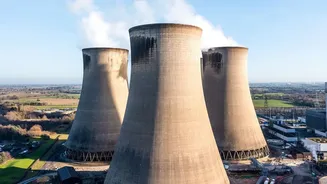
Another key difference is detectability. A nuclear power reactor is a massive industrial installation. It's large, has a significant physical and thermal footprint, and is almost impossible to hide. Its operations are relatively transparent. An enrichment plant, especially one using modern centrifuge or laser technology, can be much smaller, housed in an unassuming building, and potentially operated underground with a very low external signature. This makes clandestine enrichment activities far more feasible than building a secret reactor, posing a much greater challenge for international monitoring and verification efforts. This concealable nature is a major reason why enrichment technology is so heavily scrutinized.
How The World Watches
Given the risks, the IAEA applies different levels of scrutiny. While all nuclear material in signatory countries is subject to safeguards, the verification measures for enrichment facilities are exceptionally stringent. Inspectors verify the design of enrichment plants, track all uranium flows, use seals and cameras, and take environmental samples to detect any undeclared enrichment activity. These measures are designed to provide the world with assurance that a country's nuclear program is exclusively peaceful. The sensitivity stems from the fact that a diversion of material or misuse of the facility could lead directly to weapons-usable material, a risk not present in the normal operation of a power reactor.