


A Pool Fit for a Spacewalk
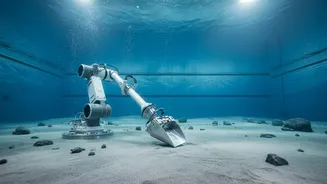
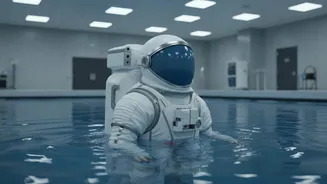
At first glance, the Neutral Buoyancy Laboratory (NBL) in Houston looks like the world’s most elaborate swimming pool. Measuring 62 metres long and 12 metres deep, it holds a staggering 6.2 million gallons of water. But this is no recreational facility.
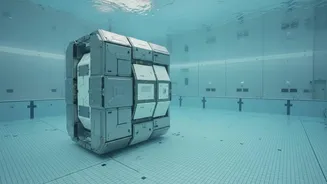
For decades, the NBL has been the primary training ground for astronauts preparing for spacewalks. By using a combination of weights and flotation devices, engineers can make a fully suited astronaut 'neutrally buoyant', creating a sensation that closely mimics the weightlessness of microgravity. The pool contains full-scale mock-ups of International Space Station components, allowing astronauts to practice complex repairs and procedures for hours at a time, supported by a team of professional divers.
Pivoting from Floating to Moonwalking
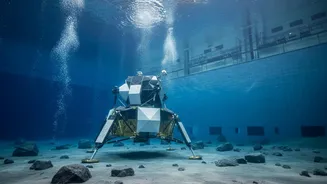
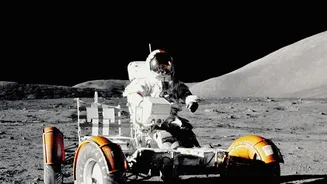
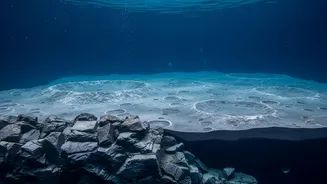
While the NBL is perfect for simulating the zero-gravity environment of Earth orbit, walking on the Moon presents a different challenge. The Moon has about one-sixth of Earth’s gravity, so astronauts don't float, they bound. To adapt, NASA has transformed a section of the massive tank into a simulated lunar landscape, complete with soil, rocks, and carefully controlled lighting. For the first time, a recent test brought two geologists in prototype Artemis spacesuits into the pool simultaneously to practice lunar geology. This wasn't about simulating weightlessness, but about simulating partial gravity to test the tools, techniques, and physical demands of carrying out scientific research on another world.
Geology Under the Sea
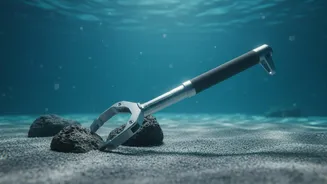
The recent exercise saw exploration geologists Trevor Graff and Angela Garcia don the new suits and descend to the NBL's lunar floor. There, they practiced essential moon-geology tasks: kneeling to inspect rocks, using hammers and sampling tools, and deploying scientific equipment. A crucial part of the test involved recreating the unique lighting at the Moon's South Pole, where the Artemis missions are slated to land. The sun hangs low on the horizon there, casting long, dark shadows that can make navigation and identifying geological features incredibly difficult. Practicing in these shadowy, underwater conditions helps NASA develop procedures to ensure astronauts can work efficiently and safely.
Why This Training Matters
The Apollo missions proved that geology is one of the most vital activities astronauts perform on the Moon. The rocks and soil samples returned to Earth have rewritten our understanding of the solar system's history. The Artemis program has even more ambitious scientific goals, including investigating polar ice deposits that could one day be used for drinking water or rocket fuel. But successfully collecting these samples requires practice. This underwater training allows NASA to refine everything from the design of a spacesuit glove to the wording of a checklist. It builds muscle memory for the astronauts and allows the mission support teams on the ground to understand the challenges firsthand. Every problem solved in the pool is one less surprise to deal with 240,000 miles from home.
The Road to Artemis
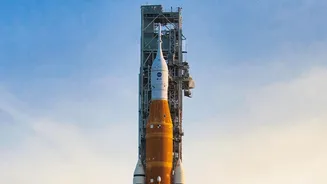
This geology test is a critical milestone in the development of the training programs for future Artemis astronauts. The insights gained from Graff and Garcia's time underwater will directly influence how crews on missions like Artemis IV will prepare for their own moonwalks. While rockets and spacecraft grab the headlines, this meticulous, often unseen preparation is the foundation of successful space exploration. As NASA works with commercial partners like Axiom Space, who are developing the next-generation suits, these integrated tests will become even more common. They ensure that when humans next step onto the lunar surface, they will be ready not just to walk, but to work.