



What New Research Reveals
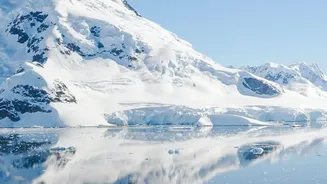
Several recent studies in 2026 have sharpened our understanding of Antarctic ice loss, using decades of satellite data to track how the continent is changing. One landmark study found that nearly a quarter of the glaciers that meet the coast are in retreat.
A key area of focus is the 'grounding line' – the point where ice resting on bedrock meets the ocean and begins to float. While many of these lines have been stable, significant retreats have been detected in vulnerable regions. For example, between 1996 and 2025, Antarctica lost about 12,800 square kilometres of grounded ice, an area almost half the size of Belgium. This retreat is largely driven by warm ocean water melting the ice from beneath.
West Antarctica: The Epicentre of Melt
The story of Antarctic ice is not uniform. The continent is broadly divided into two parts: the massive and relatively stable East Antarctic Ice Sheet, and the smaller, more vulnerable West Antarctic Ice Sheet (WAIS). The vast majority of current ice loss is happening in the west. The WAIS is considered particularly unstable because much of its bedrock lies deep below sea level. This creates a scenario where encroaching warm ocean water can get underneath the ice, causing it to lift off the bedrock and melt faster in a self-sustaining feedback loop. Studies suggest the rate of ice loss from West Antarctica has accelerated significantly, and some scientists are concerned that parts of it may have already passed a tipping point toward irreversible, long-term retreat.
The 'Doomsday Glacier' Dilemma
Nowhere is the concern more focused than on the Thwaites Glacier, nicknamed the 'Doomsday Glacier'. This single glacier in West Antarctica is enormous, roughly the size of Great Britain, and its ice alone holds enough water to raise global sea levels by about 65 centimetres. More critically, it acts as a natural dam, holding back the rest of the West Antarctic Ice Sheet. Its collapse could trigger a wider destabilisation that would lead to several metres of sea-level rise over the coming centuries. Recent research highlights its growing instability, with expanding cracks weakening the floating ice shelf that braces the glacier. While a sudden collapse in the next few years is considered unlikely, scientists agree that its retreat is set to continue and accelerate.
The Ripple Effect for India's Coastline
What happens in Antarctica does not stay in Antarctica. The melting ice directly contributes to rising sea levels across the globe, but the effect is not uniform. Counterintuitively, the most significant sea-level rise from Antarctic melt occurs far from the source. Models show that the Indian Ocean basin is one of the regions that would face the greatest increases. For a country like India, with over 7,500 kilometres of coastline and major metropolises like Mumbai, Kolkata, and Chennai situated in low-lying areas, the stakes are incredibly high. Even a modest rise in sea level dramatically increases the frequency and severity of coastal flooding during storm surges and high tides, threatening homes, infrastructure, and freshwater resources.