

Eyjafjallajökull (2010): The Ash Cloud That Grounded The World
When a relatively obscure Icelandic volcano named Eyjafjallajökull erupted in April 2010, few predicted it would cause the largest air-traffic shutdown since World War II. It wasn’t the size of the explosion that was the issue, but the type of ash it produced.
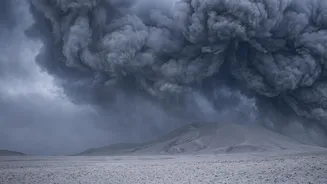
The eruption occurred under a glacier, causing meltwater to rapidly cool the lava, creating fine, sharp particles of glass-like ash. This abrasive dust was then injected directly into a jet stream that carried it over Europe, home to some of the world's busiest airspace. The threat was severe: volcanic ash can melt inside jet engines, causing them to fail. Faced with an unprecedented situation, aviation authorities took a zero-risk approach, closing huge swathes of airspace. Over an eight-day period, more than 100,000 flights were cancelled, stranding around 10 million passengers and costing the airline industry an estimated $1.7 billion in lost revenue. The event was a wake-up call, exposing the extreme vulnerability of our interconnected global travel and supply chain networks. It forced a complete rethink of aviation crisis management, leading to improved ash detection, forecasting, and new protocols for flying in low-density ash zones.
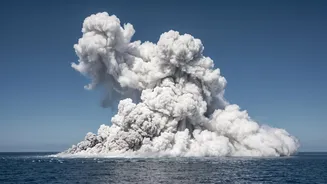
Hunga Tonga-Hunga Haʻapai (2022): The Planet-Altering Undersea Blast
The eruption of the Hunga Tonga-Hunga Haʻapai submarine volcano on January 15, 2022, was the largest explosive event of the 21st century. The blast was hundreds of times more powerful than the atomic bomb dropped on Hiroshima and sent an atmospheric shockwave that circled the globe several times. Unlike most large eruptions that inject vast amounts of sulphur dioxide, which typically has a cooling effect, the Hunga Tonga blast was unique. It vaporised a huge volume of seawater and shot an unprecedented amount of water vapour—an estimated 150 million tonnes—directly into the stratosphere. This single event increased the total water content of the stratosphere by about 10%. Scientists are still studying the long-term consequences. While most eruptions cause a slight global cooling, the massive injection of water vapour, a greenhouse gas, is having a warming effect in the stratosphere, while also causing some cooling at the surface. It also triggered chemical reactions that temporarily affected the ozone layer. The event provided a rare opportunity for scientists to study atmospheric physics in real-time, leading to rapid scientific deployments and a wealth of data that will improve climate and atmospheric models for years to come.
Mount Merapi (2010): The Human Cost of a Persistent Threat
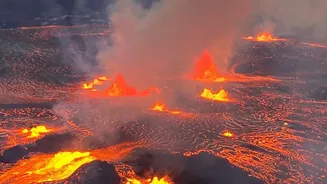
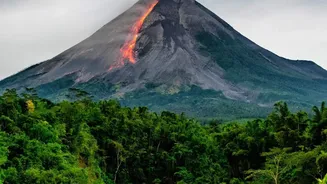
While some eruptions are notable for their global reach, others are defined by their immediate, devastating local impact. Mount Merapi in Indonesia, one of the most active and dangerous volcanoes in the world, is a prime example. Its 2010 eruption was its largest in over a century, unleashing powerful pyroclastic flows—scorching avalanches of hot gas and volcanic debris. The eruption forced the evacuation of nearly 350,000 people and tragically killed more than 340. However, the death toll could have been catastrophically higher, with estimates suggesting that timely warnings and evacuations saved between 10,000 and 20,000 lives. Scientists monitoring the volcano recognised that the seismic activity and ground deformation were far more intense than usual, allowing them to raise the alert level and expand the evacuation zone just hours before the largest explosions occurred. The 2010 event changed life around the mountain permanently. Thousands were relocated, and the local economy, once dominated by farming, saw a shift towards tourism, with 'lava tours' becoming a major business. Merapi serves as a powerful reminder of the constant risk millions of people live with and underscores the critical importance of robust monitoring and civil defence to prevent a far greater loss of life.