


The Director's Stance on Responsibility
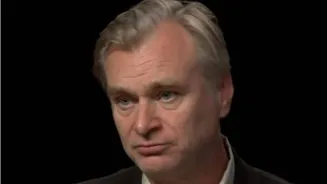
In a series of recent comments, Christopher Nolan has made his position clear: the problem with artificial intelligence in art isn't about the technology itself, but about accountability. He argues that creators, studios, and employers might use AI to sidestep
responsibility for the work they produce. For Nolan, an artist must be answerable for what they put into the world. You can't delegate a conscience to an algorithm. He views the idea that AI could wholly replace human creativity as "nonsense," asserting that the core of art is tied to the person wielding the tool, not the tool itself. This stance frames the debate not as man versus machine, but as accountability versus evasion.
A Tool, Not a Creator
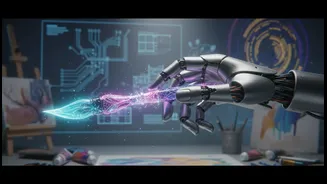
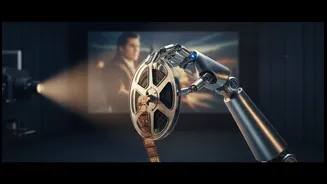
Nolan acknowledges that AI could be an "enormously powerful tool" for technical tasks, comparing it to advancements in visual effects or audio processing. However, he draws a sharp line between using AI for specific functions—like removing wires from a stunt scene—and handing over fundamental creative decisions to a machine. This distinction is crucial. It’s one thing for an artist to use software to achieve their vision, but it's another entirely for software to generate that vision. Nolan’s argument is echoed in the wider anxieties of Hollywood, where the 2023 strikes by writers and actors were largely fueled by the threat of AI being used not as a tool, but as a replacement.
Hollywood's Existential Crisis
Nolan isn't speaking in a vacuum. His comments land in an industry still grappling with the fallout from major labor disputes where AI was a central issue. Both the Writers Guild of America (WGA) and the Screen Actors Guild (SAG-AFTRA) fought for and won protections to prevent studios from replacing human writers with AI-generated scripts or using digital replicas of actors without consent and compensation. These unions argued that AI poses an existential threat, capable of devaluing human artistry and undermining livelihoods. The agreements reached were seen as a landmark, establishing guardrails that keep humans at the center of the creative process, for now.
The Ghost in the Machine
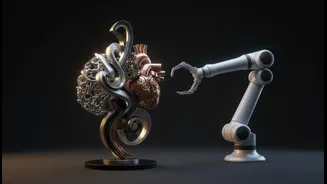
At its heart, the debate is a philosophical one. What is art without a soul behind it? Art has traditionally been seen as an expression of human consciousness, emotion, and experience. An AI, which has no life experience, no body, and no emotions, cannot truly be an author. It can mimic, combine, and generate content based on the vast library of human creativity it was trained on, but it cannot imbue work with genuine intent or meaning. Critics of AI art argue that the machine is 'uninhabited,' and therefore the work it produces lacks the essential connection to a human perspective that makes art matter. It's a technical feat, not a transmission of feeling.
Why the Audience Should Care
For the audience, the stakes are just as high. Nolan points out that younger audiences, in particular, seem to have an innate disdain for what they term "AI slop." He suggests there is a growing rejection of machine-made entertainment and a renewed interest in more tactile, authentic forms of storytelling. This is because we don't just consume stories for their plot mechanics; we connect with them because they reflect our world back at us through another person's eyes. The knowledge that a story was born from a human struggle, a unique insight, or a singular vision is part of its power. When that human element is removed, the art may feel hollow, a perfect but empty shell.