



Mastering the Melt-in-Your-Mouth Kofta
The heart of the dish is the kofta, and its texture is non-negotiable. The common mistake is creating dense, heavy balls. The secret to a melt-in-your-mouth kofta lies in the ingredients and their ratios. The base is typically a combination of grated
paneer and boiled, mashed potatoes. For a truly luxurious texture, some chefs add khoya (milk solids), which imparts a subtle richness and sweetness. The most critical factor is moisture control. Potatoes should be boiled until just fork-tender and allowed to cool completely; warm or waterlogged potatoes require more binding agent, which is the primary cause of hard koftas. Use just enough cornflour or breadcrumbs to bind the mixture—too much will make them tough. Knead the mixture gently until it forms a smooth, crack-free dough before shaping. For an extra surprise, many restaurant versions include a small filling of chopped cashews and raisins.
The Low and Slow Frying Technique
How you fry the koftas is as important as how you make them. A frequent error is frying them in oil that is either too hot or not hot enough. If the oil is too hot, the outside will brown instantly, leaving the inside undercooked, and the koftas might deflate once removed. If the oil is not hot enough, they will absorb too much oil or, even worse, disintegrate in the pan. The ideal temperature is medium-hot. To check, you can drop a tiny piece of the mixture into the oil; it should sizzle steadily without browning too quickly. Fry the koftas in small batches to avoid overcrowding the pan, which lowers the oil temperature. Move them gently in the oil to ensure even, golden-brown cooking. Once fried, let them drain on a paper towel. A perfectly fried kofta will be light, golden, and hold its shape, yet remain soft and spongy inside.
Building a Silky, Flavourful Gravy
A great Malai Kofta gravy is defined by its velvety smoothness. This texture doesn't come from cream alone, but from a well-prepared base. Most recipes start with a blend of onions, tomatoes, and ginger-garlic paste, but the key to creaminess is the addition of cashews. These ingredients are typically boiled or sautéed until soft before being blended into a fine puree. For that truly professional, restaurant-quality finish, the crucial extra step is to strain the blended puree through a fine-mesh sieve. This removes any lingering fibres from the tomatoes or onions, resulting in an impeccably smooth sauce. Spices should be aromatic but subtle—think cardamom, cumin, and a hint of garam masala—to complement the richness rather than overpower it. A touch of sugar or honey is often added to balance the acidity of the tomatoes.
The Art of the Final Assembly
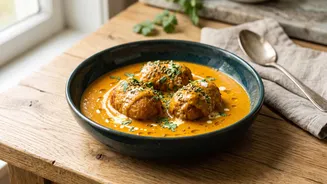
Here is the cardinal rule of Malai Kofta: never boil the koftas in the gravy. This is the most common pitfall that turns perfectly soft koftas into a mushy, broken mess. The koftas are delicate and act like sponges; simmering them will cause them to absorb too much liquid and disintegrate. Instead, the dish should be assembled just before serving. Gently heat the gravy in a serving dish and place the fried koftas into it right before it goes to the table. This ensures they retain their texture and warmth. The cream, or 'malai', is used as a finishing touch. Stir it into the gravy at the very end, over low heat, to prevent it from splitting, or simply drizzle it over the top as a garnish. A final flourish of crushed kasuri methi (dried fenugreek leaves) adds a beautiful aroma that signals a truly authentic dish.