





A Promising Mission Cut Short
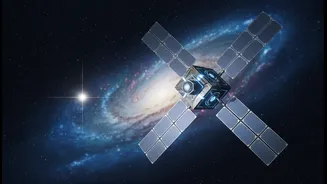
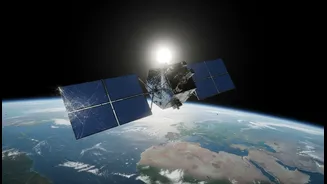
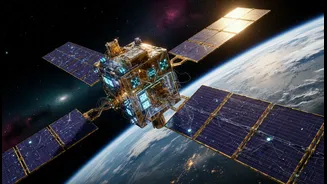
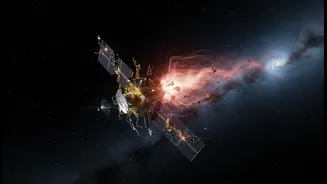
In early July 2026, GalaxEye confirmed it had lost contact with its maiden satellite, known as Mission Drishti. Launched just two months prior on May 3 aboard a SpaceX Falcon 9 rocket, the satellite was in the final stages of its initial setup in orbit.
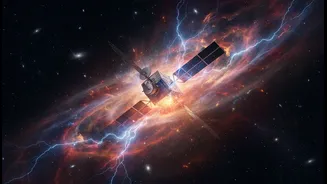
According to the company, the spacecraft encountered an intense geomagnetic solar storm. The resulting radiation likely damaged a critical onboard system, leading to intermittent and then a total loss of communication. While recovery efforts were made, the company acknowledged that the chances of re-establishing contact are low. The loss of what was India's largest privately developed Earth observation satellite marks a significant and public setback for one of the country's most promising space-tech firms.
The Vision Behind Drishti-1
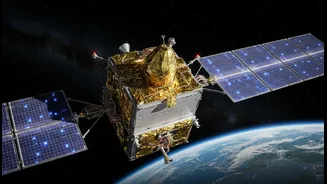
Mission Drishti wasn't just another satellite; it was a technology demonstrator for a concept that could revolutionise Earth observation. Billed as the world's first 'OptoSAR' satellite, it was designed to carry two types of sensors—optical and Synthetic Aperture Radar (SAR)—on a single platform. Think of it like having two different types of vision. Optical sensors are like the human eye, capturing clear, colour images, but they are useless at night or when it's cloudy. SAR, on the other hand, uses radar pulses to peer through clouds, smoke, and darkness, providing data in all weather conditions, day or night. The challenge is that SAR data can be difficult to interpret visually. GalaxEye’s plan was to fuse the data from both sensors to create a single, easy-to-understand, all-weather picture of the Earth’s surface.
Successes Before the Silence
While the mission ended prematurely, GalaxEye insists it was far from a total failure. Before contact was lost, the satellite had successfully completed a majority of its initial on-orbit checklist. This included establishing communication with the ground station in Bengaluru, testing key spacecraft systems, successfully deploying components, and demonstrating the company's in-house mission control capabilities. In a statement, CEO Suyash Singh noted that these early successes validated the core technologies and operational processes the company had developed. These partial wins are critical, as they prove that many of the fundamental designs and systems worked as intended in the harsh environment of space, providing a crucial foundation of knowledge for what comes next.
Finding Strength in Failure
This is where the counter-intuitive argument from the headline comes into play. In the space industry, learning from failure is a time-honoured tradition. According to Singh, the mission provided "invaluable engineering insights that will directly strengthen our future missions." The anomaly has given GalaxEye a real-world, albeit painful, lesson on the impact of extreme space weather—a factor that will now be central to designing more robust systems. Furthermore, the incident has prompted the company to accelerate its plans to bring more of its supply chain and manufacturing processes in-house. This vertical integration will give GalaxEye greater control and visibility over every component, reducing reliance on external vendors and helping to build more resilient spacecraft from the ground up.
The Path Forward for GalaxEye
Despite the loss of Drishti-1, GalaxEye is not scaling back its ambitions. The company has reaffirmed its commitment to its long-term roadmap and has already announced plans for its next chapter. Leveraging the hard-won lessons from its first mission, the team intends to build its next-generation spacecraft with enhanced protections and more internally controlled components. The goal is to launch two new, larger OptoSAR satellites within the next two years. The demand for the unique data that OptoSAR technology promises remains strong, and the company reports that the mission has actually helped strengthen customer engagement. The experience, though costly, has equipped the team with practical knowledge that cannot be gained from simulations alone.