





A Familiar System's New Secret
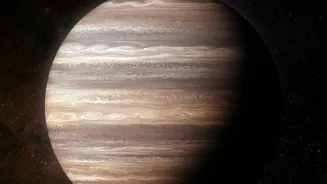
Astronomers have discovered a third giant planet in the Beta Pictoris system, a well-studied collection of worlds located just 63 light-years from Earth. This young system, only about 23 million years old, has long been a natural laboratory for observing
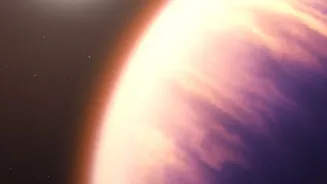
how planets form and evolve. The star was already known to host two massive planets, Beta Pictoris b and c. The newcomer, named Beta Pictoris d, now makes this only the second planetary system where at least three planets have been directly imaged. This latest addition is estimated to be at least twice the mass of Jupiter, making it a true giant. Its discovery adds another fascinating layer to one of the most iconic planetary systems in our galaxy.
How Webb Found the 'Hidden' Planet
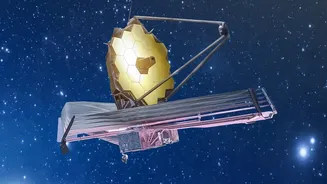
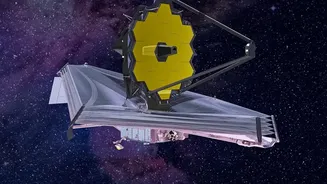
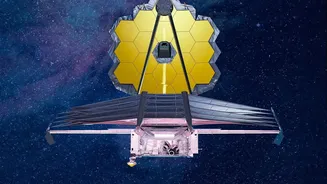
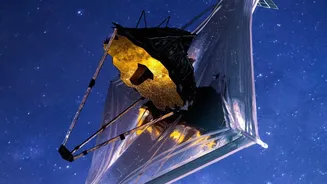
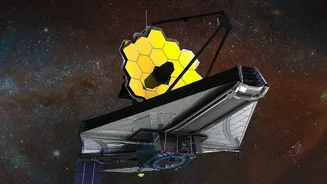
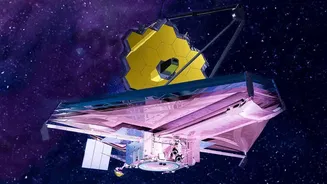
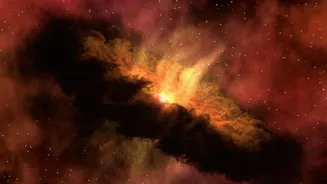
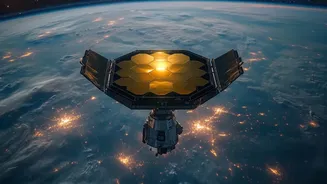
What makes this discovery truly remarkable is how the planet was found. Unlike its siblings, which were identified as bright points of light through traditional imaging, Beta Pictoris d was effectively invisible. It was concealed within the bright, swirling disk of dust and debris that still surrounds the young star. Instead of seeing the planet, the JWST detected its presence by analyzing light from the system. Using its powerful Near-Infrared Spectrograph (NIRSpec), the telescope identified the unique chemical signature of the planet's atmosphere. Specifically, it detected the tell-tale signs of carbon monoxide, water vapor, and methane—a barcode of light that confirmed a massive planet was lurking in the dust. This marks the first time a planet has been found primarily through this spectroscopic method, showcasing a powerful new tool in the search for exoplanets.
A Planet That Puzzles Scientists
Discoveries like Beta Pictoris d are exciting because they often challenge our established theories. The leading model for how giant planets form is called 'core accretion'. This theory suggests that a planet begins as a rocky core that gradually accumulates dust and debris. Once it reaches a certain size, its gravity becomes strong enough to rapidly pull in vast amounts of gas, creating a giant like Jupiter. However, this process is thought to be slow and more efficient closer to a star. Giant planets forming in the far reaches of a young system, like Beta Pictoris d, stretch this model to its limits. The presence of such a massive world in this location suggests that it may have formed through a different, much faster process.
Rewriting the Rules of Planet Formation
One alternative theory that this discovery might support is 'disk instability'. This model proposes that in a young, massive planetary disk, gravity can cause large sections of gas and dust to collapse in on themselves very quickly, forming a giant planet in a fraction of the time required by core accretion. This faster formation pathway could better explain how massive planets can exist so far from their parent star in a system that is still in its infancy. Finding worlds like Beta Pictoris d provides crucial evidence that helps scientists test and refine these competing theories. Each 'impossible' planet found pushes us closer to a complete understanding of the diverse ways worlds can be born across the universe.
The Future of Planet Hunting
This discovery is more than just another tally in the growing catalogue of exoplanets; it represents a technological and strategic breakthrough. By proving that planets can be found by their atmospheric fingerprints alone, the JWST has opened up a new frontier for exploration. This technique will allow astronomers to find worlds in complex, dusty environments where traditional direct imaging fails. It not only helps locate the planet but also provides immediate insights into its atmospheric composition. As the James Webb Space Telescope continues its mission, this method will be crucial for studying the birthplaces of planets and searching for worlds in systems that were previously too difficult to investigate, transforming our ability to map the cosmos.