





A Milestone Measured in Speed
On July 16, 2026, a BE 6 electric SUV rolled off the line at Mahindra & Mahindra's Chakan manufacturing facility, marking the three-millionth vehicle produced at the plant. While the number is impressive, the story lies in the timeline. The first million vehicles
from the Chakan plant, which began operations in 2009, took 107 months to produce. The most recent million, taking the count from two to three million, was achieved in just 27 months. That’s nearly four times faster. This dramatic acceleration isn't a sudden fluke; it's the result of a deliberate, multi-year strategy that has transformed the company from a maker of rugged utility vehicles into a modern automotive powerhouse producing a diverse range of 19 models and over 450 variants.
The Unstoppable SUV Juggernaut
A huge driver of this growth is the phenomenal success of Mahindra's new generation of SUVs. Models like the Thar, XUV700, and the Scorpio-N have reshaped public perception and driven unprecedented demand. These vehicles moved the brand from a purely utilitarian space to an aspirational one, competing on design, technology, and safety with global players. In the 2025 financial year, blockbuster models like the Scorpio, Thar, and XUV700 accounted for a significant portion of total sales, showcasing their market dominance. This surge in popularity created long waiting lists and put immense pressure on Mahindra to scale up production—a challenge the company met head-on.
Manufacturing Gets a Tech Overhaul
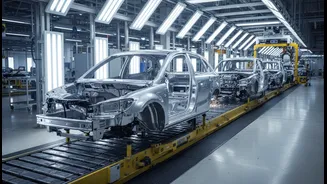
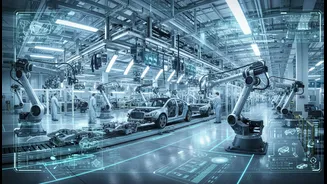
To meet this new demand, Mahindra heavily invested in its manufacturing capabilities, turning its Chakan plant into a state-of-the-art facility. The plant now employs Industry 4.0 technologies, including around 1,500 robots, which have led to over 98% automation in the body shop. Technologies like AI, IoT, and 5G connectivity are used for real-time monitoring and quality control, while seven flexible assembly lines allow the facility to produce both internal combustion engine (ICE) and electric vehicles (EVs) efficiently. This high-tech overhaul enables the plant to operate with greater agility and scale, churning out an average of roughly 37,000 vehicles a month in the recent period, compared to about 9,300 a month during its first-million run.
A Brand Reimagined
The transformation wasn't just on the factory floor. Mahindra executed a masterful brand refresh, introducing the 'Twin Peaks' logo exclusively for its SUV portfolio, starting with the XUV700. This new logo symbolised a shift towards a more modern, sophisticated, and aspirational brand identity. It was a clear signal to the market that Mahindra was no longer just about durability but also about style and cutting-edge technology. This rebranding, combined with a revamped dealership experience, helped attract a new, younger, and more urban customer base that might not have considered a Mahindra vehicle in the past. The strategy worked, aligning the brand's image with its vastly improved product lineup.
Future-Proofing for What’s Next
The rapid production pace is set to continue. Mahindra has been consistently expanding its capacity to meet sustained demand and prepare for new launches, including a robust pipeline of electric vehicles. The choice of the BE 6 electric SUV as the three-millionth vehicle from Chakan was symbolic, highlighting the plant's dual role in producing both traditional and electric vehicles. With further investments planned, including a new integrated manufacturing facility in Nagpur, Mahindra is not just clearing its current backlog but is laying the groundwork to scale to around one million units annually by the end of the decade.