









The Greatest Show in the Heavens
For a growing number of Indians, an eclipse is a blockbuster astronomical event. The days leading up to it are filled with a familiar buzz. Social media feeds light up with advice on making pinhole projectors, lists of the best viewing spots, and links
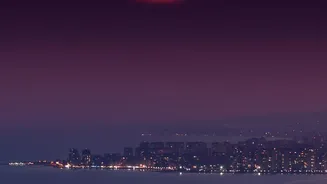
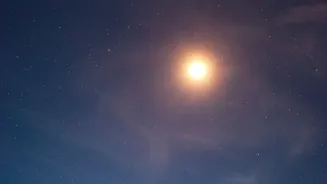
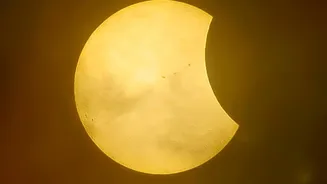
to NASA’s live stream. As the spectacle unfolds, hashtags trend, and phones are pointed skyward to capture the perfect crescent sun or blood moon, often with dramatic background music for a cinematic reel. Science communicators and planetariums work overtime, explaining the orbital mechanics with accessible graphics and debunking myths with patient resolve. It is a shared, public celebration of science and the universe's grandeur—a moment of collective wonder broadcast, liked, and shared millions of times over. This perspective treats the eclipse as a beautiful, natural phenomenon to be witnessed and documented.
The Quiet Observance of Sutak
In millions of other Indian households, the arrival of an eclipse signals a very different response. Here, it is not a time for celebration but for caution. This is the period of 'Sutak,' a traditional belief in a time of ritual impurity that begins hours before the eclipse is even visible. For a solar eclipse, Sutak starts 12 hours prior; for a lunar one, it is nine. The underlying belief, rooted in Puranic mythology, is that the demon Rahu is attempting to 'swallow' the sun or moon, releasing negative energies into the atmosphere. During Sutak, life slows down. Temple doors are often closed, cooking and eating are avoided, and pregnant women are advised to stay indoors to protect the unborn child from these perceived malefic effects. Instead of looking up at the sky, the focus turns to spiritual practices like chanting mantras, which are believed to have multiplied potency during the grahan, or eclipse.
A House Divided, a Culture United
The most fascinating part of this story is not the opposition of these two views, but their coexistence. Often, they live under the same roof. A teenager might be setting up a telescope on the balcony while their grandmother places blades of tulsi or kusha grass in water containers and on food items to 'protect' them from impurity. One family member might be sharing memes about eclipse superstitions while another is quietly fasting until the eclipse has passed and a ritual bath has been taken. This duality is not necessarily a source of conflict. Instead, it’s a reflection of modern Indian identity, where deep-rooted cultural memory and scientific curiosity are in constant, overlapping dialogue. The rituals are followed, sometimes out of deep faith, and other times out of respect for elders or a 'just-in-case' logic that sees no harm in observing tradition.
The Modern Middle Path
Rather than one view replacing the other, a hybrid approach is emerging. Many urban Indians now walk a middle path. They might enthusiastically follow the science, share pictures, and understand the astronomical facts, but still adhere to certain aspects of Sutak. They may avoid eating a heavy meal during the eclipse, aligning with Ayurvedic principles that suggest digestion is weaker, or take a shower afterward as a simple act of purification. This blend shows that for many, it isn't a stark choice between science and superstition. It is about navigating a world where both hold relevance. The rules of Sutak are followed, but only if the eclipse is visible in one's own region—a nod to practicality that has always been part of the tradition. While the total solar eclipse of August 12, 2026, was a major global event, it wasn't visible in India, so no Sutak was observed. However, the total lunar eclipse on March 3 of the same year was visible, prompting many to follow the rituals.