




The Ghost in the Machine
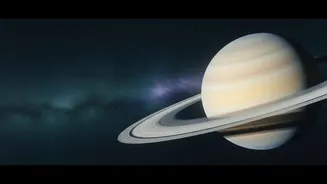
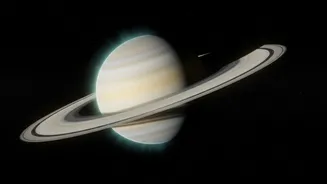
The Cassini spacecraft took its final plunge into Saturn's atmosphere on September 15, 2017, but its ghost continues to haunt scientists in the best possible way. The mission, a collaboration between NASA, the European Space Agency (ESA), and the Italian
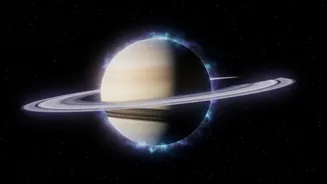
Space Agency (ASI), spent 13 years collecting an unprecedented amount of data. Now, even years later, researchers are still unearthing major discoveries from this treasure trove. The latest revelation comes from a deep dive into the behaviour of Saturn's magnetosphere, the vast magnetic bubble that surrounds the planet. This new analysis, published in scientific journals, confirms what astronomers have long suspected: the rules that govern giant planets are very different from those on Earth.
Your Planetary Force Field
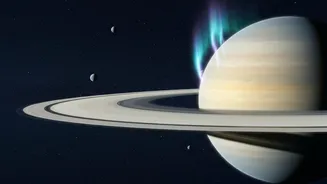
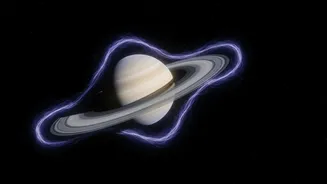
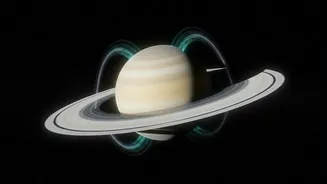
So, what is a magnetosphere? Think of it as a planet's invisible force field. Generated deep within a planet's core, this magnetic field extends into space, creating a protective bubble that shields the planet from the solar wind—a constant stream of charged particles blasted out by the Sun. On Earth, this shield is vital for life, preventing the solar wind from stripping away our atmosphere. The interaction between these particles and our magnetosphere is what creates the beautiful aurorae at the poles. On Earth and Jupiter, the magnetic field is also noticeably tilted relative to the planet's spin axis. This tilt is a key feature that helps scientists track the planet's rotation and understand its internal dynamo.
Saturn's Lopsided Shield
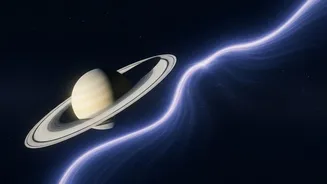
This is where Saturn throws a wrench in the works. The new analysis, which focused on a region called the magnetic cusp, found something strange. The cusp is a funnel-shaped opening near the poles where solar wind particles can leak into the atmosphere. On Earth, this opening is located on the 'noon' side of the planet, directly facing the Sun. But recent studies show that Saturn’s cusp is significantly skewed, dragged far over to the 'afternoon' or dusk side. Instead of being at the 12 o'clock position, it's often found between 1 and 3 o'clock, and sometimes even later. This confirms that Saturn’s magnetosphere isn’t a neat, symmetrical bubble like Earth’s, but a lopsided, distorted shield.
The Spin and the Spray
What causes this distortion? Researchers point to two main culprits: Saturn's incredibly fast rotation and its active moons. A day on Saturn is just 10.7 hours long, and this rapid spin essentially flings the magnetic field outwards. More importantly, this isn't an empty system. The icy moon Enceladus is constantly spraying huge plumes of water vapor into space, feeding a massive cloud of plasma (ionized gas) into Saturn's magnetosphere. This heavy soup of particles is picked up by the magnetic field and dragged around by the planet's fast rotation, overpowering the influence of the solar wind and twisting the entire magnetic shield out of shape. This is a fundamental difference from Earth, where the solar wind is the dominant force shaping our magnetosphere.
Why This Cosmic Puzzle Matters
Understanding this cosmic oddity is more than just a matter of planetary curiosity. It fundamentally changes our models of how giant planets work, which has implications for studying similar planets outside our solar system, known as exoplanets. This new information provides a better map of Saturn's space environment, which is crucial for planning future missions, especially those aiming to investigate the potentially habitable ocean world of Enceladus. By studying a system so different from our own, scientists can refine the universal laws of physics that govern planetary formation and magnetic fields. Saturn's strange, skewed shield serves as a powerful reminder that our solar system is filled with unique worlds, each with its own secrets waiting to be discovered, often long after the initial exploration is over.