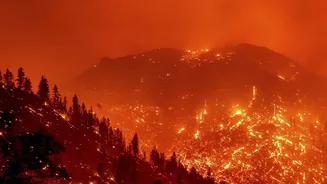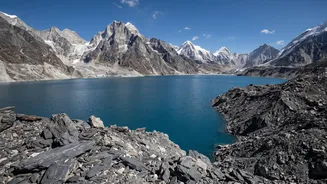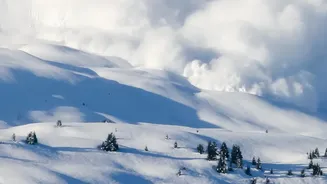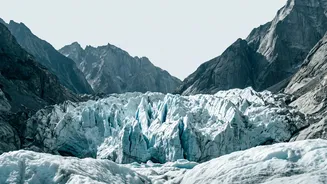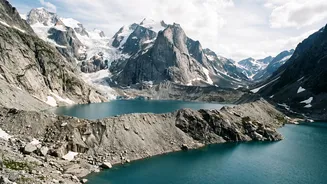




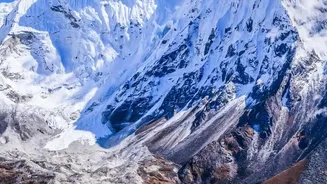
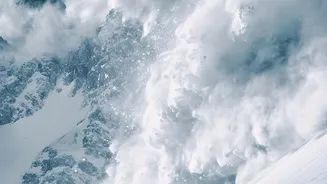
The majestic Himalayas, long a symbol of permanence, are becoming a landscape of alarming instability. Scientists are issuing urgent warnings that in this rapidly warming region, a single disaster no longer ends when the shaking or flooding stops.
From Single Event to a Domino Effect
When
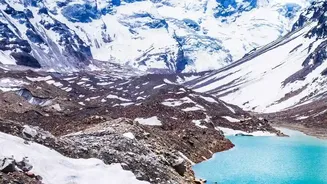
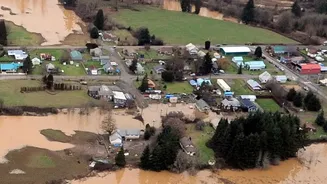
we think of a natural disaster, we often picture a singular event: an earthquake, a flood, or a landslide. But in the high mountains of the Hindu Kush Himalaya, researchers are observing a more complex and dangerous phenomenon known as 'cascading risks'. This is where one hazard triggers a chain reaction of subsequent events, amplifying the overall destruction. A warming climate is intensifying these interconnected disasters. For example, a glacial lake outburst flood (GLOF) is no longer just a flood; it can destabilise entire valleys. The initial torrent of water and debris can erode mountain slopes, causing massive landslides. This debris can then block a river downstream, forming a new, unstable dam and creating a fresh flood threat for communities further down. This domino effect is what makes recent mountain events so uniquely perilous.
A Chain Reaction in Action
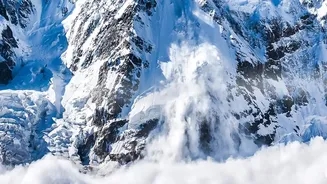
The catastrophic Rasuwa disaster in August 2026, which straddled the Nepal-China border, provides a devastating real-world example of a cascading event. It wasn't a typical GLOF. Instead, it began with a massive collapse of rock and glacier ice from a mountain peak, likely destabilised by warming temperatures and thawing permafrost. This avalanche of an estimated 132 million cubic metres of material slammed into a river valley, transforming into a high-speed torrent of water, rock, and mud. The surge destroyed bridges, highways, and hydropower plants, demonstrating how a single high-altitude failure can cripple critical infrastructure and isolate countless people in minutes. Events like the 2021 Chamoli disaster in India and the 2023 Sikkim GLOF show similar patterns, where one hazard is just the beginning of the story.
The Human Cost on the Frontline
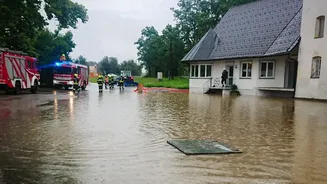
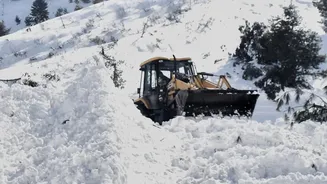
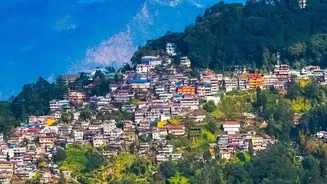
For the more than 50 million people living in the Indian Himalayan region, these cascading risks represent a constant and growing threat. Disasters are wiping out homes, farms, and livelihoods. In states like Uttarakhand and Himachal Pradesh, communities are living with the knowledge that the mountains around them are becoming less stable. The destruction of roads and bridges can cut villages off from emergency aid, medical care, and essential supplies for weeks. This forces many to migrate, leaving their ancestral homes behind. The impact falls disproportionately on women, who often stay in the villages to manage agriculture and care for children, making them more exposed to the direct consequences of these environmental shocks.
Ripples Reaching the Plains
The consequences of Himalayan instability are not confined to the mountains. The region is the 'Third Pole', home to the largest concentration of ice outside the polar regions, feeding ten major river systems, including the Ganga, Indus, and Brahmaputra. These rivers support the lives and livelihoods of nearly two billion people downstream. As glaciers retreat and weather patterns become more erratic, the flow of this vital freshwater is threatened. Increased sediment from landslides chokes rivers and damages hydropower infrastructure, impacting energy security. Unpredictable water supply threatens food security for hundreds of millions in the plains who depend on Himalayan rivers for agriculture. What happens in the Himalayas directly affects the water and economic security of the entire nation.
A Call for a New Approach
Researchers and institutions like the International Centre for Integrated Mountain Development (ICIMOD) stress that traditional, single-hazard management is no longer sufficient. Responding to these complex threats requires a 'cascade-aware' approach. This means developing early warning systems that monitor multiple factors at once—not just rainfall, but also glacier stability, ground movement, and river blockages. Following recent disasters, experts have called for stronger regional cooperation, as these events often cross international borders. The focus is shifting towards integrated solutions: better monitoring of high-risk slopes using satellite technology, risk-informed infrastructure planning, and empowering local communities with the knowledge to prepare for compound events.