






A Groundbreaking First Act at Pluto
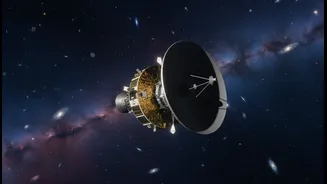
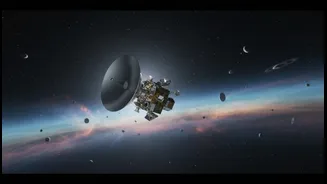
Launched in 2006, New Horizons was designed with one primary goal: to conduct humanity's first-ever close-up study of Pluto. For nine years, it journeyed across the solar system. When it finally arrived in July 2015, the images it sent back were breathtaking.
They transformed Pluto from a distant, blurry dot into a complex world with towering ice mountains, vast nitrogen glaciers, and a surprisingly thin blue atmosphere. The mission was a spectacular success, revealing that the dwarf planet is geologically active and may even harbor a liquid water ocean beneath its frozen crust. This single flyby fundamentally changed our understanding of the distant, icy bodies in our solar system's third zone, the Kuiper Belt.
An Encore Beyond Imagination
But the mission's planners had always hoped for more. After the Pluto encounter, NASA approved an extended mission. Using the Hubble Space Telescope, scientists identified a new target: a small Kuiper Belt Object (KBO) then known as 2014 MU69. On January 1, 2019, New Horizons flew past this object, now officially named Arrokoth, which means "sky" in the Powhatan/Algonquian language. This was the most distant object ever explored by a spacecraft. The encounter revealed Arrokoth to be a 'contact binary'—two distinct, flattened lobes gently fused together, looking something like a reddish snowman. This provided invaluable clues about how planetesimals, the building blocks of planets, form in the early solar system. It was the probe's first major reinvention.
A New Career as a Deep-Space Observatory
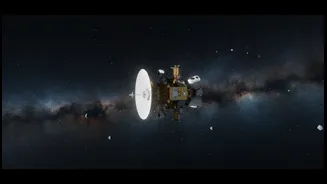
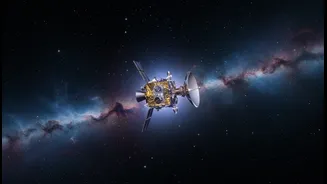
So what comes after visiting the most distant object ever? This is where New Horizons' second reinvention begins. Rather than aiming for another flyby, the spacecraft has now transitioned into a new role: a unique deep-space observatory. In early July 2026, the spacecraft woke up from a 321-day hibernation period, its longest yet, in good health at a distance of about 9.5 billion kilometers (5.9 billion miles) from Earth. In this new phase, its primary job isn't to visit a single target but to study the environment of the outer solar system itself. Its instruments continue to measure the solar wind, the charged particles streaming from the sun, and the dust environment of the Kuiper Belt. These long-term observations from a vantage point no other active mission has provide crucial data on the boundary where our sun's influence wanes and interstellar space begins.
The Ultimate Return on Investment
From a business and technology perspective, extending the life of missions like New Horizons represents an incredible return on investment. Launching a new deep-space probe is a monumental undertaking, costing hundreds of millions, if not billions, of dollars. By repurposing an existing, healthy spacecraft, NASA can continue to gather groundbreaking science for a fraction of the cost. Hibernation modes are used during long cruise periods to save resources and extend the spacecraft's operational life. New Horizons has now hibernated 23 times since 2007. Its instruments remain as capable as they were at launch, and the mission is currently funded to continue through the late 2020s as it travels through the Kuiper Belt. This strategy of maximizing existing assets provides a powerful model for future exploration.
What Does the Future Hold?
While New Horizons is now primarily an observatory, the team behind it hasn't given up on one more close encounter. Scientists are using powerful new observatories, like the Vera C. Rubin Observatory, to search for a potential third KBO that the spacecraft could reach with its remaining fuel. According to mission leader Alan Stern, finding such a target is challenging, but the search continues. Even if another flyby doesn't materialize, the probe will continue its journey outward, sending back data about the heliosphere. It is expected to leave the Kuiper Belt entirely around 2028 or 2029. The spacecraft has enough power to potentially keep operating into the 2030s, following in the footsteps of the legendary Voyager probes as it heads toward interstellar space.