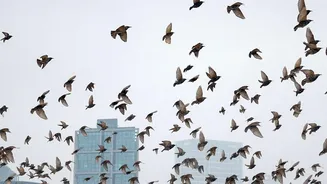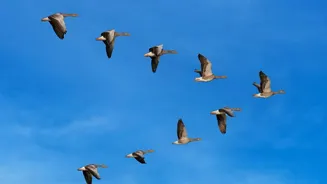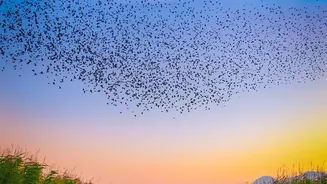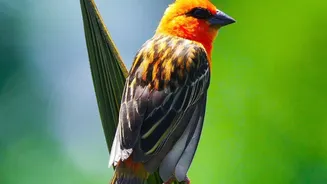






A Silent Global Crisis
The first-ever 'State of the World’s Migratory Species' report, released by the United Nations, paints a sobering picture of the health of our planet's great travellers. The findings are alarming: 44 percent of listed migratory species are showing population
decreases. For birds specifically, a comprehensive July 2026 study published in Nature Reviews Biodiversity found that 51% of migratory bird species are declining. Furthermore, the UN report highlights that more than one in five (22%) of these species are threatened with extinction. This isn't a distant problem; it's a direct reflection of a worldwide environmental crisis that has severe implications for ecosystems that both wildlife and humans depend on.
The Human-Driven Threats
The two greatest threats identified in the UN report are unambiguous: overexploitation and habitat loss from human activity. In India, these global pressures are intensely local. Wetlands, crucial stopover sites for birds on the Central Asian Flyway, are vanishing due to construction and changes in agricultural patterns. The shift from traditional crops like lentils to sugarcane, for example, has been linked to a steep decline in cranes visiting Central and South India. Pollution is another major factor; pesticides used in farming poison water sources, while light and noise pollution can disorient birds during their long-distance flights. Compounding these issues is climate change, which acts as a threat multiplier, altering migration timings and even skewing the sex ratios of species like sea turtles.
Why Their Decline Affects Us
The disappearance of migratory birds is more than an aesthetic loss; it's a critical blow to the health of our environment. These birds are vital bio-indicators, meaning their population health reflects the condition of their habitats. They are essential for ecosystem functions, such as pollinating plants, controlling agricultural pests, and dispersing seeds. A decline in insect-eating birds, for instance, can have cascading effects on agriculture and forest health. The silence of birds like the Siberian Crane, which has not been seen in its historic wintering ground in Bharatpur since 2002, is a stark warning about the degradation of the very ecosystems that provide us with clean water, air, and resources.
India's Role and Responsibility
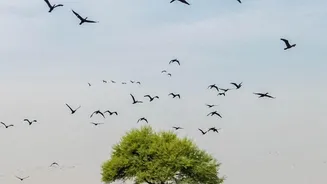
India sits at the heart of the Central Asian Flyway, a critical superhighway for migratory birds travelling between the Arctic and the Indian Ocean. This position gives the nation a special responsibility. Fortunately, conservation efforts are underway. The National Action Plan for Conservation of Migratory Birds aims to protect habitats and halt population decline. In places like Nagaland, community-led initiatives have transformed areas once known for mass hunting of Amur falcons into conservation success stories, proving that change is possible. Likewise, citizen-science platforms like eBird India are empowering ordinary people to contribute valuable data for monitoring and protecting these birds.
A Path Forward is Possible
While the statistics are grim, the reports emphasize that recovery is possible with coordinated action. The key lies in protecting and connecting habitats across their entire migratory routes, from breeding grounds in the north to wintering sites in the south. This requires international cooperation, as these birds know no borders. For India, this means strengthening the protection of its wetlands, reducing pollution, and promoting sustainable agriculture that works with nature, not against it. As some conservation efforts show, when communities and governments work together, it is possible to reverse these declines and ensure the skies don't fall silent.