







The Old Model: A Place for Everything
For over a century, the dominant idea in neuroscience has been the concept of the 'engram' or 'memory trace'. This theory proposed that each memory—whether it's your grandmother's face or the capital of France—is physically stored in a specific and dedicated
group of neurons. Think of it like a single book on a specific shelf in a vast library. The hippocampus, a seahorse-shaped region deep in the brain, was identified as a crucial hub for creating and indexing these memories. According to this model, to recall a memory, the brain simply had to activate the right set of neurons, the engram, to bring the information back to consciousness. This idea was supported by experiments showing that stimulating specific brain cells could trigger the recall of certain memories. It provided a tidy and logical framework: a specific experience creates a specific, localized physical change in the brain.
What New Research Reveals
Recent studies are painting a much more complex and distributed picture. Instead of one memory living in one location, evidence now strongly suggests that a single memory is stored across a wide network of connected brain regions. One major finding from March 2026, for instance, showed that the brain actually stores the 'what' of a memory (a person or object) separately from the 'where' and 'when' (the context). These two sets of information are kept in different groups of neurons and only become linked together during the act of remembering. This challenges the idea of a single, unified engram. Other studies have found that memories aren't static files but are dynamic and can change each time they are retrieved. The process of recalling a memory seems to be an act of reconstruction, combining information from the original event with our general knowledge and current situation.
From Storage to Reconstruction
This marks a fundamental shift in thinking. The old model viewed memory as a process of storage and retrieval, like a computer's hard drive. The emerging view is that memory is an active process of reconstruction. It’s less like pulling a file and more like baking a cake from a recipe, where the ingredients (the distributed memory fragments) are brought together and combined to create the final product. This explains why our memories can sometimes be unreliable or change over time. Each time you recall an event, you are essentially rebuilding it, and details can be subtly altered, added, or lost in the process. Some neuroscientists even propose that forgetting isn't a passive failure but an active process, where the brain intentionally clears out non-essential information to make room for what matters. This dynamic, distributed network seems to make memory more resilient; if one part of the brain is damaged, the memory might still be recoverable from other connected areas.
Why This New Understanding Matters
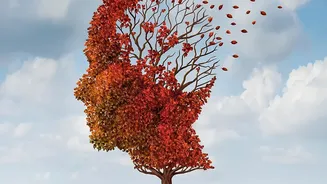
This evolving understanding of memory has profound implications. For one, it could revolutionize how we approach neurological disorders. In conditions like Alzheimer's disease, memory loss may not be a case of memories being erased, but rather the brain losing its ability to reconstruct them. Research has already shown that strengthening connections between memory cells in mouse models of Alzheimer's can help restore access to seemingly lost memories. This new perspective could lead to treatments that focus on improving the brain's retrieval and reconstruction mechanisms rather than just trying to prevent cell death. Furthermore, it has implications for the development of artificial intelligence, suggesting that creating truly human-like AI may require moving beyond simple data storage to building systems that can dynamically reconstruct information. Ultimately, this research forces us to reconsider the very nature of our personal histories, which may be less like a fixed recording and more like a story we are constantly retelling.