

The Anatomy of Jalebi Batter
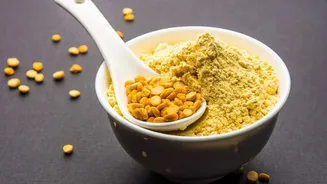
Jalebi, a beloved sweet across the Indian subcontinent, begins its life as a humble batter. The primary ingredient is typically maida (all-purpose flour), which provides the structural foundation. Sometimes, a small amount of besan (gram flour) or cornflour
is added to enhance crispiness. This mixture is combined with water and, crucially, a fermenting agent. While modern, instant versions use baking powder, the traditional and most flavourful jalebis rely on a period of fermentation, often kickstarted with curd (yogurt) or simply by allowing natural yeasts in the air to work their magic over several hours.
The Science of Fermentation
Fermentation is the key step that transforms the simple batter into something capable of greatness. When the batter is left to rest in a warm place, microorganisms like yeast and lactic acid bacteria get to work. These tiny helpers consume the carbohydrates and sugars in the flour, producing two important byproducts: lactic acid and carbon dioxide gas. The lactic acid is what gives traditional jalebi its characteristic mild, tangy flavour, a perfect counterpoint to the sweet syrup it will later absorb. But it's the carbon dioxide that is the true architect of the jalebi's structure.
Creating the Perfect Consistency
The carbon dioxide produced during fermentation creates thousands of tiny gas bubbles throughout the batter. These bubbles, trapped within the gluten network of the flour, have a profound effect on the batter's physical properties. The batter becomes lighter, more airy, and develops a specific viscosity—what chefs call a 'flowing consistency'. It needs to be thick enough to hold a shape, yet fluid enough to be piped smoothly from a bottle or cloth. If the batter is too thin, the jalebi will be flat and won't form proper spirals; too thick, and it will be clumpy and difficult to pipe. Fermentation naturally helps achieve this ideal, slightly elastic state.
The Moment of Truth in Hot Oil
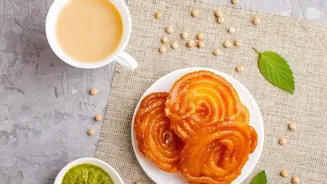
This is where the magic happens. As the carefully fermented batter is piped in concentric circles into a wide pan of hot oil or ghee, several things occur at once. The hot oil immediately begins to cook the outside of the batter stream, setting its shape. Simultaneously, the intense heat causes the trapped carbon dioxide bubbles to rapidly expand. This expansion puffs up the jalebi from the inside, creating a light, porous, and web-like interior while the outside fries to a crisp. This internal structure would be impossible to achieve without the gas created during fermentation. An unfermented batter would simply result in a denser, less intricate sweet.
A Structure Built for Syrup
The final journey for the hot, crispy spirals is a dip into warm sugar syrup, often flavoured with cardamom or saffron. The porous, airy structure created by the fermentation and frying process is perfectly designed for this step. It acts like a sponge, quickly soaking up the sweet syrup. This is what creates jalebi's signature textural contrast: a crispy, crunchy exterior that gives way to a chewy, syrup-filled centre. So the next time you bite into that tangled, golden sweet, you can appreciate the hidden science that made it all possible, from the patient wait of fermentation to the final, spectacular puff in the pan.