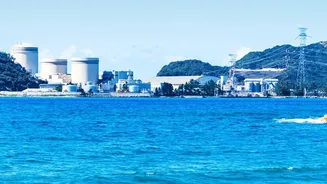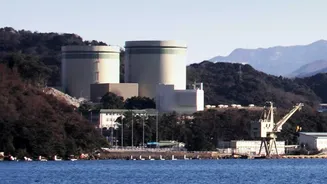





As the world grapples with rising energy demands and climate change, nuclear power is back in the spotlight. The International Atomic Energy Agency (IAEA) offers a glimpse into its potential future, but the outlook is far from certain.
The Global Nuclear Watchdog's Forecast
The IAEA, the world's
central intergovernmental forum for scientific and technical co-operation in the nuclear field, regularly publishes long-term projections for nuclear energy. For the sixth year in a row, the agency has increased its forecast, signalling growing global momentum for this clean and reliable energy source. Its latest report, extended for the first time to 2060, outlines two distinct potential futures for nuclear power, known as the 'low' and 'high' cases. These are not predictions, but plausible scenarios based on different assumptions about technology, markets, and policy decisions made around the world.
Two Futures: A Tale of High and Low Scenarios
The difference between the two scenarios is significant. The low case assumes current market trends and policies continue with few major changes. In this version of the future, global nuclear capacity would nearly double by 2060, rising from about 377 gigawatts (GW(e)) in 2025 to 696 GW(e). The high case, however, is far more ambitious. It assumes governments actively pursue policies supporting nuclear energy to meet climate and energy security goals. In this scenario, capacity could more than triple to 1,284 GW(e) by 2060. This optimistic outlook is considered technically feasible but requires overcoming several major hurdles.
The Conditions That Shape the Future
Achieving the high-case scenario is conditional on several key factors. First and foremost is government policy and public support. Clear, long-term commitments are needed to attract the massive investment required for new plants. Access to financing remains a primary challenge for these capital-intensive projects. Another crucial condition is industrial readiness to build new reactors on time and within budget, which has been a persistent issue for many projects in the West. Furthermore, the future will also depend on extending the operational lifetimes of the existing global fleet, as two-thirds of reactors are over 30 years old. Without these extensions, even building new reactors might not be enough to reach the high-case target.
The Rise of Small Modular Reactors
A game changer element in the IAEA's projections is the growing role of Small Modular Reactors (SMRs). These are advanced reactors, generally 300 MWe or less, that can be factory built and transported for installation. Their smaller size and modular nature could make them cheaper, faster to build, and suitable for a wider range of applications, including powering remote communities or industrial heat processes. In the IAEA's high case scenario, SMRs are projected to account for 28% of all new nuclear capacity added by 2060, a significant jump from previous estimates. This suggests a major shift in nuclear technology, moving from massive, bespoke projects to more flexible and scalable solutions.
What This Means for India
These global trends are highly relevant for India, which has its own massive energy needs and ambitious nuclear power goals. The Indian government has set a target of reaching 100 GW of nuclear capacity by 2047, a huge leap from its current capacity of under 10 GW. To achieve this, India is pursuing a two pronged strategy: building large conventional reactors and developing its own SMRs, including the 200 MWe Bharat Small Modular Reactor. The challenges highlighted by the IAEA—financing, policy stability, and industrial capacity—are the very same hurdles India must overcome. Success in SMR technology globally could provide a major boost to India's plans, potentially making it easier to decarbonise its grid and provide reliable power for its growing economy.