
A Cosmic Ballet Frozen in Time
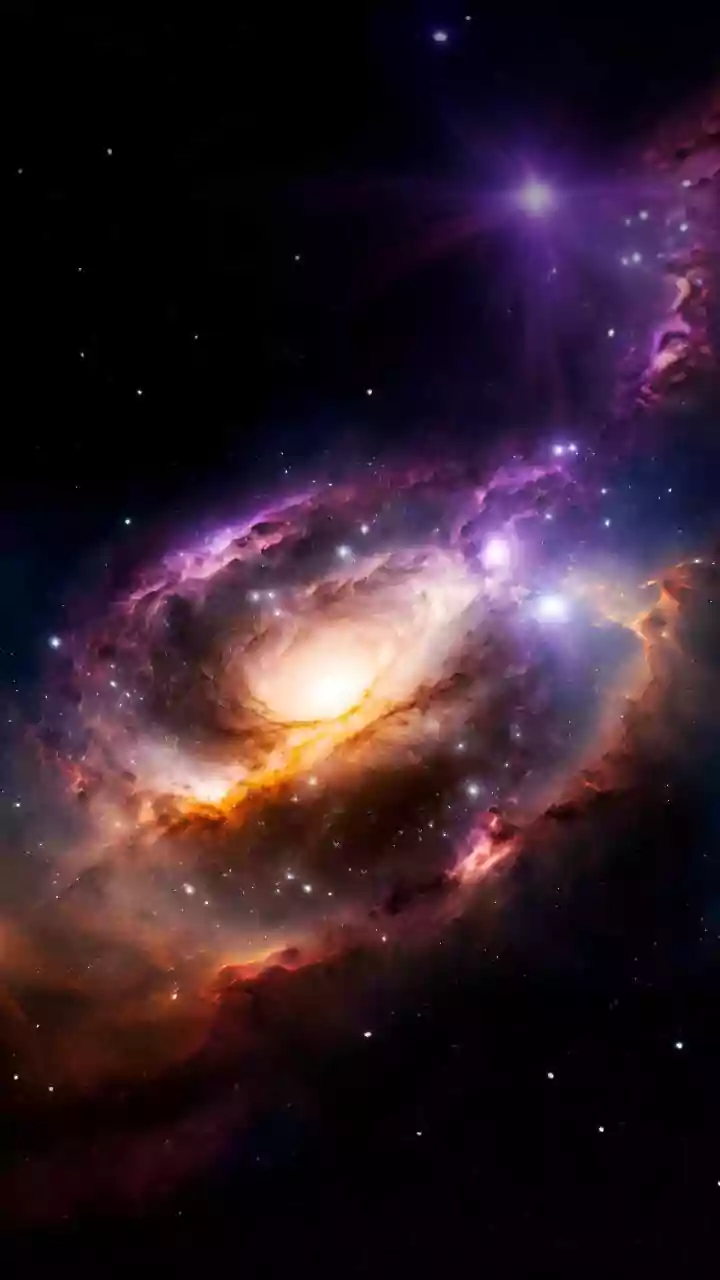
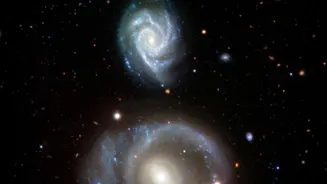
The image, captured by the venerable Hubble Space Telescope, showcases a remarkable cosmic collection. Known collectively as NGC 7764A, this system is located approximately 425 million light-years away in the constellation Phoenix. What makes this image so
captivating is the sheer activity it displays. In the upper portion, two galaxies are clearly interacting, their structures warped and drawn out into long streams of gas and stars. They appear almost fluid, as if caught mid-twirl in a celestial ballet. A third, seemingly separate galaxy, sits nearby. While its connection to the other two isn't definitively proven, its relative proximity suggests it may be a player in this complex gravitational drama. This single snapshot provides a glimpse into the various stages of galactic interaction that shape the universe over billions of years.
The Creative Force of Galactic Collisions
When we hear the term 'galaxy collision', it's easy to imagine a destructive cosmic car crash. The reality, however, is far more creative and less about destruction. Galaxies are mostly empty space, so when they interact, their individual stars rarely, if ever, collide. Instead, the powerful force of gravity orchestrates the encounter. As galaxies draw each other closer, their mutual gravitational pull distorts their shapes, creating spectacular tidal tails and bridges of stars and gas flung across thousands of light-years. These interactions are not brief encounters; a full merger can take half a billion years to complete. Far from being an end, these mergers are a primary mechanism for galaxy growth. Indeed, most large galaxies, including our own Milky Way, have grown to their current size through a series of such mergers over cosmic history.
A Burst of New Stars
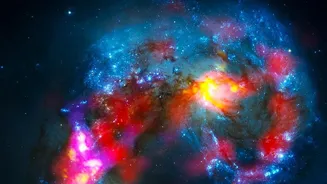
One of the most significant consequences of a galactic get-together is the triggering of intense bursts of star formation. The gravitational tug-of-war compresses vast clouds of interstellar gas within the galaxies. This compression creates dense pockets that collapse under their own gravity, providing the perfect nurseries for new stars to be born. This process, known as a 'starburst', can cause a galaxy to produce new stars at a rate hundreds of times greater than normal. These regions of furious star birth are often visible as bright, blue-tinged areas in Hubble images, as the most massive and newly formed stars shine intensely in blue light. This process is a key part of galactic evolution, enriching galaxies with new generations of stars and heavier elements.
A Glimpse into Our Own Future
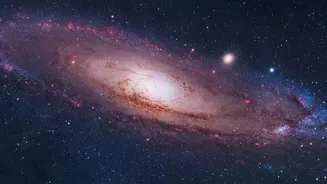
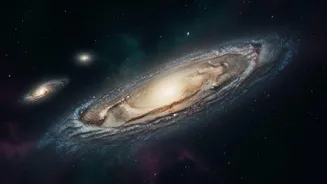
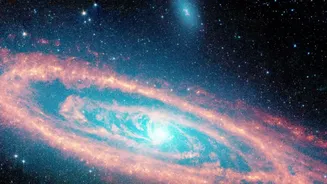
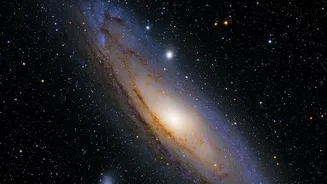
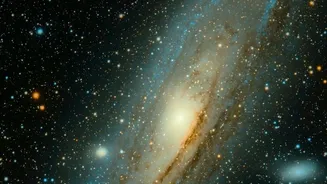
Observing distant galactic mergers like NGC 7764A is more than just an academic exercise; it's like watching a preview of our own cosmic destiny. The Milky Way is not stationary in the universe; we are on a collision course with our nearest large neighbour, the Andromeda Galaxy. In about 4.5 billion years, these two massive spiral galaxies will begin a long process of merging, an event that will reshape our corner of the cosmos. While the event is too far in the future to concern us, studying systems like NGC 7764A allows astronomers to model and predict what might happen. The night sky will become a spectacular, changing canvas as Andromeda grows larger, and eventually, the two galaxies will coalesce into a single, larger elliptical galaxy. Images of these distant dances give us a tangible connection to the dynamic and ever-evolving nature of the universe.