





The Anatomy of a Blockage
The story of this disaster begins high in the mountains. The Himalayas are geologically young and active, with steep, unstable slopes. During heavy monsoon rains or due to seismic tremors, massive landslides can occur. Entire hillsides of rock, soil,
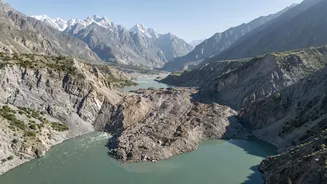
and debris can slide down into a narrow river valley. When the volume of this debris is large enough, it can completely block the river's flow, creating what is known as a landslide dam. These dams are not engineered structures; they are unstable, temporary piles of loose material. The recent tragic event on August 26, 2026, in Nepal appears to have started with a massive collapse of rock and glacial ice, which then blocked the Lhende Khola river.
The Dangerous Lake
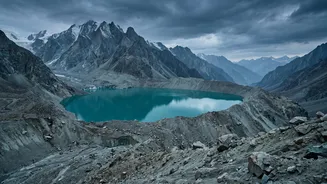
Once the river is blocked, the water has nowhere to go. It begins to back up behind the newly formed landslide dam, creating a large, deep, and rapidly growing lake. The pressure on the unstable dam increases with every passing minute as the lake fills. This process can happen alarmingly fast. In some cases, these impoundment lakes can stretch for kilometres, submerging upstream villages and infrastructure. The dam itself is a ticking time bomb. Made of uncemented rock and soil, it is highly susceptible to erosion and failure. In fact, studies show that roughly half of all landslide dams fail within ten days of forming.
When the Dam Breaks
The failure of a landslide dam is a catastrophic event. It typically happens in one of two ways. The most common is overtopping, where the rising lake water spills over the top of the dam. This flow of water quickly erodes the loose material, cutting a deeper and deeper channel until the dam gives way in a sudden, violent breach. Alternatively, the immense water pressure can cause a structural failure from within, a process known as piping, where water seeps through the dam, weakening it until it collapses. The result of either scenario is a Landslide Dam Outburst Flood (LDOF), a sudden release of the entire lake's volume.
A Wall of Water and Debris
The flood that results is not just water. It is a terrifying, high-velocity slurry of water, mud, sediment, and massive boulders that scours the valley as it rushes downstream. This debris flow has immense destructive power, far exceeding a normal monsoon flood. It can destroy concrete bridges, sweep away multi-storey buildings, and completely alter the landscape. The August 2026 disaster saw the Trishuli river rise by nine meters in just 30 minutes at a point 50 km downstream, overwhelming monitoring stations before they could even send a warning. This wall of water and debris can travel for hundreds of kilometres, as seen when debris from events in Tibet reached northern India.
A Deadlier Cousin: The GLOF
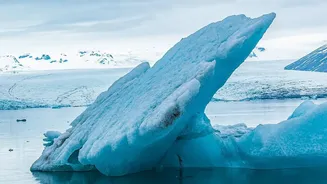
A related, and often more dangerous, phenomenon is a Glacial Lake Outburst Flood (GLOF). As climate change warms the Himalayas, glaciers are melting at an accelerated rate. This meltwater forms lakes, often dammed by moraines—ridges of loose rock and debris left behind by a retreating glacier. These moraine dams are notoriously unstable. A GLOF occurs when this natural dam fails, triggered by an ice avalanche into the lake, an earthquake, or simply the pressure of the growing lake. The August 2026 Nepal disaster was initiated by a collapse of glacial ice and rock, combining the features of a landslide and a glacial event.
Why Nepal's Floods Are India's Concern
These disasters do not respect international borders. Major river systems like the Kosi and the Gandak (called Trishuli in Nepal) originate in the high Himalayas of Nepal and flow down into the densely populated plains of Bihar and Uttar Pradesh. The Kosi, known as the "Sorrow of Bihar," has a long history of devastating floods, often linked to events upstream in Nepal. A breach of an embankment on the Kosi in Nepal in 2008 displaced millions in Bihar. The August 2026 flood, which began on the Nepal-China border, had victims whose bodies were carried as far as Uttar Pradesh, highlighting the direct and tragic cross-border impact.