





The Digital Deluge and Its Power Problem
India is in the midst of an unprecedented data centre boom. Driven by a surge in cloud computing, the adoption of Artificial Intelligence, and the country's rapid digitisation, the demand for data storage and processing is skyrocketing. Projections show
India’s data centre capacity, which crossed 1.5 GW in 2025, is set to more than double in the coming years. This expansion, however, comes with a colossal energy appetite. Data centres are among the most power-intensive structures in the world, requiring a constant, 24/7 supply of electricity to run servers and, crucially, to keep them cool. Cooling systems alone can account for 30-40% of a facility's total energy use. As capacity expands, this could strain local grids and significantly increase the nation's carbon footprint, with some estimates suggesting data centres could consume up to 6% of India's electricity by 2030.
The Green Imperative and Client Demand
The push towards renewables is not just an environmental afterthought; it is a core business imperative. A primary driver is the demand from global clients. Hyperscale companies like Amazon, Google, and Microsoft, which lease vast amounts of space in Indian data centres, have their own aggressive global climate commitments. They require their digital infrastructure to be powered by clean energy, making sustainability a non-negotiable criterion for selecting a data centre partner. Furthermore, there is growing pressure on all large corporations to improve their Environmental, Social, and Governance (ESG) performance. For Indian operators like AdaniConneX, CtrlS, and NTT, demonstrating a commitment to 100% renewable energy is a powerful market differentiator and a key part of their growth strategy.
The Economics of a Green Kilowatt
Beyond sustainability goals, the shift to renewables is underpinned by powerful economic incentives. The cost of solar and wind power in India has fallen dramatically, often making it cheaper than power from the fossil-fuel-dominated grid. Data centre operators are increasingly signing long-term Power Purchase Agreements (PPAs) with renewable energy producers. These agreements, typically spanning 15-25 years, lock in electricity prices, shielding companies from the volatility of traditional energy markets and providing long-term cost certainty. For example, AdaniConneX recently secured a massive $1.44 billion in sustainability-linked financing to fund its green data centre expansion. By building their own dedicated solar parks or signing large-scale PPAs, operators can secure reliable, low-cost power that is also green.
How It Works in Practice
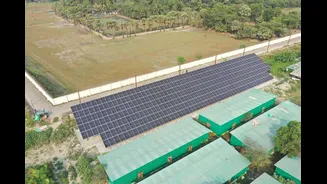
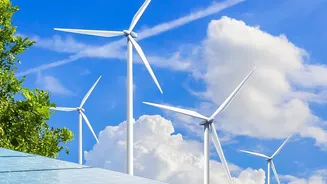
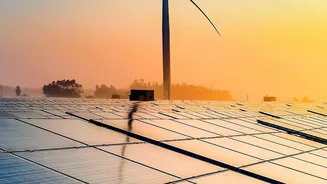
Data centre operators in India are employing a mix of strategies to achieve their green energy goals. The most common approach is the off-site PPA, where a data centre in Mumbai might be powered by a solar farm in Rajasthan. Some companies, like CtrlS, are building their own captive solar plants to power their facilities directly. Another strategy involves integrating renewable sources into the building's design itself; one CtrlS campus in Chennai features solar panels integrated into its facade. These approaches are often supplemented with the purchase of Renewable Energy Certificates (RECs) to offset any remaining grid-power usage. The goal is to create a portfolio of clean energy sources—combining solar, wind, and battery storage—to ensure a reliable, round-the-clock supply of green power.
Challenges on the Path to 100% Green
The journey to fully green data centres is not without obstacles. The primary challenge is the intermittent nature of solar and wind power. The sun doesn't always shine, and the wind doesn't always blow, but data centres need power every second of every day. This necessitates expensive battery storage solutions or continued reliance on the grid (and its diesel generator backups) for reliability. Furthermore, clustering data centres in major hubs like Mumbai and Chennai puts immense pressure on local power transmission infrastructure, which may not be equipped to handle such concentrated loads. There is also the significant land requirement for building utility-scale solar and wind farms, along with navigating the complex regulatory landscape for energy transmission across states.