




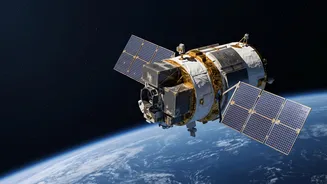
A Daring Rescue Cut Short
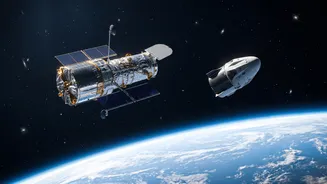
In a significant setback for satellite servicing, NASA and its commercial partner, Katalyst Space, officially abandoned the attempt to rescue the Swift Observatory on August 19, 2026. The ambitious plan involved sending a robotic servicing spacecraft,
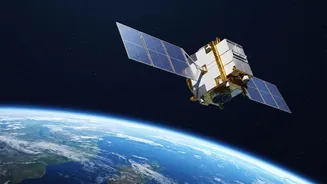
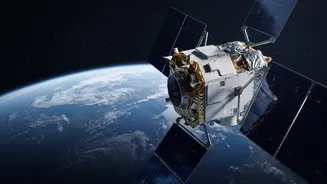
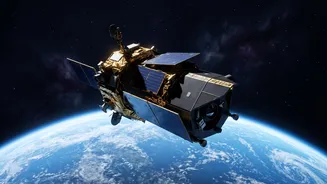
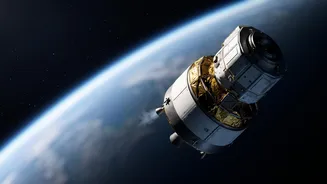
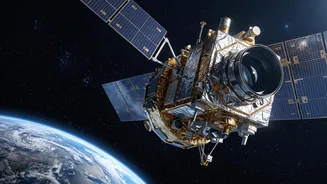
named LINK, to physically grab the 21-year-old telescope and boost it into a higher orbit. This would have counteracted its orbital decay and extended its scientific mission for several more years. The rescue was deemed necessary after increased solar activity in recent years expanded Earth's atmosphere, creating more drag on Swift and accelerating its descent far quicker than anticipated. Unfortunately, the LINK spacecraft itself suffered critical malfunctions after its launch in July 2026, including the failure of two of its three reaction wheels, which are essential for controlling its orientation. This caused the servicer to enter an uncontrollable spin, making a safe rendezvous and capture impossible.
An Observatory on Borrowed Time
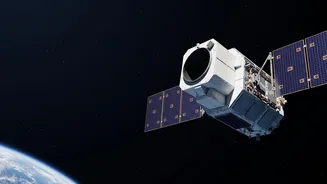
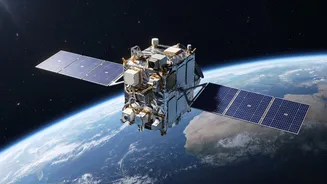
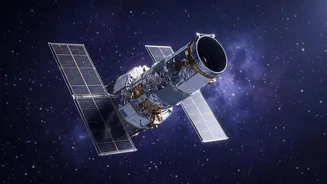
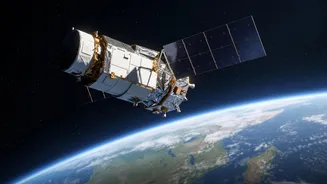
Launched in 2004, the Neil Gehrels Swift Observatory has been one of NASA's most productive astrophysical missions. Its primary purpose is to study gamma-ray bursts (GRBs), the most powerful explosions in the universe, which are believed to be associated with the birth of black holes or the collision of neutron stars. The observatory's key feature is its ability to 'swiftly' pivot and focus its multiple instruments—spanning gamma-ray, X-ray, ultraviolet, and optical wavelengths—on a newly detected burst, often within a minute. This rapid response allows scientists to capture the fleeting afterglow of these cataclysmic events, providing invaluable data about the early universe. Having long outlived its initial two-year mission, the observatory's orbit has been slowly decaying. Without the boost from the LINK mission, NASA anticipates Swift will likely re-enter Earth's atmosphere and burn up later in 2026.
Why The Rescue Was a High-Risk Gamble
The entire rescue operation was a high-risk, high-reward endeavor from the start. The Swift telescope was never designed to be serviced or refueled in space, meaning it lacks any standard docking ports or grappling fixtures. The LINK spacecraft was designed to use a novel gripper system to attach itself to the observatory. The mission, contracted to Katalyst for $30 million, was fast-tracked to give Swift a fighting chance before its orbit decayed too much. Despite the failure of the primary objective, NASA officials have emphasized that the attempt was worthwhile. It pushed the boundaries of commercial satellite servicing and autonomous rendezvous technology. Even in failure, the mission provided crucial data, as LINK will still conduct proximity operations to test its navigation systems near Swift, gathering information that will inform future, more successful servicing missions.
A Legacy of Discovery Continues to the End
While the headline reads as a failure, the reality is more nuanced. The cancellation of the rescue mission does not mean Swift's work is over. The observatory remains functional and will continue its scientific operations for as long as its altitude allows. This is a testament to the durability of the spacecraft's original design and the ingenuity of its operators. In fact, the observatory has already overcome previous technical challenges, including the failure of gyroscopes which required a software patch in early 2024 to allow it to continue pointing accurately. Until its final moments, Swift will keep its eyes on the sky, hunting for cosmic explosions and adding to a legacy that includes the detection of over 1,000 gamma-ray bursts. The mission may not have the ending that was hoped for, but its scientific contributions, and the lessons learned from the daring attempt to save it, will endure.