





The Seven Lakes That Quench a City's Thirst
The journey of Mumbai's water begins far from the city's bustling streets, in seven massive reservoirs nestled in the Western Ghats. These are the city's lifelines: Bhatsa, Upper Vaitarna, Middle Vaitarna, Modak Sagar, Tansa, Vihar, and Tulsi. Bhatsa is
the largest contributor, providing nearly half of the total supply. Vihar and Tulsi, the oldest and smallest, are located within city limits inside the Sanjay Gandhi National Park, while the others are situated up to 175 kilometres away in Thane, Palghar, and Nashik districts. These lakes are entirely dependent on the annual monsoon rains to be replenished, making the city's water security a subject of intense focus every year.
An Engineering Marvel Beneath Your Feet
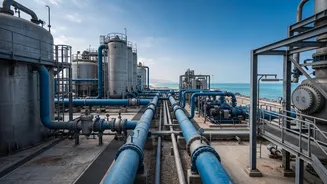
Getting water from these distant lakes to a citizen's tap is a monumental feat of engineering. The Brihanmumbai Municipal Corporation (BMC) manages a vast and intricate system to transport this raw water. The network includes hundreds of kilometres of massive pipelines and underground tunnels that carry water to treatment plants. At facilities like the one in Bhandup, the water is treated to make it potable before being pumped into the city's distribution network. This treated water then travels through another web of main lines and smaller pipes to reach homes, businesses, and industries across the metropolis, a silent, vital flow that keeps Mumbai running.
Demand Versus Supply: The Daily Deficit
While the supply of around 4,100 million litres per day (MLD) sounds immense, it consistently falls short of Mumbai's actual needs. The city's daily requirement is estimated to be between 4,600 and 4,665 MLD, creating a daily shortfall of over 500 MLD. This gap is driven by a massive population, including millions of daily commuters, and widespread commercial and industrial activity. When monsoon rains are deficient and the lakes don't fill to capacity, this deficit becomes more acute, often forcing the BMC to impose water cuts across the city to conserve the available stock until the next rainy season.
The Persistent Problem of 'Non-Revenue Water'
Exacerbating the supply deficit is a major issue known as 'non-revenue water' (NRW). This is treated water that is pumped into the system but never reaches a paying consumer, and therefore generates no revenue for the BMC. According to recent civic body data, a shocking 34% of Mumbai's water supply is currently lost as NRW. This amounts to over 1,300 MLD vanishing each day. While some of this is due to leakages in the city's vast and ageing pipeline network, a significant portion is also lost to unauthorised connections and water theft. Officials believe that reducing NRW by just 10% could save around 400 MLD, an amount nearly equivalent to the entire output of a new dam project.
Securing Mumbai's Water Future
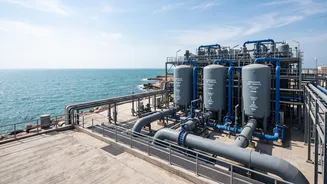
To address the ever-widening gap between demand and supply, which is projected to reach a staggering 2,324 MLD by 2041, the BMC is pursuing several long-term projects. Key among these are new dams, such as the Gargai project, which is under construction and expected to add 440 MLD by 2029. Other ambitious schemes include the Pinjal and the Damanganga-Pinjal river link projects, though these are in earlier stages of planning. To create a source independent of the monsoon, the city is also moving forward with plans for desalination plants, with work beginning on a 200 MLD facility at Manori. These efforts, combined with programmes to fix leakages and revive local wells for non-potable use, represent a multi-pronged strategy to quench the megacity's growing thirst.