








A Broad Economic Offensive
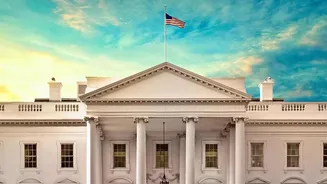
On August 24, 2026, the U.S. Treasury Department announced a major escalation of its economic pressure on Iran. Led by Treasury Secretary Scott Bessent, the new measures are designed to close loopholes that Washington says Iran uses to fund its military
activities and evade existing restrictions. The campaign adds five critical sectors of the Iranian economy to a sanctions target list: digital assets, aviation, technology, gold, and shipping. This move grants the Treasury's Office of Foreign Assets Control (OFAC) the authority to sanction any person or entity determined to be operating within these sectors of Iran's economy, regardless of their location. The initiative was described as a "warning shot," giving other nations a "defined timeline" to wind down any business in these areas before potential penalties are imposed.
Why Target Digital Assets?
The focus on digital assets highlights a modern front in the long-running economic standoff. U.S. officials state that Iran has increasingly turned to cryptocurrencies to bypass the traditional banking system, launder funds, and finance the Islamic Revolutionary Guard Corps (IRGC). Prior to the main announcement, in early August 2026, the Treasury had already sanctioned crypto exchanges Shelbit and Aban Tether, accusing them of processing millions of dollars for sanctioned Iranian entities and the IRGC. The new determination expands this effort, signaling a systematic campaign to dismantle the digital financial rails that Tehran allegedly relies on to sustain its economy under pressure and support activities Washington deems destabilizing.
The Strategic Focus on Aviation
The aviation sector has long been a point of contention. The new measures build on existing sanctions against Iranian airlines, particularly Mahan Air. U.S. authorities have labeled Mahan Air the "airline of choice" for the IRGC, accusing it of transporting weapons, military personnel, and drone components. In the months leading up to this broader campaign, the U.S. sanctioned several international companies in China, India, and Russia for providing services to Mahan Air. By officially designating the entire aviation sector as a target, Washington aims to further isolate Iran's carriers and disrupt the logistical networks supporting its military and its allies. The stated goal is to make it prohibitively risky for any global company to engage with Iran's airlines.
The Stated Goals and Broader Strategy
Treasury Secretary Bessent described the plan as an effort to achieve the "economic asphyxiation" of the Iranian regime. The administration's stated goal is to force an "endgame" by cutting off all financial lifelines, thereby pressuring Tehran to alter its foreign and military policies. The U.S. says the revenue from these sectors is used to procure missile technology, conduct cyber operations, and generate oil revenue outside of official channels. As part of the rollout, it was announced that U.S. President Donald Trump was personally contacting world leaders to demand they cease their economic interactions with Iran. In a related move, the Treasury also suspended general licenses that had previously allowed certain personal remittance payments to Iran, further tightening financial flows.
Potential Impact and Global Reaction
The long-term effects of "Operation Economic Outcast" will depend on international compliance. The strategy relies heavily on the threat of secondary sanctions, where the U.S. can cut off foreign firms from its own financial system if they do business with sanctioned Iranian sectors. While some analysts see this as a significant escalation, Iranian officials have publicly dismissed the threats as "big talk." They claim that Iran's trade partners do not take the statements seriously and will continue their engagement. This sets the stage for a new phase of economic friction, testing the reach of American financial power and the resilience of Iran's efforts to forge an alternative economic path.