




A Tale of Two Blooms
For those following the botanical calendar, the maths is simple: the last major Neelakurinji bloom in Munnar’s famous Eravikulam National Park was in 2018. The next is therefore due in 2030. Yet, as of September 2026, the hills are alive with colour.
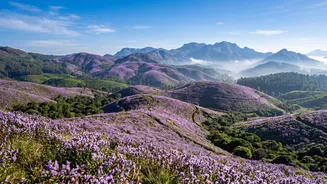
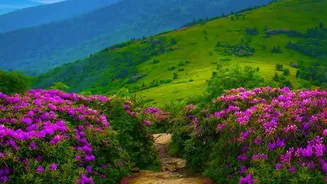
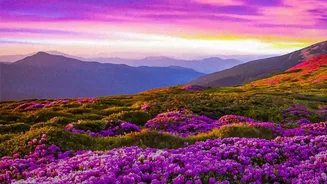
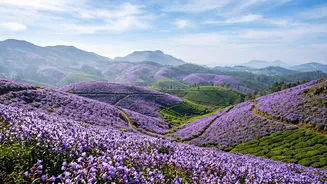
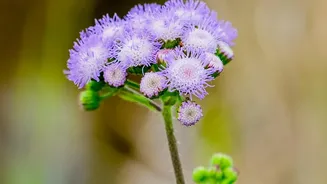
The latest evidence confirms that a spectacular flowering is indeed underway, particularly across the slopes of Chokramudi and the Mattupetty-Korandakkad hills. This isn't an early arrival of the 2030 event. Instead, it’s a crucial reminder that not all Neelakurinji plants are on the same clock. Munnar is home to different populations of the Strobilanthes kunthiana shrub, and they follow their own distinct 12-year cycles. The population currently in bloom last flowered in 2014, making 2026 its scheduled year to transform the landscape. So, the social media feeds filled with purple vistas are correct, but they tell only part of the story.
The Science of a Synchronised Cycle
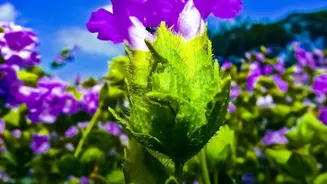
The phenomenon that makes Neelakurinji so special is known as gregarious or mass flowering. The plant itself is what botanists call a plietesial—a species that flowers at long intervals. For over a decade, the shrub remains in a vegetative state, quietly growing and storing energy in the high-altitude shola grasslands of the Western Ghats. Then, in a synchronised burst, an entire population flowers simultaneously, reproduces by setting seed, and then dies. This one-and-done life strategy, known as semelparity, is a marvel of evolutionary biology. While the exact trigger for this 12-year internal clock remains a subject of scientific study, its reliability is remarkable. The name 'Nilgiri', or Blue Mountains, is itself believed to be a reference to the breathtaking colour these flowers lend to the hills. The Paliyan tribal community has historically even used the 12-year cycle to calculate their age.
Where to Witness the 2026 Bloom
For travellers and nature lovers hoping to see the flowers this season, the key locations are Chokramudi and the Korandakkad hills near Mattupetty. Reports from early September confirm that substantial stretches of these hills are covered in the signature purple-blue hue. It is crucial for visitors to understand that the famous Eravikulam National Park, site of the 2018 bloom, is not the centre of the current flowering. Authorities have made arrangements for tourists at designated viewing areas, and KSRTC is even running special bus services from Munnar town to help manage the influx. However, a word of caution: some flowering areas are on private property, so access may be restricted. It's also a protected species; plucking the flowers or damaging the plants can lead to hefty fines and even imprisonment.
Conservation in the Spotlight
This year's bloom, happening largely outside the protected zone of a national park, has highlighted the urgent need for conservation. The shola-grassland ecosystem that Neelakurinji depends on is fragile and shrinking due to the expansion of plantations and other human activities. In a significant development, Strobilanthes kunthiana was assessed for the IUCN Red List for the first time in 2024 and classified as a threatened, 'Vulnerable' species. The mass flowering is a vital part of the local ecology, attracting honeybees and butterflies in large numbers, and the honey produced during this period is highly valued. The current spectacle, expected to last through September, serves as a powerful reminder of what's at stake. It is not just a tourist attraction but the culmination of a 12-year life cycle essential to the health of the Western Ghats.