









A Persistent Eye in the Sky
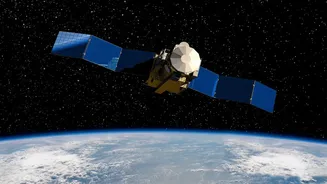
What makes EOS-05 a game-changer is its orbit. Most of India’s Earth observation satellites circle the planet in a Low-Earth Orbit, capturing high-resolution images but only when they pass over a specific area. EOS-05, however, operates from a much higher
geosynchronous orbit, positioned around 36,000 km above the Earth. This allows it to continuously monitor the entire Indian subcontinent and surrounding regions. Instead of waiting for a satellite’s next pass, which could take a day, agencies can now get near-real-time imagery of a developing situation. This capability for “persistent monitoring” provides a constant stream of data, fundamentally changing how India can observe its own territory.
Transforming Disaster Management
For a country prone to natural disasters, this new capability is invaluable. ISRO's satellite network already plays a crucial role in providing early warnings and damage assessment for cyclones, floods, and landslides. With EOS-05, the response can be even faster and more effective. The ability to frequently image a large geographical area means authorities can track the rapid development of cyclones or the spread of forest fires in near-real-time. This allows for more targeted evacuation orders and helps relief and rescue teams understand the on-ground situation with greater clarity, ultimately saving lives and resources.
A Guardian for the Economy and Environment
The applications of Earth observation satellites extend deep into the national economy. Data from space is used for everything from urban planning and mineral prospecting to managing water resources. EOS-05 will supplement this by providing continuous data on agricultural health, water stress, and snow cover. This has a direct impact on farmers, who rely on such information for better crop management. Furthermore, it is a powerful tool for monitoring India's vast 'Blue Economy.' The satellite can help identify potential fishing zones, track algal blooms, and monitor coastal ecosystems, supporting the sustainable use of ocean resources that contribute significantly to India's GDP.
Enhancing National Security
While its primary applications are civilian, the strategic value of a satellite like EOS-05 is undeniable. Officials have noted the dual-use nature of such advanced Earth observation technology. The ability to persistently monitor large areas provides enhanced situational awareness along India's borders and maritime approaches. It can help detect changes in terrain or unusual activity, offering more reaction time for security forces. This 'eye in the sky' complements existing surveillance systems and serves as a critical asset for monitoring regions of strategic interest without being officially designated a military satellite.
A Boost for ISRO's Ambitions
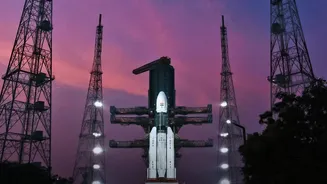
The successful launch is also a significant morale booster for the Indian Space Research Organisation (ISRO). It demonstrates mastery over the complex GSLV rocket and its cryogenic upper stage, especially following an unsuccessful mission with a similar satellite in 2021. By placing a sophisticated imaging satellite into a geosynchronous orbit, ISRO has added a new and powerful dimension to what is already one of the world's largest constellations of civilian remote sensing satellites. This achievement not only enhances India's self-reliance in space but also strengthens its position as a major player in the global space community, capable of developing critical technologies for national development and security.