







A Terminal in a Garden
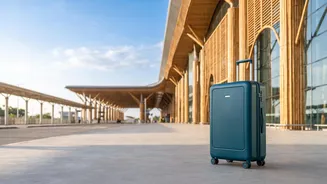
The most striking feature of Bengaluru's Terminal 2 (T2) is its core design philosophy: a 'terminal in a garden'. Instead of sterile corridors and artificial lighting, the terminal immerses passengers in nature. Designed by Skidmore, Owings & Merrill
(SOM), the 255,000-square-metre space is a tribute to Bengaluru's legacy as the 'Garden City'. Passengers walk through spaces flanked by green walls, past indoor waterfalls, and under hanging gardens suspended from the ceiling. The extensive use of natural materials like engineered bamboo, brick, and granite enhances this connection to nature. This biophilic approach is not just for aesthetics; it is designed to create a calming and tranquil atmosphere, fundamentally altering the typically hectic passenger experience. With over 600,000 plants, including rare and endangered species, the terminal functions as a living ecosystem.
Technology for a Seamless Journey
Beyond its green credentials, the airport is a hub of technological innovation aimed at making the passenger journey as smooth as possible. At the forefront is the implementation of Digi Yatra, a facial recognition system that offers a paperless, contactless experience. After a one-time registration, passengers can move from the entrance through security checks and to the boarding gate using biometric authentication, significantly reducing queues and processing times. Bengaluru's airport has been a pioneer in this initiative, being one of the first to roll out the system and recently conducting successful trials for international travel in collaboration with the International Air Transport Association (IATA). This positions BLR Airport as a leader in creating a fully digital travel ecosystem where the passenger is in control.
Sustainability at its Core
The commitment to a green experience goes deeper than just the visible gardens. T2 has been recognised as the largest terminal in the world to be pre-certified with a Platinum LEED rating by the US Green Building Council. The facility is designed to run entirely on renewable energy, leveraging extensive solar power systems. It also features sophisticated water conservation strategies, including harvesting rainwater to irrigate its vast plant life and for other uses like cooling. The materials used in construction were chosen for their sustainable properties, such as locally sourced stone and bamboo, which is a rapidly renewable resource. This holistic approach ensures that the airport not only feels green but operates with a minimal environmental footprint.
A New Benchmark for Airports
The result of this fusion of nature, technology, and sustainability is a long list of accolades. T2 is the first and only airport terminal in India to receive a 5-star rating from Skytrax, a global benchmark for airport excellence. It has also been recognised by UNESCO's Prix Versailles as one of the 'world's most beautiful airports', receiving a special prize for its interior design. These awards, along with consistent recognition for customer experience and safety, underscore the success of its vision. By doubling the airport's capacity to handle millions more passengers annually, T2 is not just an expansion but a re-imagination of what an airport can be: a calming, engaging, and culturally relevant public space.