





1. Sweet Potatoes
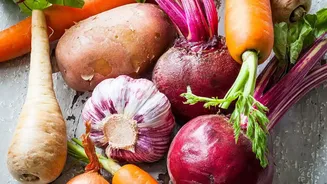
Far more than just a healthier alternative to the standard potato, the sweet potato is a culinary powerhouse. Its natural sweetness and creamy texture make it suitable for both savoury and sweet dishes year-round. During colder months, they are perfect
when roasted, mashed, or blended into a hearty soup with warming spices. Come summer, try grilling slices for a smoky side dish or incorporating them into vibrant salads and even burritos. Their ability to be baked, fried, steamed, or pureed makes them one of the most adaptable ingredients you can have on hand, working well in everything from breakfast hash to pies and casseroles.
2. Carrots
Often taken for granted, the humble carrot is a champion of versatility. Eaten raw, they provide a sweet, crunchy element to salads and slaws or serve as a simple snack. Cooking unlocks even more possibilities. Roasting carrots brings out their natural sugars, making them a delicious side dish when glazed with honey or seasoned with herbs. They form the flavour base for countless soups, stews, and stocks. In warmer weather, try them pickled for a zesty kick or grated into a fresh carrot salad. And let's not forget their role in baking, where their moisture and sweetness are essential for classics like carrot cake. With so many applications, from appetisers to desserts, carrots earn their place as an all-season essential.
3. Beetroot
With its vibrant colour and deep, earthy flavour, beetroot is a fantastic way to add excitement to your meals. It's equally delicious served hot or cold, making it a true year-round vegetable. In winter, roasted beetroot pairs beautifully with feta cheese in a warm salad or can be blended into a comforting soup. For summer, it can be served as a chilled soup, grated raw into slaws for a crunchy texture, or boiled and tossed in a simple vinaigrette. Indian cuisine features it in warm preparations like poriyal, a lightly spiced stir-fry. Whether boiled, roasted, or pickled, its sweet and earthy notes can transform a simple dish into something special.
4. Parsnips
Related to the carrot, the parsnip offers a sweeter, nuttier, and more complex flavour. While famously delicious when roasted alongside a Sunday dinner, its uses extend far beyond that single application. Parsnips make a fantastic addition to winter soups and stews, providing a creamy texture and sweet depth. They can also be boiled and mashed, either on their own or mixed with potatoes for a more flavourful puree. In a more creative twist, they can be used to make fritters (latkes), grated into curries, or even baked into cakes and puddings for a moist, spiced dessert. Their unique taste makes them an excellent ingredient for elevating everyday meals.
5. Celeriac (Celery Root)
Don't be intimidated by its gnarled appearance; celeriac, or celery root, is a wonderfully versatile and sophisticated vegetable. It has a subtle, nutty taste reminiscent of celery and parsley. Celeriac can be eaten raw, most famously in a classic French remoulade—a slaw made with a creamy mustard dressing. When cooked, it becomes tender and its flavour mellows. It's excellent when roasted, either in chunks or whole, and can be boiled and mashed to create a delicious, low-carb alternative to mashed potatoes. It also adds a wonderful, aromatic depth to soups, stews, and gratins. Learning to use celeriac is an easy way to add a gourmet touch to your home cooking.