




The Great Viscosity Myth
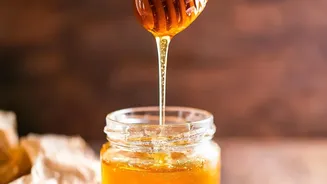
One of the most enduring beliefs about honey is that thicker is better. We assume a dense, slow-pouring consistency means the honey is pure and concentrated. However, this is a misleading assumption. The thickness, or viscosity, of honey is determined
by several factors, including its specific floral source and the temperature at which it's stored. Honey made from certain nectars is naturally runnier than others, even when it is 100% pure and raw. Conversely, sophisticated adulterants like rice syrup can be engineered to be incredibly thick, easily mimicking the texture of high-quality honey. Cold weather will also naturally thicken any honey, while warmer temperatures will make it more fluid. Therefore, judging a jar by its sluggish pour is an unreliable test that overlooks the nuances of nature and the cleverness of modern food fraud.
The Rise of 'Designer' Syrups
Honey adulteration has evolved far beyond simply adding sugar and water. The most significant threat to honey purity today comes from 'designer syrups' made from rice, wheat, or beets. These C3 plant-based syrups are chemically engineered to have a sugar profile that is nearly identical to real honey. This allows them to pass the older, more common C4 sugar tests that were designed to detect adulterants like corn syrup (a C4 plant). A 2020 investigation in India by the Centre for Science and Environment (CSE) revealed this very issue, finding that many major brands passed standard FSSAI tests but were found to be adulterated with sugar syrup when subjected to more advanced Nuclear Magnetic Resonance (NMR) testing. This makes visual inspection and simple taste tests almost useless for detecting modern adulteration.
Home Tests: Fun but Flawed
The internet is filled with simple 'kitchen tests' to check for honey purity. The water test, where a spoonful of pure honey supposedly sinks as a solid lump in a glass of water, is a popular one. Others include the flame test (a matchstick dipped in pure honey should light) and the thumb test (a drop of pure honey shouldn't spread quickly). While these tests are based on the principle that pure honey has low moisture content and high density, they are not foolproof. A high-quality, pure honey will likely 'pass' these tests, but so might a honey adulterated with a high-density, specially formulated rice syrup. These tests can help you spot crudely diluted products, but they cannot give you a definitive answer about sophisticated adulterants.
Crystallisation: A Good Sign, Not a Flaw
Many consumers mistakenly believe that honey that has turned grainy or solid has gone bad or is of poor quality. In reality, crystallization is one of the best indicators of authentic, raw honey. This natural process occurs because honey is a supersaturated solution of glucose and fructose. Over time, the glucose separates from the water, forming tiny crystals. The rate of crystallization depends on the honey's specific floral source and its glucose-to-fructose ratio. Some pure honeys crystallize within weeks, while others can remain liquid for much longer. Heavily processed or adulterated honey often remains syrupy indefinitely because the pollen and other fine particles that act as catalysts for crystallization have been filtered out, or because added syrups prevent the process entirely.
Your Best Defence: Smart Shopping
Since home tests are unreliable and visual cues like thickness are misleading, the most powerful tool you have is knowledge. The only definitive way to verify purity is through advanced laboratory analysis like NMR testing. For the everyday consumer, this means putting your trust in the source. Start by reading the label carefully. Be wary of vague terms like 'honey blend' or 'product of multiple countries'. Look for brand transparency and certifications. Buying directly from local, reputable beekeepers is often your safest bet, as you can ask them about their practices directly. While FSSAI has updated its standards to tackle modern adulteration, choosing a trustworthy producer remains the consumer's most effective strategy.