



1. Mehrangarh Fort, Jodhpur
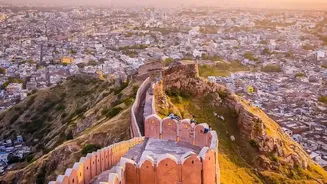
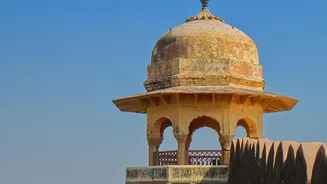
Rising from a 400-foot cliff, Mehrangarh Fort dominates the Jodhpur skyline, a colossal structure that Rudyard Kipling described as the work of Titans. Its architecture is a powerful statement of Rajput strength, with seven massive gates and intricately
carved palaces within its walls. Inside, the Moti Mahal (Pearl Palace) and Sheesh Mahal (Mirror Palace) showcase delicate craftsmanship with latticed windows and ornate decorations. The true reward, however, is the view from its ramparts. From here, you are treated to a breathtaking panorama of Jodhpur's old city, a sea of blue houses spreading out below that gives the city its famous nickname.
2. Kumbhalgarh Fort, Rajasthan
Famous for its staggering 36-kilometre-long wall, often called the Great Wall of India, Kumbhalgarh is a UNESCO World Heritage site set amidst the Aravalli Hills. The fort's architecture is a masterclass in defensive design, built to be impregnable as it straddles 13 hill peaks. Inside the massive fortifications lie over 360 temples, palaces, and gardens. The highlight for view-seekers is the Badal Mahal, or Palace of Clouds, situated at the fort's highest point. From here, the panoramic views of the rugged Aravalli mountain range are truly spectacular, offering a sense of immense scale and isolation.
3. Jaisalmer Fort, Jaisalmer
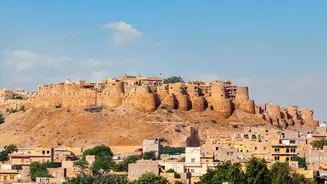
Unlike any other fort, Jaisalmer Fort is a living monument where a significant portion of the old city's population still resides within its walls. Known as Sonar Quila or the Golden Fort, its massive yellow sandstone walls appear to merge with the Thar Desert, glowing with a honey-gold hue at sunset. The architecture is a stunning fusion of Rajput and Mughal styles, seen in the ornate havelis, the Raj Mahal (Royal Palace), and a complex of finely carved Jain temples dating back to the 12th century. The views from the fort's 99 bastions provide an unforgettable sight of the sprawling desert landscape and the city below.
4. Amer Fort, Jaipur
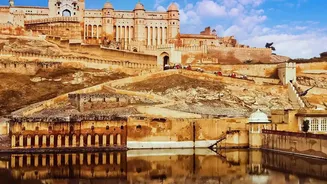
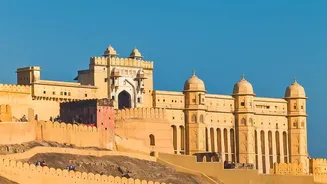
Situated on a forested hill overlooking Maota Lake, Amer Fort is a stunning blend of Rajput and Mughal architectural styles. Constructed from red sandstone and marble, the fort complex is a series of four levels, each with its own courtyard. Visitors are captivated by the Diwan-i-Aam (Hall of Public Audience), the intricate mirror work of the Sheesh Mahal, and the beautifully painted Ganesh Pol gateway. The fort offers magnificent views of Maota Lake and the Kesar Kyari garden situated in its waters. The strategic and picturesque setting makes it a favourite for those who appreciate how architecture can complement the natural landscape.
5. Chittorgarh Fort, Chittorgarh
Sprawling across nearly 700 acres, Chittorgarh is the largest fort complex in India and a UNESCO World Heritage site filled with tales of Rajput valour. Its architecture is defined by its sheer scale, housing numerous palaces, temples, and reservoirs. Two of its most famous structures are the Vijay Stambh (Tower of Victory) and the Kirti Stambh (Tower of Fame), both intricately carved and offering commanding views. Climbing the Vijay Stambh rewards visitors with a stunning panoramic vista of the entire fort complex and the plains below, providing a true sense of the fortress's historical dominance.
6. Gwalior Fort, Gwalior
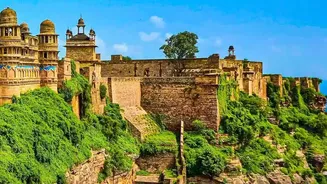
Often called the 'pearl amongst the fortresses of Hind', Gwalior Fort stands on an isolated rock, offering panoramic views of the city. Its architectural heritage spans centuries, showcasing a blend of styles from different dynasties. A key highlight is the Man Mandir Palace, adorned with vibrant blue ceramic tiles. The fort complex also includes the unique Teli ka Mandir, which blends North and South Indian architectural styles, and the intricately carved Saas-Bahu temples. The defensive walls and grand palaces create a formidable skyline, making it a dream for architecture enthusiasts.
7. Golconda Fort, Hyderabad
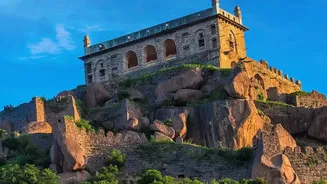
Once the capital of the Qutb Shahi dynasty and the center of a flourishing diamond trade, Golconda Fort is a majestic fortress city built on a 120-meter high granite hill. While much of it is in ruins, its architectural genius remains evident. The fort is renowned for its advanced acoustic system, where a clap at the main gate can be heard at the highest point, the Bala Hissar pavilion, nearly a kilometre away. The climb to this pavilion is well worth the effort, offering a bird's-eye view of the fort's ruins, its massive ramparts, and the sprawling cityscape of Hyderabad in the distance.