



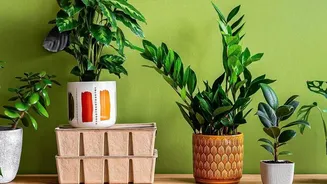
The Legend of the Space-Age Study
The idea that houseplants are natural air purifiers originates from a landmark 1989 NASA study. Facing the challenge of keeping air clean in sealed space stations, researchers explored whether common plants could filter out volatile organic compounds
(VOCs) — chemicals like formaldehyde and benzene that are released from furniture, paints, and cleaning products. The study placed individual plants in small, sealed chambers and injected these chemicals. The results were promising: plants did indeed absorb some of the pollutants. This finding quickly grew into a widely accepted piece of wellness wisdom, spawning countless articles and lists of 'air-purifying' plants.
From a Sealed Box to Your Living Room
Here’s the catch: your home is not a sealed NASA chamber. Subsequent reviews of this research have highlighted a critical flaw in applying these findings to a real-world home. The original experiments were conducted in tiny, airtight spaces with no ventilation. In contrast, a typical house or apartment has a much larger volume of air that is constantly being exchanged with the outside through windows, doors, and ventilation systems. A 2019 review published in the Journal of Exposure Science & Environmental Epidemiology concluded that this constant air exchange is far more significant for air quality than the slow work of a few plants. The rate at which plants remove VOCs is simply too slow to keep up.
The Numbers Don't Lie
So, how many plants would it actually take to make a difference? According to researchers, the number is staggering. To have a meaningful impact on your home's air quality, you would need anywhere from 10 to 1,000 plants per square metre of floor space. For an average-sized living room, that would mean turning your home into a dense jungle of several hundred, if not thousands, of plants. Essentially, you would need to live in a greenhouse to replicate the air-cleaning effects seen in the lab. For most people, that is simply not practical.
Meet the 'Air-Purifying' All_Stars
Despite the science, certain plants consistently top the lists of supposed air_purifiers. Here are six popular ones and the reality of their roles:
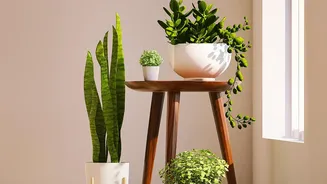
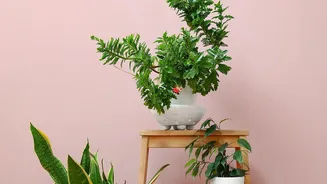
1. Snake Plant (Dracaena trifasciata): Famous for being low_maintenance and for releasing oxygen at night, it was one of the plants in the NASA study. While hardy, it suffers from the same limitations as others in a normal room.
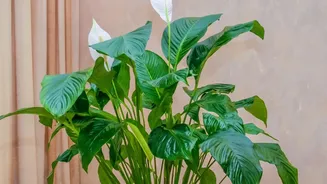
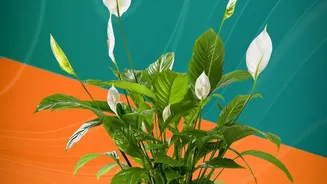
2. Peace Lily (Spathiphyllum): Known for its elegant white flowers, the peace lily was also tested by NASA and is often praised for removing pollutants. It’s a beautiful plant, but would require a forest of its friends to clean a room.
3. Spider Plant (Chlorophytum comosum): This popular hanging plant is easy to propagate and was shown to be effective at removing formaldehyde in lab conditions. In a home setting, however, its impact is negligible.
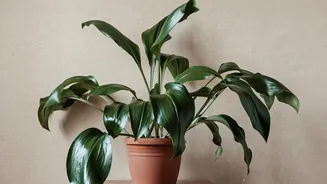
4. Dracaena (Dracaena species): This genus includes many popular varieties like the Dragon Tree. Different types of Dracaena were tested by NASA and showed an ability to filter toxins in a sealed chamber, but they can't overcome the realities of home ventilation.
5. Golden Pothos (Epipremnum aureum): A forgiving and fast_growing vine, Pothos is often recommended for beginners. It was part of the research showing VOC reduction, but like the others, its real_world effect is minimal.
6. English Ivy (Hedera helix): A classic trailing plant, English Ivy was noted for its ability to filter formaldehyde and benzene in the lab. However, its cleaning power doesn't scale up effectively outside of a sealed container.
So, Should You Give Up on Houseplants?
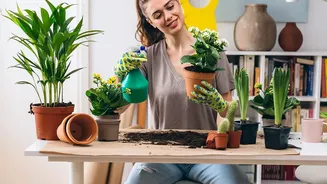
Absolutely not. While they may not be the powerful air filters we once hoped, the benefits of having plants are very real. Numerous studies have shown that indoor plants offer significant psychological advantages. Interacting with plants can reduce stress, lower anxiety, and improve your overall mood. Studies have also found that having plants in a workspace can increase productivity and focus. The presence of greenery connects us to nature, which is especially important for those living in urban environments without much access to green space. They add beauty and life to our homes, and the act of caring for them can be a rewarding hobby in itself.