





The Old 'Use-Once' Model
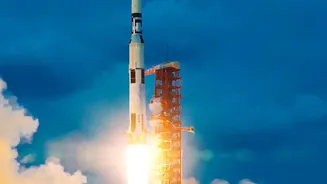
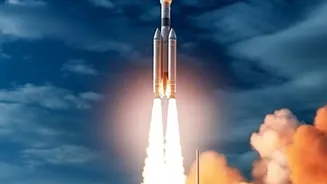
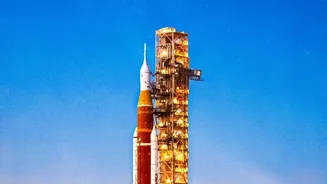
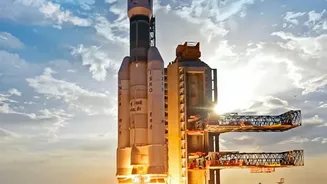
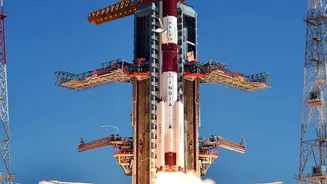
Imagine an airline having to build a brand-new aircraft for every single flight. Air travel would be astronomically expensive and incredibly rare. For most of the space age, that was the reality for rockets. Each launch vehicle was an expendable piece
of precision hardware, with its most expensive components—the powerful first-stage boosters—either burning up in the atmosphere or crashing into the ocean. This approach made every mission a massive financial undertaking, limiting how often satellites, scientific instruments, and astronauts could be sent to orbit. The high cost, which could be over $60 million per launch, and long manufacturing lead times meant launch schedules were rigid and infrequent, creating a bottleneck for the entire space industry.
A New Era of Launch Logistics
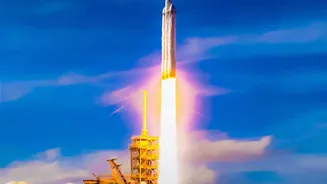
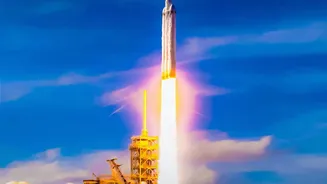
Reusable launch systems fundamentally change this dynamic. Spearheaded by companies like SpaceX with its Falcon 9 rocket, the core innovation is the ability to safely land the first-stage booster after it has propelled its payload toward orbit. Using a combination of grid fins for steering and engine burns for slowing down, these boosters perform a controlled descent and land vertically on a ground pad or an autonomous droneship. After inspection and refurbishment, the booster is ready for another mission. This shift from a single-use to a multi-use asset is the key. Instead of waiting for a new booster to be built from scratch, launch operators can work with a fleet of flight-proven vehicles, dramatically shortening the time between missions.
More Than Just Cost Savings
While lower costs are the most-cited benefit of reusability, the impact on scheduling and operational tempo is just as revolutionary. When rockets are reusable, launch providers can plan for a much higher flight cadence. For satellite operators, this means less time waiting in a queue for a launch slot. It allows them to deploy large constellations of satellites, like those for global internet services, much faster than was previously possible. This newfound flexibility also enables quicker replacement of aging or failed satellites and opens the door for scientific missions that might have been too risky or costly to justify when every launch was a singular, high-stakes event. The ability to launch more frequently turns space access into a more predictable and responsive service.
The Growing Fleet of Reusables
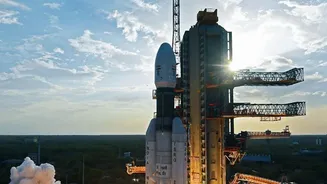
While SpaceX has become synonymous with reusability, it is no longer the only player. A growing number of aerospace companies and national agencies are developing their own reusable systems. Blue Origin has its New Shepard suborbital system and is developing the orbital New Glenn rocket with a reusable first stage. Rocket Lab has successfully recovered and is working to reuse the first stage of its smaller Electron rocket. In China, both state-owned and commercial companies are actively testing reusable technologies, with vehicles like the Long March 10B demonstrating successful recovery. India's ISRO is also developing its own Reusable Launch Vehicle (RLV) technology. This global competition is accelerating innovation and pushing the industry toward a more sustainable and efficient future.
Challenges on the Horizon
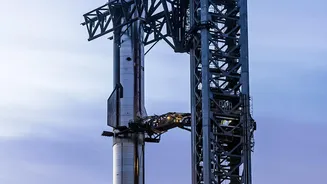
Despite the progress, making rockets reusable is not simple. The process of refurbishing a booster between flights requires detailed inspections, testing, and replacement of certain parts, which introduces new operational complexities. While turnaround times have improved dramatically, they are not yet instantaneous and can be affected by everything from hardware availability to launch pad logistics. Furthermore, developing these systems requires massive upfront investment in research and development. Companies are also working on the next frontier: fully reusable systems, like SpaceX's Starship, where both the booster and the upper stage can be recovered, which presents an even greater set of engineering challenges.