



The Primeval Białowieża Forest, Poland and Belarus
Step into one of the last and largest remaining parts of the immense primeval forest that once stretched across the European Plain. The Białowieża Forest, a UNESCO World Heritage site straddling the border of Poland and Belarus, is a realm of staggering
biodiversity. This is not a manicured park but a living, breathing ecosystem where natural processes unfold with minimal human interference. Its old-growth stands are home to an incredible array of life, including wolves, lynx, and otters. The forest is most famous as the sanctuary for the European bison, the continent's heaviest land animal, which was successfully reintroduced here after being hunted to extinction in the wild. Walking among its ancient oaks and decaying logs—which support a universe of fungi and insects—feels like a journey back in time.
The Danube Delta, Romania and Ukraine
Where the mighty Danube River meets the Black Sea, it forms the second-largest and best-preserved delta in Europe—a sprawling labyrinth of water, land, and reeds. Shared between Romania and Ukraine, the Danube Delta is a UNESCO World Heritage site and a paradise for nature lovers. This vast wetland is a critical stopover for migratory birds and a sanctuary for over 300 bird species, including the largest population of great white pelicans in Europe. Its network of channels, lakes, and islands supports a rich tapestry of life, with around 90 species of fish, including rare sturgeon. Exploring its waterways by boat offers a unique perspective on a landscape constantly shaped by water, supporting traditional occupations like fishing and reed harvesting that have existed for centuries.
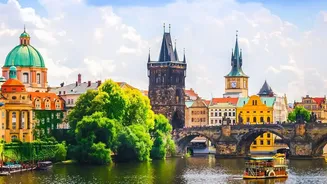
Český Krumlov, Czech Republic
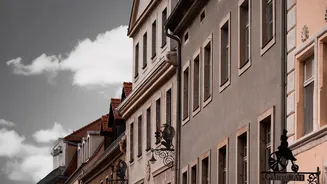
Nestled in a bend of the Vltava River, Český Krumlov is the quintessential fairytale town. Its architectural heritage is so remarkably intact that UNESCO designated its historic centre a World Heritage site. Dominated by a massive 13th-century castle, the town is a stunning showcase of Gothic, Renaissance, and Baroque architecture, seemingly untouched by the passage of time. Wandering its narrow cobblestone streets feels like stepping into another century. The castle complex itself is enormous for such a small town, featuring courtyards, gardens, and one of the world's oldest preserved Baroque theatres. Thanks to its peaceful evolution over five centuries, Český Krumlov offers an authentic glimpse into the life of a small central European medieval town.
Polesia, The Amazon of Europe
Stretching across Belarus, Poland, Russia, and Ukraine, Polesia is Europe's largest wetland wilderness, a vast and wild landscape of rivers, peatlands, and forests. Though not yet a single unified UNESCO site, conservationists are actively campaigning for this status to protect its globally important ecosystems. The region is a crucial carbon sink, with its peatlands storing more carbon than all other vegetation combined. It provides a vital sanctuary for wildlife, including grey cranes, moose, and countless migratory birds. Recent efforts have led to the creation of new national parks and the expansion of nature reserves in both Ukraine and Belarus to safeguard this precious wilderness from threats like deforestation and drainage.
The Ancient Beech Forests of the Carpathians
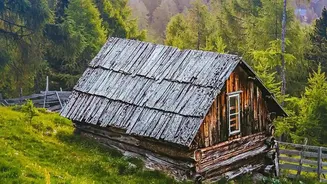
A different kind of forest heritage is found in the Ancient and Primeval Beech Forests, a transnational UNESCO site spanning 18 countries, with significant portions in the Carpathian Mountains. These forests represent the post-glacial expansion of beech trees across the continent and have remained largely undisturbed by human activity. They are not just collections of trees but complex ecosystems that provide a window into the past. Locations in Ukraine, Slovakia, and Romania contain massifs where the forest has evolved without interruption for thousands of years. This incredible network of protected areas, from Poland to Romania, preserves the natural processes and genetic diversity of Europe's original forests, showcasing a natural heritage as profound as any cultural monument.