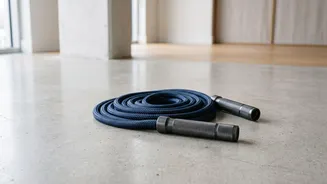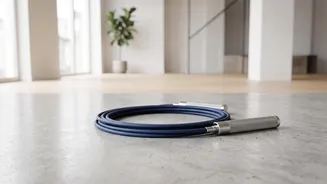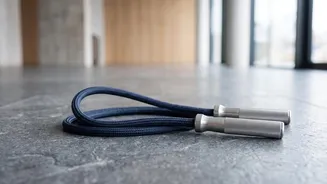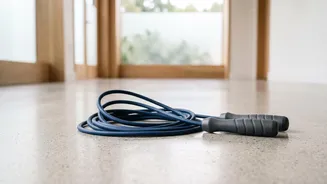







Looking to boost your coordination and get fit? Jump rope and running are two fantastic, accessible options. But for a beginner, the path to feeling smooth and in control looks quite different for each, making the choice a personal one.
The First Hurdle: Getting Started
For most people,
running feels more natural at the outset. You already know how to do it, more or less. The initial learning curve isn't about the basic movement but about refining it to prevent injury and improve efficiency. Most beginners can head out the door and complete a short run, even if their form needs work. Jump rope, on the other hand, presents a steeper initial challenge. It's a skill that requires immediate timing and rhythm. A beginner might spend their first few sessions struggling to string together more than a few consecutive jumps. This immediate feedback loop—trip, reset, try again—can be frustrating, but it's also how the skill is built.
What 'Coordination' Means for Each
When we talk about coordination, it's not a single quality. Running primarily develops gross motor coordination and rhythm. It's about synchronizing your arm swing with your leg stride, maintaining an upright posture, and controlling your breathing to create an efficient, forward-moving pattern. It trains your body to perform a repetitive motion smoothly over long durations. Jump rope develops a more complex, multi-limb form of coordination. It demands constant communication between your eyes, hands, and feet. Your wrists must turn the rope at the perfect speed while your feet make small, precise jumps to clear it. This builds hand-eye-foot coordination, timing, and rhythm in a way that very few other exercises can.
The Path to Progression
Progressing in running often means focusing on consistency and gradual improvements in form and endurance. The learning curve is about making small tweaks: relaxing your shoulders, keeping your eyes on the horizon, and finding a natural foot strike. As your body adapts, you run longer, faster, or tackle more challenging terrain. The coordination gains are subtle, felt as a sense of increased efficiency and less clumsiness. Progression with a jump rope is more distinct and skill-based. Once you master the basic bounce, a whole world of new movements opens up. You can learn different footwork patterns, like the boxer skip or high knees. From there, you can move on to more advanced tricks like crossovers or even double-unders. Each new skill presents its own mini learning curve, offering clear milestones and a constant sense of accomplishment.
Assessing Your Improvement
So how do you know if your coordination is getting better? With running, the feedback is often subjective. You might notice your runs feel smoother, you're less sore afterward, or you can maintain your form even when you're tired. You can also ask a friend to film you to see if your posture looks more upright and your stride less forced. For jumping rope, assessment is much more direct. The most obvious metric is the number of consecutive jumps you can complete. Being able to jump for one minute straight is a huge milestone that was impossible on day one. Successfully landing a new trick for the first time provides instant, undeniable proof that your timing and motor control have improved.
Which Is Better for Your Goals?
If your primary goal is to quickly build cardiovascular endurance with a minimal skill barrier, running is the more straightforward choice. The coordination it builds is fundamental to athletic movement and will make you a more efficient runner. If your goal is to rapidly develop rhythm, timing, balance, and quickness that transfers to other sports, jump rope has the edge. Its steep initial learning curve pays off with significant gains in neuromuscular control. Many athletes use jump rope specifically to enhance the reactive power and footwork that running alone doesn't target as directly.