








What Is the Grand Plan?
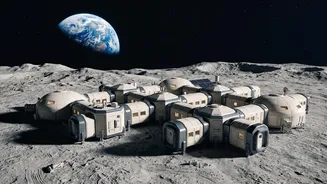
The entire endeavour is part of the Artemis program, NASA's initiative to return humans to the Moon and establish a long-term presence. Unlike the Apollo missions, which were about "flags and footprints," the goal this time is to stay. The plan is to build
a sprawling Artemis Base Camp near the lunar South Pole. This base will serve as a home and workplace for astronauts, a hub for groundbreaking science, and a crucial testing ground for the technologies needed to eventually send humans to Mars.
Why the Lunar South Pole?
Location is everything. The Moon's South Pole is a region of strategic importance and immense scientific interest. It offers access to near-constant sunlight on the rims of some craters, which is vital for solar power generation. At the same time, the floors of these craters are in permanent shadow, creating some of the coldest spots in the solar system. Scientists believe these perpetually dark regions hold vast reservoirs of water ice. This ice is a game-changing resource; it can be processed into breathable air and drinkable water for astronauts, and its components—hydrogen and oxygen—can be used to make rocket propellant, effectively turning the Moon into a refuelling station for deeper space missions.
What Is This 'Phased Strategy'?
NASA is tackling this monumental task step-by-step. The strategy is broken into three main phases designed to build capabilities over time and manage risk.
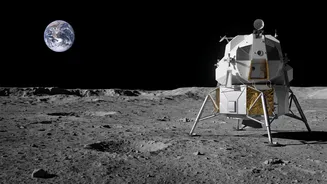
Phase 1 (through 2029): This initial phase is all about learning and laying the groundwork. It involves a series of robotic and uncrewed missions to scout the terrain, test landing technologies, and deliver scientific instruments. Commercial partners like Blue Origin are playing a key role, with landers set to deliver payloads to the surface.
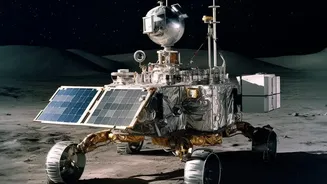
Phase 2 (2029-2032): This phase focuses on establishing early infrastructure. Heavier cargo will arrive, including the first elements of a power grid, mobility systems like rovers, and initial habitat components. Japan's space agency, JAXA, will provide a pressurized rover that acts as a mobile habitat for short expeditions.
Phase 3 (2032 and beyond): With the foundational elements in place, this phase marks the assembly of a permanent lunar outpost where astronauts can live and work for extended periods. This involves linking larger habitats, scaling up power systems, and implementing advanced In-Situ Resource Utilization (ISRU) technologies to 'live off the land' by extracting oxygen from the lunar soil, known as regolith.
What Key Technologies Are Required?
Building a city on the Moon requires a technological leap. NASA and its partners are developing a suite of new systems. Mobility is crucial, with plans for both an unpressurized Lunar Terrain Vehicle (LTV) for short trips and a larger, pressurized rover for longer expeditions of up to 45 days. For power, NASA is developing advanced vertical solar arrays to catch the low-angle sunlight at the pole and nuclear power systems, like radioisotope Stirling generators, to provide electricity during the long, dark lunar nights. A major focus is on ISRU, with technology being created to excavate lunar regolith and extract bonded oxygen. This will reduce the need for costly resupply missions from Earth.
What Is the Timeline for Human Boots on the Ground?
While robotic missions are already underway and planned through the late 2020s, the human return is meticulously scheduled. Following the successful Artemis II flyby mission, the plan for crewed landings has been refined. The Artemis IV mission is slated to bring humans back to the lunar surface in 2028. From there, NASA aims to conduct crewed missions about once per year, initially with short stays. As the base camp evolves through Phase 3 in the 2030s, the goal is to enable crews to stay for up to two months at a time, transitioning from expeditions to sustained habitation.