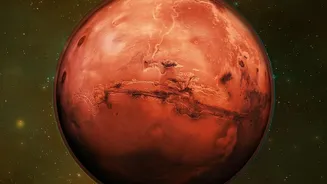


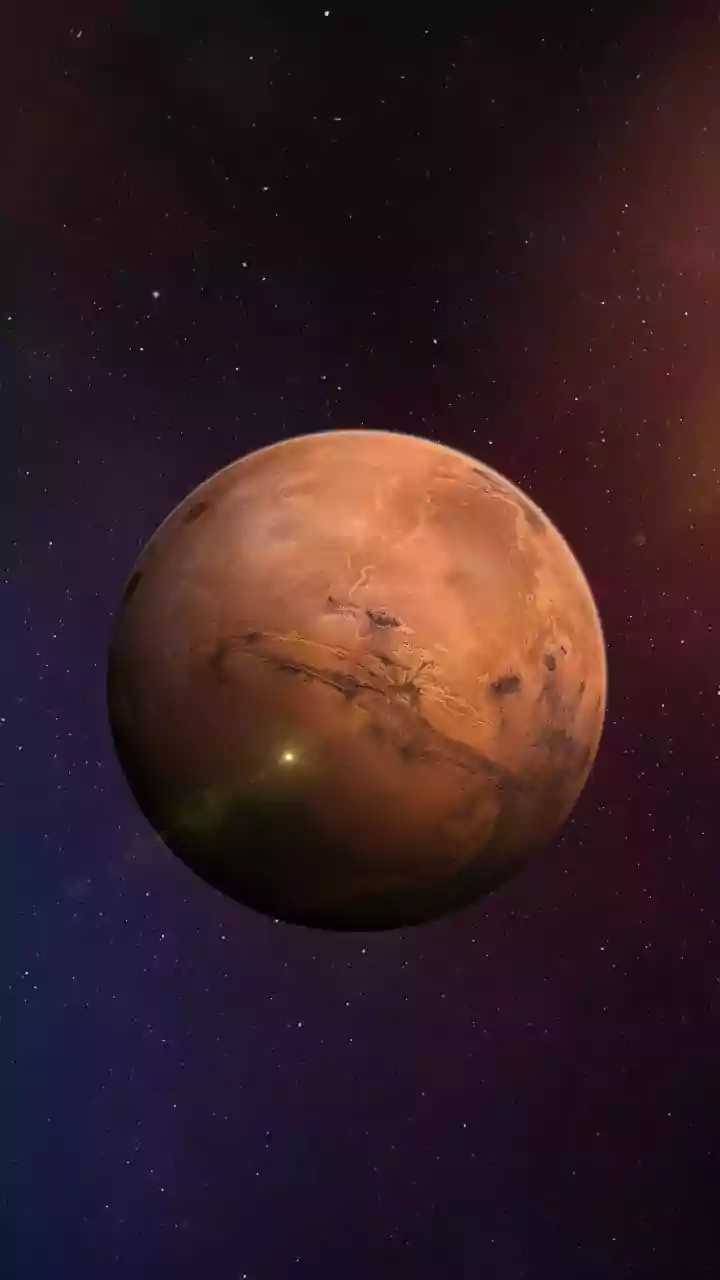

Imagine holding a piece of another world, a rock that is almost as old as the solar system itself. Scientists are doing just that with Teghaza 001, a messenger from Mars that tells a story of a planet's birth over 4.1 billion years ago.
A Messenger From Ancient Mars
In 2022, meteorite
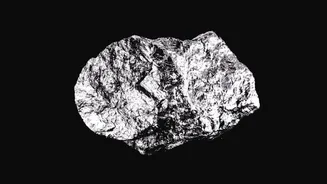
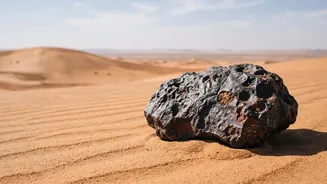
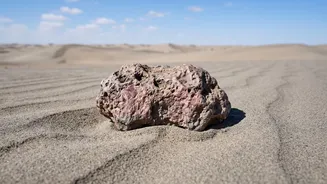
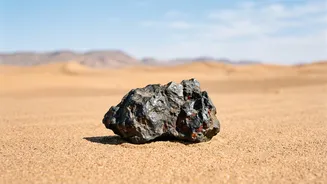
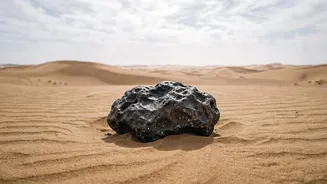
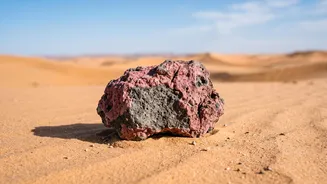
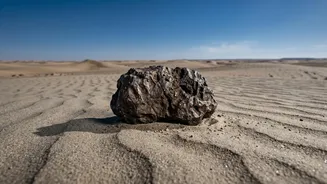
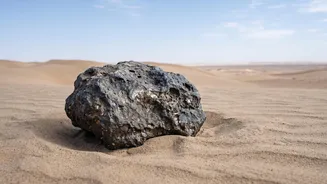
hunters discovered several fragments of a unique, rose-coloured rock in Mali's Sahara Desert. Named Teghaza 001 after the nearby salt plain, this rock was not of this Earth. Scientific analysis confirmed its origin: Mars. It was likely blasted off the Martian surface by a massive asteroid or comet impact millions of years ago, sent hurtling through space before eventually being captured by Earth's gravity and landing in the desert. While over 400 Martian meteorites have been found on Earth, Teghaza 001 is special. It belongs to an exclusive club of the three most ancient Martian rocks ever discovered, giving us an unprecedented window into the Red Planet's infancy.
Reading a 4.1-Billion-Year-Old Clock
Determining the age of a rock from another planet is a meticulous process. For Teghaza 001, scientists turned to tiny, durable crystals embedded within it called zircons. These crystals act as remarkable time capsules because they trap uranium when they form. Over billions of years, this uranium predictably decays into lead. By measuring the ratio of uranium to lead, a technique known as radiometric dating, researchers can calculate the rock's age with incredible precision. This method dated Teghaza 001 to at least 4.1 billion years old, meaning it formed within the first 400 to 500 million years of Mars's existence. The finding was so significant that one scientist dubbed the meteorite a 'Rosetta Stone for Mars'.
A Glimpse Into a Primordial World
The age of Teghaza 001 is revolutionary because it tells us that Mars formed a solid crust very early in its history. Most other Martian meteorites are much younger, typically less than 600 million years old, offering a limited view of the planet's deep past. Teghaza 001, an igneous rock called a gabbro, cooled slowly deep beneath the Martian surface. Its unique mineral composition is unlike most other Martian samples and provides the first physical evidence of a primordial crust, which until now had only been theorised about from orbital data. This ancient crust was likely forged from a vast, global ocean of magma that cooled after the planet’s formation.
The Crucial Clues of Water
Perhaps the most exciting revelation from Teghaza 001 is the strong evidence of interaction with liquid water. Analysis of its minerals and oxygen isotopes—different forms of the element—shows that the rock was altered by water around 4.1 billion years ago. This suggests a dynamic water cycle was active on early Mars, with fluids percolating through the planet's crust. While this doesn't prove that life existed, it confirms that key conditions for habitability, including the presence of water, were in place during the planet's earliest days. The finding supports a picture of an ancient Mars that was likely warmer and wetter than the cold, dry desert we see today.
More Than Just an Old Rock
Teghaza 001 does more than just break a record for age. It helps solve a long-standing puzzle: why most known Martian meteorites are so much younger than the planet's ancient surface. This rock is our first physical sample from the vast, cratered southern highlands, a region believed to be the oldest on Mars. By studying it, scientists can better understand how all rocky planets, including our own, form and evolve. Earth's own ancient crust has been almost entirely erased by billions of years of tectonic activity, making samples like Teghaza 001 invaluable for understanding the dawn of the solar system. It provides a physical reference point for the processes that may have also shaped the early Earth.