








The Forecast for Early 2027
Several climate forecasting centres are signalling that a strong El Niño event, which began developing in 2026, will likely persist into early 2027. El Niño is a natural climate pattern characterized by unusually warm ocean temperatures in the equatorial
Pacific, and its effects ripple across the globe. For India, El Niño events are often associated with warmer temperatures, weaker monsoon rains, and drier conditions. Some projections indicate that the combination of this strong El Niño and background global warming could push global average temperatures to record highs in 2027, potentially crossing significant thresholds. Some models even suggest a probability that global temperatures could temporarily breach a 2-degree Celsius warming level for at least one month.
Understanding 'Model Uncertainty'
When scientists talk about "model uncertainty," they aren't saying they have no idea what will happen. Rather, it's a recognition that climate models are complex simulations of the Earth's systems, and they aren't perfect. There are three main sources of this uncertainty. First is natural variability, which includes unpredictable fluctuations like volcanic eruptions or slight changes in solar output. Second is scenario uncertainty, which comes from not knowing exactly how human emissions will change in the future. Third, and most relevant to this forecast, is model uncertainty itself. Different research institutions build their models with slightly different mathematical representations of physical processes, like how clouds form or how oceans absorb heat. When these different models are run with the same starting data, they can produce a range of slightly different outcomes, creating the 'uncertainty' in the forecast.
The Undeniable Warming Signal
Despite the variability in short-term predictions, there is a clear and consistent long-term trend: the 'strong warming signal'. This refers to the underlying warming of the planet caused by human-induced greenhouse gas emissions. Think of it as a rising tide. The tide (global warming) is steadily coming in, making the overall sea level higher. On top of that tide, there are waves (El Niño, La Niña, and daily weather) of varying sizes. The uncertainty is in predicting the exact height of each individual wave at a specific moment, but the direction of the tide is unmistakable. Even if models differ on the precise temperature for February 2027, they are in near-unanimous agreement that the baseline from which that temperature starts is getting progressively warmer.
What This Means for India
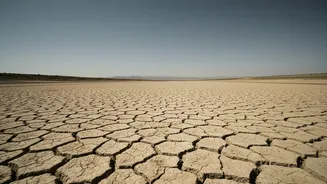
For India, this combination of a strong El Niño and a persistent warming trend could have significant consequences. The most immediate concerns are the potential for more intense and prolonged heatwaves during the pre-monsoon period and a possible weakening of the crucial summer monsoon. A weaker monsoon could lead to reduced rainfall, putting stress on agriculture, water reservoirs, and the national economy. With hundreds of millions of people in India already experiencing the effects of extreme weather, the added pressure from a strong El Niño event layered on top of accelerating climate change elevates the risk. Farmers may face difficult decisions about planting crops, and governments may need to prepare for increased demand for water and electricity for cooling.