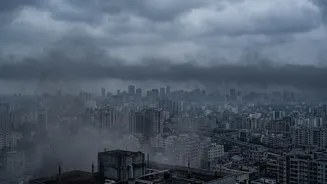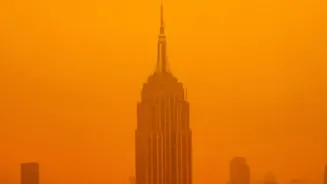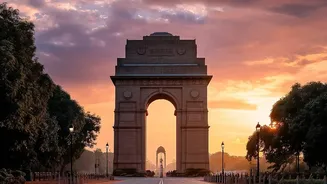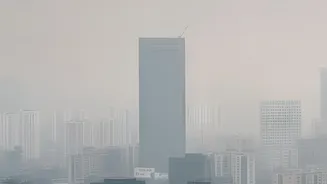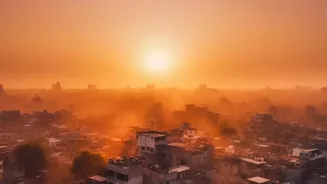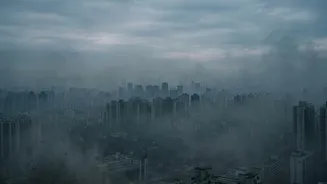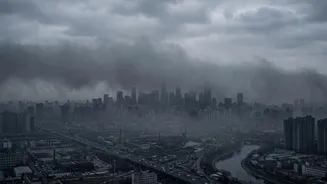






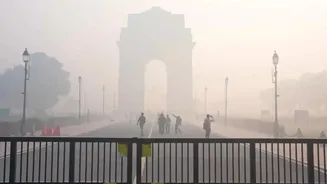
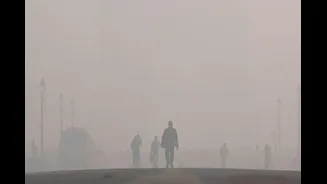
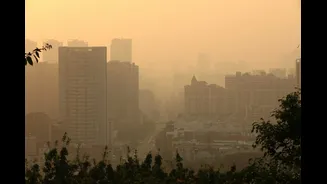
As November settles over Delhi, a familiar, acrid haze blankets the city, turning the sky a murky grey and raising health alarms. But alongside the tangible threat of pollution is a frustrating uncertainty: why is it so hard to predict how bad the air
will be tomorrow?
A City Breathing 'Very Poor' Air
As of November 12, 2026, Delhi's Air Quality Index (AQI) is hovering in the 'Very Poor' category, with an official reading of 313. This isn't just a number; it represents a real and present danger. An AQI in this range means prolonged exposure can lead to respiratory illness, even for healthy individuals. The lead pollutant is PM2.5—fine particulate matter so small it can penetrate deep into the lungs and enter the bloodstream, posing serious health risks. Across the city, many monitoring stations are reporting even higher, 'Severe' level readings, underscoring that for many residents, the air is hazardous.
The Toll on Your Health
The health impacts of this toxic air are both immediate and long-term. Doctors report a surge in patients, including young and otherwise healthy people, complaining of throat irritation, coughing, and breathing discomfort. These symptoms can appear within hours of exposure. The risks go far beyond temporary discomfort. Exposure to high levels of PM2.5 is linked to an increased risk of respiratory infections, asthma attacks, chronic obstructive pulmonary disease (COPD), heart disease, stroke, and even lung cancer. For children, the damage can be irreversible, with studies showing that Delhi's poor air quality has caused lasting lung damage to over two million children.
A Familiar and Toxic Cocktail
The annual spike in November pollution is caused by a perfect storm of factors. Local sources like vehicle exhaust, construction dust, and industrial emissions form the baseline of pollution throughout the year. This is then exacerbated by two major seasonal events: stubble burning in the neighbouring states of Punjab and Haryana, and firecracker emissions from festivals like Diwali and even the wedding season. Compounding all of this is the weather. In winter, cold, dense air gets trapped near the ground by a layer of warmer air above—a phenomenon called thermal inversion. With low wind speeds, this atmospheric 'lid' prevents pollutants from dispersing, effectively locking the city in a chamber of its own toxic air.
Why Forecasts Often Get It Wrong
Predicting air quality is incredibly complex, which is why day-to-day forecasts can be unreliable. Forecasting models like the System of Air Quality and Weather Forecasting and Research (SAFAR) and the Decision Support System (DSS) depend on a huge number of variables. One of the biggest challenges is the emission inventory—the database of pollution sources. These inventories are often outdated; for example, some systems still use data from 2016 or 2018, which doesn't reflect the current reality of vehicle numbers or industrial activity. This is a primary reason for forecasting errors. Another issue is the unpredictable nature of certain emission sources. The number of farm fires can change daily, and satellites don't always capture fires that are set in the evening to avoid detection. Similarly, unexpected events, like a high number of weddings leading to widespread firecracker use, are not typically factored into models and can cause pollution to spike far beyond what was predicted.
Protecting Yourself When the Air is Hazardous
While government action is needed for a long term solution, there are crucial steps individuals can take to minimize exposure. Official health advisories recommend avoiding outdoor activities, especially strenuous exercise, when the AQI is 'Very Poor' or 'Severe'. If you must go out, a well fitted N95 or N99 mask is essential, as simple cloth or surgical masks do not filter out harmful PM2.5 particles. Indoors, it's best to keep windows and doors closed. Using an air purifier with a HEPA filter can significantly reduce the concentration of pollutants inside your home, particularly in bedrooms where you spend many hours. Finally, avoid indoor sources of pollution like burning incense or mosquito coils.