

The Sun's Fiery Riddle
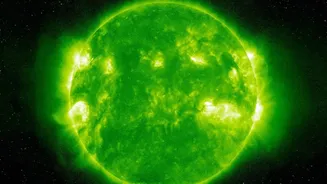
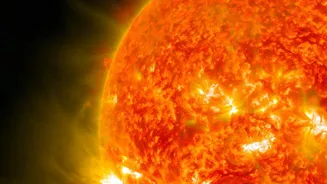
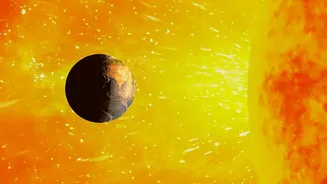
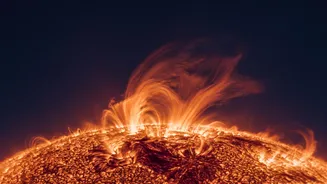
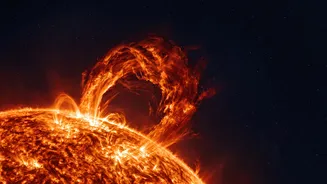
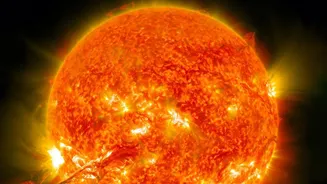
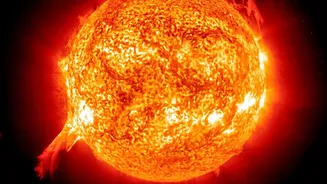
The Sun constantly ejects enormous clouds of magnetised plasma into space. These events, known as Coronal Mass Ejections (CMEs), are staggeringly powerful. A single CME can contain billions of tonnes of matter and travel at speeds of up to 3,000 kilometres
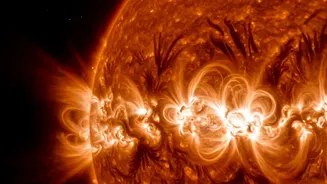
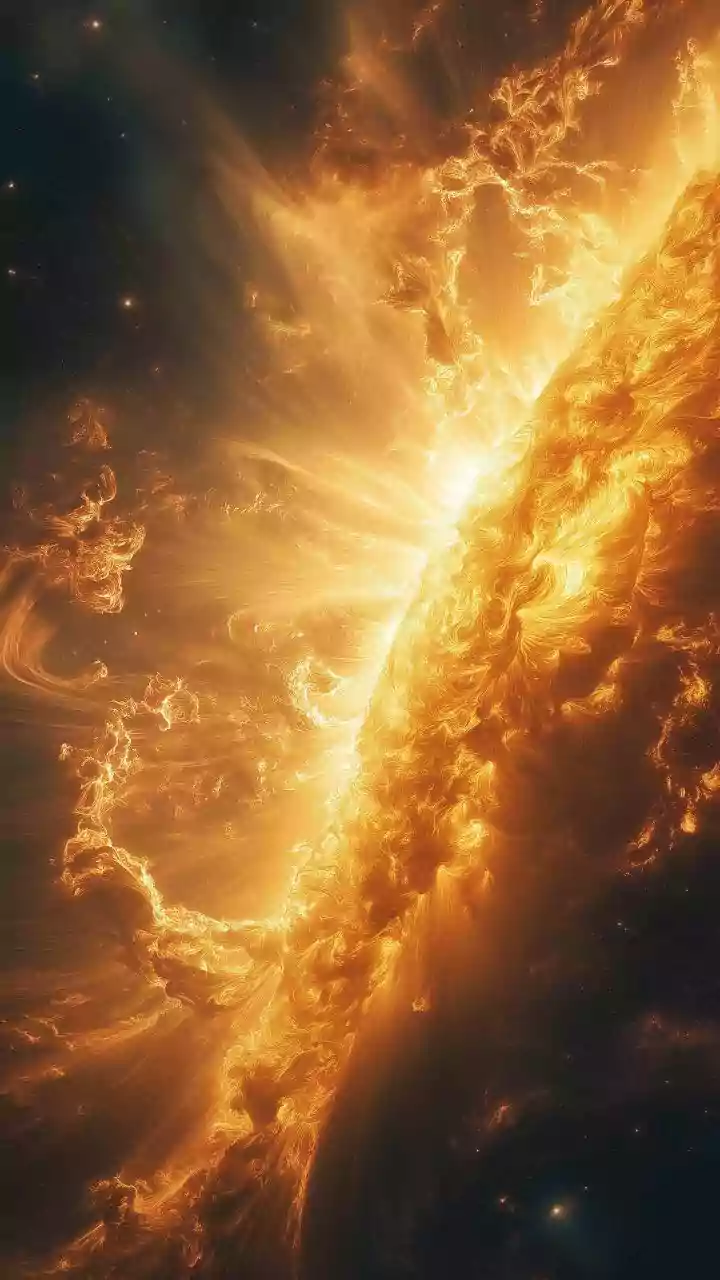
per second. When a CME hits Earth, it can wreak havoc, triggering geomagnetic storms that disrupt satellites, communication networks, and even power grids. For decades, scientists have struggled to study the crucial first moments of these eruptions. The Sun’s own blinding glare makes it incredibly difficult to see the faint, super-hot outer atmosphere, or corona, where they are born. Understanding how CMEs form and gain energy right at the source has been a major missing piece in our ability to forecast space weather.
India’s Eye on the Sun
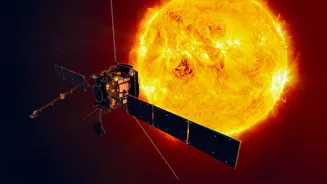
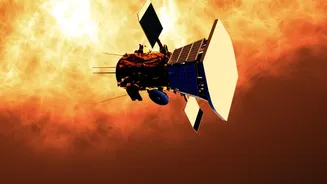
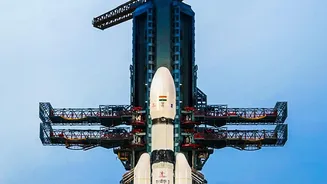
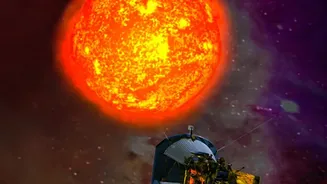
Enter Aditya-L1, India's first dedicated solar observatory. Launched by ISRO in September 2023, the spacecraft is positioned at Lagrange Point 1 (L1), a unique spot 1.5 million kilometres from Earth where it has an uninterrupted view of the Sun. Its primary instrument for this task is the Visible Emission Line Coronagraph (VELC). A coronagraph is designed to block the direct light from the Sun's bright surface, allowing it to observe the much dimmer corona. VELC is special because it uses spectroscopy, a technique that breaks down light to analyse the properties of the coronal plasma, such as its temperature and density, very close to the solar surface.
Europe's Artificial Eclipse
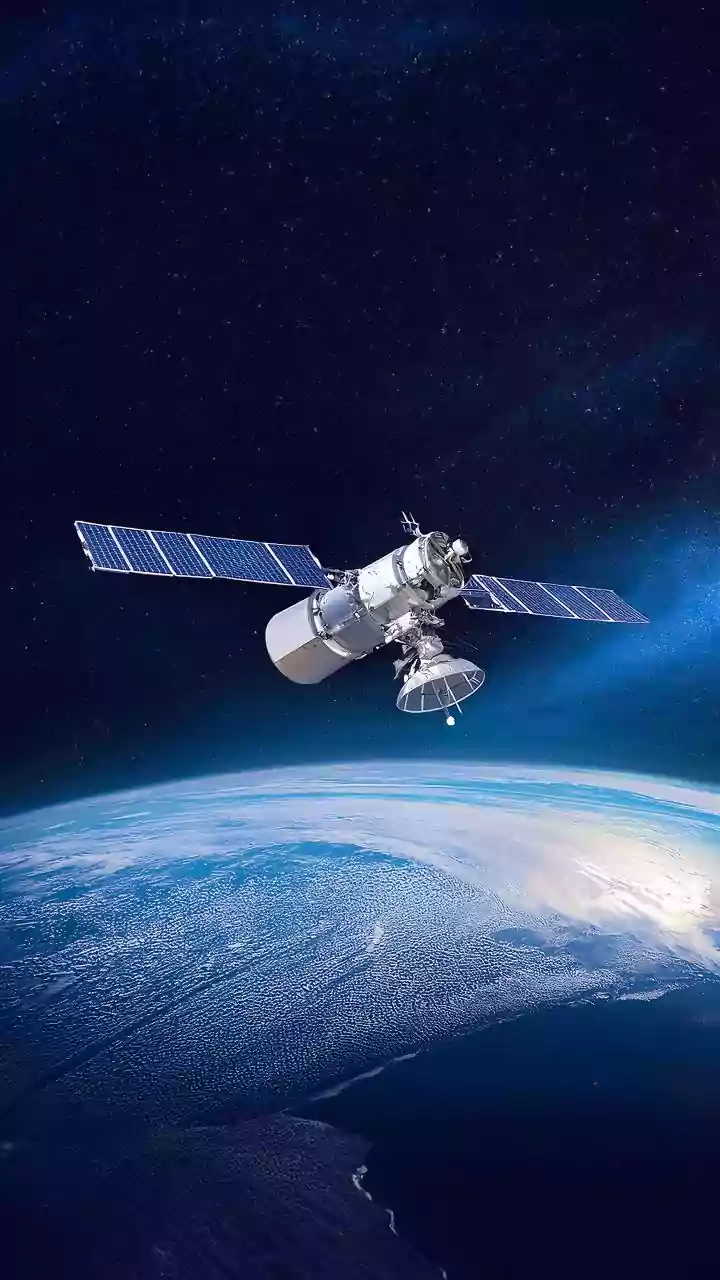
The European Space Agency's (ESA) Proba-3 mission, launched in December 2024 aboard an Indian PSLV rocket, takes a different but equally ingenious approach. Proba-3 is the world's first precision formation-flying mission. It consists of two separate satellites flying in a tight, autonomous formation about 150 metres apart. One satellite, the 'Occulter', positions itself to cast a precise shadow onto the other satellite, the 'Coronagraph'. This creates a near-perfect artificial solar eclipse in space, allowing its ASPIICS instrument to capture incredibly sharp images of the Sun's inner corona, a region notoriously difficult to see.
A Partnership Forged in Science
The real breakthrough comes from combining the data from these two missions. Aditya-L1's VELC provides detailed 'spectroscopic' data on the plasma's physical state, while Proba-3's ASPIICS provides sharp 'imaging' data on the eruption's shape, mass, and movement. Recently, scientists jointly analysed two CMEs that were simultaneously observed by both missions in September 2025. This tandem view allows researchers to trace an eruption's entire journey, from the initial trigger seen by Proba-3's high-precision imager to the subsequent evolution captured by Aditya-L1's constant spectroscopic gaze. This provides a more complete, cross-checked picture than either mission could achieve alone.
New Insights into Solar Fury
This joint analysis has already yielded fascinating results. By studying the two eruptions, one fast (around 645 km/s) and one slow (145 km/s), scientists could compare how their energy was distributed. For instance, they measured how much energy was in the form of motion (kinetic), heat (thermal), and magnetic fields right from the very beginning. The study found that in the faster CME, thermal energy was a tiny fraction of the total, whereas in the slower one, the thermal energy grew to match the kinetic energy. These first-of-their-kind measurements provide crucial data to test and refine the theories of how these colossal eruptions are powered, improving our fundamental understanding of the Sun.
Protecting Our Planet
This research is not just academic. A better understanding of the origin and evolution of CMEs directly translates into better space weather forecasting. By knowing the initial mass, speed, and energy of an eruption, scientists can more accurately predict its trajectory and potential impact on Earth. This gives operators of satellites, power grids, and navigation systems more time to take protective measures, safeguarding the vital infrastructure that powers our modern world. The collaboration between ISRO and ESA showcases how international scientific cooperation is essential for tackling some of the biggest challenges in space science and protecting our technology-dependent society.