




Know Your Enemy: What Is Dust?
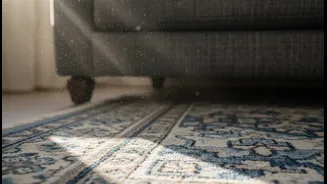
Before you can effectively fight dust, it helps to know what it is. Household dust is a complex mix of particles from both inside and outside your home. It includes dead skin cells from people and pets, fabric fibres from clothing and furniture, pet dander,
soil particles tracked in on shoes, and pollen that blows in through windows. This mixture becomes a feeding ground for microscopic dust mites, whose waste products are a common trigger for allergies and asthma. Understanding that dust is a constant accumulation of various particles explains why a multi-pronged strategy is so effective for keeping it under control.
Tackle the Source: Your Bedding
We spend roughly a third of our lives in bed, shedding skin cells and creating a warm, often humid environment that dust mites love. Your bed is a primary dust factory, so it’s the most important place to start. Make it a non-negotiable habit to wash all your bedding—sheets, pillowcases, and duvet covers—once a week. Use a hot water cycle, ideally at least 55-60°C, to effectively kill dust mites and wash away allergens. For an even greater defence, encase your mattress, box spring, and pillows in zippered, allergen-proof covers. These tightly woven protectors create a barrier that prevents mites from settling in and their allergens from getting out.
Ground Control: Cleaning Your Floors the Right Way
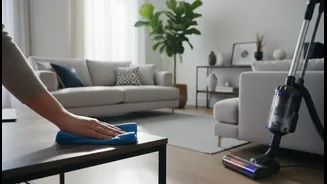
Floors are the final resting place for dust that settles out of the air. How you clean them makes a significant difference. If you have wall-to-wall carpeting, it acts like a giant dust reservoir. Vacuuming at least twice a week with a machine that has a HEPA (high-efficiency particulate air) filter is crucial. A HEPA filter traps tiny particles, preventing them from being blown back into the air. For hardwood, laminate, or tile floors, rethink your tools. Dry sweeping tends to just stir dust up. Instead, use a damp mop or a microfiber duster, which will trap and remove dust particles effectively. Paying extra attention to corners and the areas under furniture will capture hidden dust bunnies before they have a chance to multiply.
Less Is More: The Power of Uncluttered Surfaces
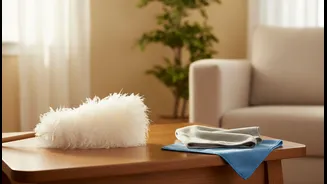
Every item sitting on your nightstand, dresser, or desk is another surface for dust to collect on. These items not only gather dust themselves but also make it much harder to clean properly. The more clutter you have, the more places dust has to hide. Take a minimalist approach to your bedroom surfaces. Store books, magazines, and trinkets in drawers or covered bins. This simple act of decluttering dramatically reduces the surface area available for dust to settle. With clear surfaces, a quick wipe-down with a damp microfiber cloth is all it takes to keep the area clean, a task that takes seconds instead of several minutes of moving objects around.
Advanced Tactics for a Dust-Free Haven
Once you have the big three under control, you can add other strategies for even better results. An air purifier with a HEPA filter can capture airborne dust particles before they have a chance to settle. Keeping your home's humidity level below 50% will make the environment less hospitable for dust mites. Remember to regularly clean other dust traps like curtains, blinds, and ceiling fan blades. It’s best to clean from top to bottom, so dust from higher surfaces is captured when you vacuum the floor at the end. A consistent routine makes all the difference, turning an endless battle into a manageable weekly task.