






The Promise of Green, The Burden of Access
We know parks are good for us. Study after study confirms that access to green space is a powerful antidote to the pressures of urban life. They are vital for our physical and mental health, offering a free, accessible place for exercise, social connection,
and quiet reflection. Time spent in nature can lower stress hormones, improve cognitive function, and foster a sense of community. In theory, these spaces are our urban oases. In practice, however, a park's benefits are only available to those who can easily reach it. For a vast number of people living in Indian cities, the nearest significant green space is a destination, not a part of their neighbourhood. This gap between the promise of a park and the lived reality of accessing it is where the problem lies. When a trip to the park requires a car or a long bus ride, it ceases to be a casual, routine activity and becomes a planned event, often one that is hard to justify in a packed schedule.
When the Journey Defeats the Purpose
The commute is the great undoing of the park's restorative power. Research has consistently shown that long or stressful commutes are linked to lower life satisfaction, increased anxiety, and a persistent sense of time pressure. The very stress you hope to shed at the park is amplified by the journey to get there. The frustrating crawl through traffic, the noise, the pollution—it all adds up, chipping away at your patience and your free time. By the time you arrive, you may have spent more energy and accumulated more stress than the park can possibly help you relieve. Physical activity is known to mitigate the stress of commuting, but therein lies the paradox: the long commute leaves less time for the very activities, like a park visit, that would help. A park intended as a sanctuary for well-being becomes just another destination on a long list of errands, fundamentally failing its core purpose.
Rethinking 'Park' and Redefining 'Access'
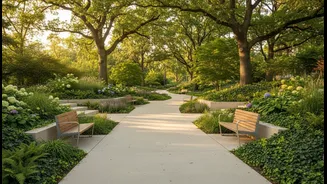
Perhaps the issue is our definition of a park. We often think of large, sprawling 'destination parks'—grand, impressive, but ultimately infrequent luxuries. While these have their place, the true engine of daily wellness lies in smaller, neighbourhood 'pocket parks'. These are the unassuming green lots, the small community gardens, and the tree-lined squares that are woven directly into the fabric of where people live. True accessibility isn't just a road on a map; it's about being able to decide on a whim to take a 10-minute walk to a clean, safe, and pleasant green space. This is the central idea behind concepts like the '15-minute city', which envisions urban planning where essential needs—including recreation—are available within a short walk or cycle. This model prioritises human-scale living over car-dependent sprawl, a shift desperately needed in many Indian urban centres that are often green on paper but unequal in access.
Planning for People, Not Just Grand Projects
The challenge for urban planners and policymakers in India is immense, with land scarcity and fragmented governance often hindering progress. However, the focus must shift from merely building parks to building accessible park networks. This means prioritising the creation and protection of small-scale green spaces during urban expansion. It involves ensuring new developments integrate parks as essential infrastructure, not as afterthoughts. Simple interventions like improving walkability, ensuring footpaths are clear and safe, and creating green corridors can dramatically enhance access to existing parks. It's about seeing a city not as a collection of zones connected by traffic, but as a collection of vibrant, self-sufficient neighbourhoods. In many Indian cities, mixed-use development already exists organically; the task is to support this with infrastructure that prioritises people over cars.