





Poland: Royal Kraków and Its Fortified Heart
Our itinerary begins in Kraków, Poland, a city whose Historic Centre was one of the very first sites inscribed on the UNESCO World Heritage List in 1978. The heart of Kraków is its vast Main Market Square, one of the largest medieval town squares in Europe,
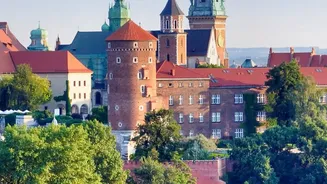
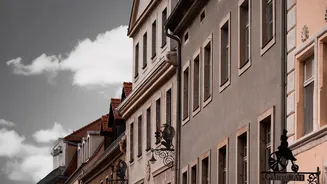
dominated by the magnificent St. Mary's Basilica and the Renaissance-era Cloth Hall. The city's fortified streets are best understood by tracing the Royal Route, the historic coronation path of Polish kings. This path leads from the remnants of the city's medieval defensive walls, past stunning burgher houses and churches, and culminates at Wawel Hill. Here, the Wawel Royal Castle and Wawel Cathedral stand as a powerful symbol of Polish identity, a fortified complex that was the seat of monarchy for centuries. Walking these streets feels like a journey through a living museum of Gothic, Renaissance, and Baroque architecture.
Poland: The Primeval Whispers of Białowieża Forest
From the architectural grandeur of Kraków, we venture to one of Europe's last and largest remaining tracts of primeval lowland forest: Białowieża Forest. A UNESCO World Heritage site that straddles the border between Poland and Belarus, this is a sanctuary of biodiversity. Białowieża is famed as the home of the European bison, the continent's heaviest land animal, which has been successfully reintroduced here. Exploring the forest, visitors can wander through stands of ancient trees, some several centuries old. The area is a mosaic of mixed forests, swampy grounds, and river valleys, offering a glimpse of what the European Plain looked like thousands of years ago. The presence of vast amounts of dead and decaying wood fosters an incredible diversity of fungi and insects, making it a crucial site for conservation and a truly wild experience.
Romania: Sighișoara, Europe's Inhabited Citadel
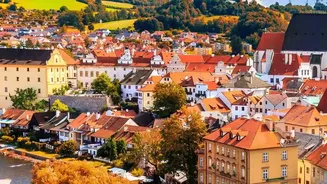
Next, we travel south to the heart of Transylvania in Romania, to the Historic Centre of Sighișoara. Designated a UNESCO World Heritage site in 1999, Sighișoara is celebrated as one of the most beautiful and best-preserved inhabited medieval citadels in Europe. Founded by Transylvanian Saxons in the 12th century, its fortified walls still enclose a vibrant community. The citadel is a fairytale of winding cobbled alleys, steep stairways, and colorful burgher houses. Nine of the original 14 defensive towers remain, each once maintained by a different craft guild. The 64-meter-tall Clock Tower, built in the 14th century, serves as the main gate and icon of the city. Sighișoara is also famously the birthplace of Vlad the Impaler, the historical figure who inspired Bram Stoker's Dracula, adding another layer of legend to its fortified streets.
Romania: The Ancient Beech Forests of the Carpathians
Completing our journey, we find the natural counterpart to Sighișoara's medieval walls in the nearby Carpathian Mountains. This mountain range is home to components of the transnational UNESCO World Heritage site known as the Ancient and Primeval Beech Forests of the Carpathians and Other Regions of Europe. This vast, multi-country site protects the last remnants of undisturbed, temperate beech forests on the continent. These forests are a living document of the post-glacial expansion of the beech tree across Europe, a process that has been ongoing for thousands of years without major human interference. The Romanian components, found in national parks like Domogled-Valea Cernei and Semenic-Cheile Carașului, offer a serene and powerful contrast to the bustling historic towns. Hiking through these ancient groves, you can experience a timeless natural ecosystem that has been recognized for its outstanding universal value.