



A Journey Beyond the Horizon
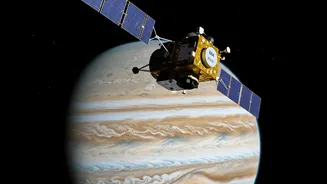
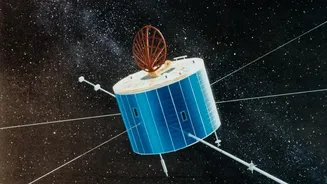
Launched in 1977, Voyager 2 is a testament to human curiosity and engineering endurance. It is the only spacecraft to have ever visited the ice giants, Uranus and Neptune, providing humanity with its first close-up views of these distant worlds. Now,
at more than 21 billion kilometers from Earth, it has long since left our solar system behind, venturing into the vast, unknown territory of interstellar space. It, along with its twin, Voyager 1, is humanity’s farthest-flung object, still sending back invaluable data from a region no other probe has reached. This incredible journey, however, is powered by a finite resource, one that has been slowly but surely dwindling for nearly half a century.
The Inevitable Power Problem
The Voyager probes are not powered by solar panels, which would be useless in the dark depths of space so far from the sun. Instead, they rely on radioisotope thermoelectric generators, or RTGs, which convert the heat from decaying plutonium into electricity. While reliable, this power source has a limited lifespan. Every year, the RTGs on Voyager 2 lose about four watts of power, forcing the mission's engineers into a long-term balancing act. To keep the spacecraft alive, they have been methodically shutting down non-essential systems and heaters over the years. Recently, the power margins became so thin that the team faced a difficult choice: shut down one of the few remaining science instruments to save power.
An Ingenious 'Big Bang' Solution
Rather than sacrifice another piece of the mission’s scientific capability, engineers at NASA's Jet Propulsion Laboratory (JPL) developed a creative workaround, nicknamed the 'Big Bang' fix. This plan involved a carefully coordinated swap of power configurations. They simultaneously turned off a few specific powered devices, including heaters and a digital tape recorder that was kept running partly for the heat it generated, and activated lower-power alternatives that could still keep the spacecraft warm enough to operate. The maneuver was a delicate one, requiring engineers to send commands that take over 19 hours to reach the distant probe, and then wait another 19 hours for a confirmation signal.
More Science from the Void
The successful implementation of this power-saving measure means that Voyager 2 can continue to operate all three of its remaining active science instruments for at least another year. These instruments—the magnetometer, Plasma Wave Subsystem, and Cosmic Ray Subsystem—are still gathering crucial data about the interstellar medium, the space between the stars. Before this fix, NASA anticipated having to shut down one of these instruments before the end of 2026. This new lease on life allows Voyager 2 to continue its unique observations, sending back information about a region of the universe that we can only explore through its 'eyes'. This success has also paved the way for a similar upgrade to be attempted on Voyager 1, potentially extending its life as well.