








A Milestone in the Stars
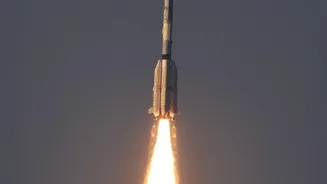
On July 18, 2026, India's space ambitions took a giant leap forward. Skyroot Aerospace, a Hyderabad-based startup, successfully launched its Vikram-1 rocket, becoming the first private Indian company to place satellites into orbit. The launch, christened
Mission 'Aagaman', was more than just a technical success; it was a powerful statement. It demonstrated that private enterprise could not only participate in but also lead critical missions, a domain once exclusively held by the state-run Indian Space Research Organisation (ISRO). Vikram-1 is an orbital-class vehicle designed to serve the burgeoning global market for small satellite launches, offering a cost-effective and on-demand "cab service to space." Its construction uses advanced techniques like 3D-printed engines and lightweight carbon composite structures, showcasing homegrown innovation.
The 2018 Bet
Long before the roar of Vikram-1's engines, the idea for Skyroot was just a pitch. In 2018, co-founders Pawan Kumar Chandana and Naga Bharath Daka, two former ISRO scientists, took a chance and sent a cold message on LinkedIn to serial entrepreneur Mukesh Bansal. At the time, India had no formal policy for private space launches, and the idea of a startup building orbital rockets seemed far-fetched to most investors. Yet, Bansal, known for building consumer giants Myntra and Cult.fit, saw potential where others saw risk. Moved by the founders' passion, he became Skyroot's first and only angel investor, putting in approximately ₹12 crore long before any venture capital firms came knocking. This was not just an investment in a company; it was a bet on a future where India's space sector would open up, a vision that wouldn't become official government policy until 2020.
The Rise of Skyroot
Chandana and Daka founded Skyroot Aerospace after seeing a draft of a government bill that hinted at the opening of the space sector. They quit their stable jobs at ISRO to chase an uncertain dream. For years, they faced skepticism. Rocket development is capital-intensive and fraught with risk; a single failure can be catastrophic. Most investors, comfortable with software and consumer internet businesses, shied away from such a long-term, hardware-heavy venture. Bansal's initial capital was the lifeline that allowed the company to survive and build its core team. His support continued through challenging periods, including an additional infusion of funds during the COVID-19 pandemic to ensure the team stayed intact. This early backing was critical, providing the runway Skyroot needed to develop its technology and prove its concept, which eventually attracted institutional funding after the government formally liberalized the sector.
Vindication and New Horizons
The successful launch of Vikram-1 is the ultimate validation of Bansal's foresight. His initial ₹12 crore bet has blossomed into a holding worth over ₹700 crore, factoring in his current stake and partial exits, representing a nearly 60-fold return on his investment. But the significance is far greater than the financial windfall. It cements Bansal’s reputation as a visionary investor capable of identifying and nurturing disruptive, nation-building ideas in deep-tech, far from his usual turf of e-commerce and fitness. For Skyroot, the launch transforms it from a promising startup into a globally competitive player in the multi-billion-dollar commercial satellite market. For India, it makes the nation only the third country, after the US and China, to have a private company achieve an orbital launch, a major milestone in its 'Atmanirbhar Bharat' mission.
A New Era for Indian Spacetech
Skyroot's success story is a beacon for the entire Indian tech ecosystem. It highlights a maturing landscape where investors are increasingly willing to back ambitious, capital-intensive projects with long gestation periods. The government's establishment of IN-SPACe as a regulatory body and the clear framework provided by the Indian Space Policy 2023 have created a fertile ground for startups like Skyroot, Agnikul, Pixxel, and Digantara to thrive. These companies are not just complementing ISRO's efforts but are building new capabilities across launch services, satellite manufacturing, and space-based data applications. The success of Vikram-1 is set to unlock even more private capital, accelerating innovation and solidifying India’s position as a formidable power in the global space economy.