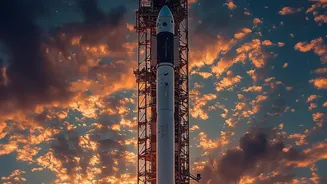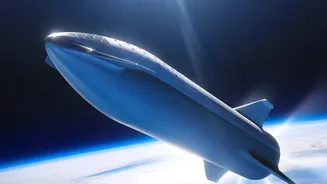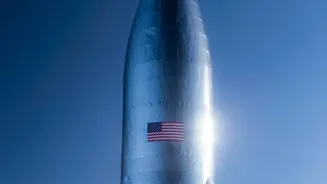





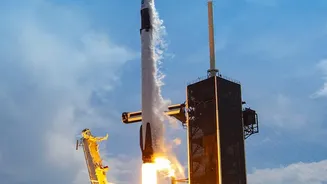

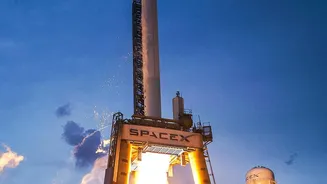
SpaceX just achieved a landmark milestone in its quest to make humanity a multiplanetary species. The successful recovery of a Starship upper stage from orbit on November 14 is a pivotal step toward fully and rapidly reusable rockets.
A Historic Catch
On November 14, 2026,
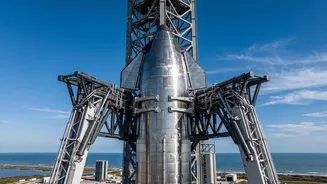
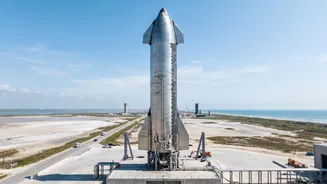
after a nearly 22.5-hour mission that included 14 orbits of Earth, SpaceX did something no one has ever done before: it caught an orbital-class upper stage with its launch tower. The mission, known as Flight 15, saw the Starship upper stage (named Ship 42) return from space, survive a fiery reentry, and execute a precise landing maneuver. It descended into the waiting 'chopstick' arms of the 'Mechazilla' tower at the Starbase facility in Texas. While the mission's Super Heavy booster was not recovered, the successful capture of the Ship was hailed as a revolutionary moment. As one SpaceX spokesperson put it, this was the 'holy grail of spaceflight'.
Why The Upper Stage Matters Most
SpaceX has been landing and reusing its Falcon 9 first-stage boosters for years, a feat that has already transformed the economics of space launch. However, recovering the second, or upper, stage is a far greater challenge. The upper stage is what travels all the way to orbit, reaching speeds over 17,000 miles per hour. To return, it must endure vastly more extreme heating and deceleration than a booster, which performs a much shorter, suborbital hop. Proving that the upper stage can not only survive this journey but be recovered intact is the final major piece of the reusability puzzle. It’s the difference between throwing away the most complex part of the rocket every time and creating a system more akin to a commercial airliner, capable of flying again and again.
From Recovery to Reflight
Catching the rocket is only half the battle; the true goal is 'rapid reusability'. The next phase for SpaceX involves a thorough inspection of Ship 42. Engineers will assess the condition of its thousands of heat shield tiles, its Raptor engines, and its overall structural integrity. According to CEO Elon Musk, the vehicle appears to have returned in good condition, likely needing only a few weeks of refurbishment to be capable of flying again. However, due to its historic significance, Musk has suggested Ship 42 might be put on public display instead of being reflown. Even so, the data gathered is invaluable. The ultimate goal is to reduce the turnaround time between flights from months or weeks to mere hours, a key requirement for SpaceX’s ambitious plans.
The Economic Game-Changer
Achieving full and rapid reusability with both stages of Starship is expected to slash the cost of accessing space by a factor of up to 100, according to Musk. This isn't just about launching satellites cheaper. Such a dramatic cost reduction could unlock entirely new possibilities, from building out massive satellite constellations like Starlink and Starmind to enabling large-scale scientific missions. It is the foundational technology required to fulfill SpaceX's long-term vision of establishing a permanent human presence on the Moon and a self-sustaining city on Mars. The company has stated goals of launching thousands of Starship flights per year, a cadence that is only conceivable with an aircraft-like operational model.
The Road Ahead
Despite this monumental success, there is still work to do. SpaceX has yet to demonstrate a simultaneous recovery of both the Super Heavy booster and the Starship upper stage in a single mission. The next critical milestone after recovery is demonstrating re-flight of a recovered ship, proving the refurbishment process is viable and efficient. Furthermore, for deep-space missions, SpaceX must master in-orbit refueling, which will require multiple tanker Starships to meet a primary ship in orbit. The November 14 catch was a giant leap, but it's one of many that will be needed to build a reliable bridge to the stars. The next test flight is already being planned, potentially for as early as December 2026.